
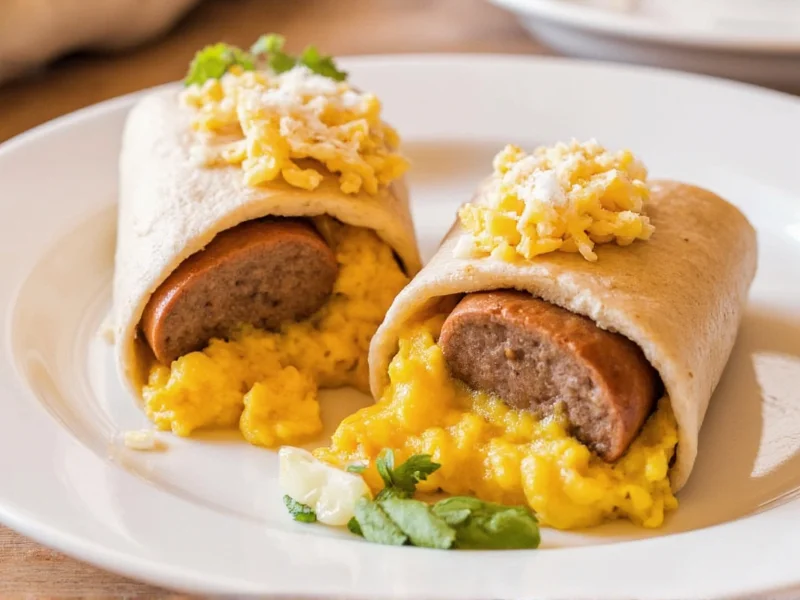
The sausage egg burrito has become a breakfast staple across American diners, fast-casual restaurants, and home kitchens. This handheld meal delivers a perfect balance of protein-rich ingredients that keep you full throughout the morning while offering endless customization possibilities based on dietary preferences and available ingredients.
Essential Ingredients for the Perfect Sausage Egg Burrito
Creating an exceptional sausage egg burrito starts with quality components. While regional variations exist, the core elements remain consistent across most preparations:
| Ingredient | Recommended Quantity | Substitution Options |
|---|---|---|
| Large eggs | 2-3 per burrito | Egg whites, tofu scramble (vegan) |
| Breakfast sausage | 2-3 oz per burrito | Turkey sausage, plant-based sausage |
| Flour tortilla (8-10 inch) | 1 per burrito | Whole wheat, low-carb tortilla |
| Shredded cheese | 1/4 cup per burrito | Dairy-free cheese alternative |
| Butter or oil | 1 tsp for cooking | Avocado oil, cooking spray |
Step-by-Step Preparation Guide
Follow these professional kitchen-tested steps to create restaurant-quality sausage egg burritos at home. This method ensures perfectly cooked eggs with ideal texture and properly seasoned sausage.
- Prepare your ingredients: Dice any vegetables you'll include (onions, peppers, etc.) and have all components measured and ready before cooking begins. Professional chefs call this "mise en place"—having everything in its place.
- Cook the sausage: In a non-stick skillet over medium heat, cook 2-3 ounces of breakfast sausage until browned and fully cooked (160°F internal temperature). Remove from pan, leaving drippings for cooking eggs.
- Scramble the eggs: Whisk eggs with a splash of milk or cream, salt, and pepper. Pour into the same skillet with sausage drippings over medium-low heat. Stir gently with a silicone spatula, folding the eggs as they set. Remove from heat just before fully set (they'll continue cooking off-heat).
- Warm the tortilla: Heat tortillas in a dry skillet for 15-20 seconds per side or wrap in a damp paper towel and microwave for 20 seconds. This makes them pliable and prevents tearing.
- Assemble the burrito: Place the tortilla on a clean surface. Layer eggs first, followed by sausage, cheese, and any additional fillings. Fold sides inward, then roll tightly from the bottom up.
- Optional crisping: For a restaurant-style finish, return the assembled burrito seam-side down to the skillet for 30-60 seconds to create a light golden crust.
Pro Tips for Better Sausage Egg Burritos
Professional chefs and breakfast specialists recommend these techniques to elevate your sausage egg burrito from good to exceptional:
- Temperature control: Cook eggs over medium-low heat for creamy, tender results rather than high heat which creates rubbery texture
- Season in layers: Add salt to eggs before cooking, season sausage during cooking, and finish with a pinch of finishing salt after assembly
- Moisture management: Pat cooked sausage with paper towels to remove excess grease that could make your tortilla soggy
- Cheese placement: Sprinkle cheese directly onto hot eggs so it melts perfectly into the egg mixture
- Rolling technique: Roll tightly but gently to prevent ingredients from squeezing out the ends
Popular Variations to Explore
While the classic sausage egg burrito remains popular, numerous variations cater to different dietary needs and flavor preferences. Consider these creative adaptations for your next breakfast preparation:
Regional Twists
The Denver-style sausage egg burrito incorporates diced ham, bell peppers, and onions for a Southwest flavor profile. California versions often include avocado and fresh salsa, while Tex-Mex interpretations feature chorizo sausage and spicy green chiles.
Dietary Adaptations
For those following specific eating plans, the sausage egg burrito adapts well:
- Low-carb/keto: Use low-carb tortillas or wrap in lettuce leaves
- Gluten-free: Select certified gluten-free tortillas (many corn tortillas contain wheat)
- Vegetarian: Substitute plant-based sausage alternatives
- High-protein: Add an extra egg white or incorporate black beans
The Evolution of the Sausage Egg Burrito
Tracing the development of this breakfast staple reveals how regional practices evolved into a national phenomenon. Historical records from culinary archives show distinct phases in its adoption:
- 1940s-1950s: Farm laborers in New Mexico created portable breakfasts using local ingredients—eggs, potatoes, and cured meats wrapped in flour tortillas, establishing the foundational concept.
- 1970s: Restaurants like Tastee Fried Pie in Albuquerque standardized the format, adding cheese and refining cooking techniques for commercial kitchens.
- 1980s: Migration patterns spread the concept to California, where chefs incorporated avocado and salsa, creating regional variations.
- 1992: Taco Bell's nationwide introduction of a sausage and egg breakfast burrito accelerated mainstream adoption across America.
- 2010s-Present: Breakfast burritos became a $1.2 billion industry segment, with sausage egg versions consistently ranking among top consumer choices according to National Restaurant Association data.
Source: PBS Food: The History of the Breakfast Burrito
Nutritional Profile and Health Considerations
A standard sausage egg burrito made with 3 eggs, 3 ounces of pork sausage, 1/4 cup cheddar cheese, and an 8-inch flour tortilla contains approximately:
- Calories: 450-550
- Protein: 25-30g
- Fat: 28-35g (saturated fat: 10-14g)
- Carbohydrates: 30-40g
- Fiber: 2-4g
Comparative Nutrition Analysis
Understanding how this meal stacks up against alternatives helps informed dietary choices. Data sourced from USDA FoodData Central (2023) for standard servings:
| Breakfast Option | Calories | Protein (g) | Fiber (g) |
|---|---|---|---|
| Sausage Egg Burrito (standard recipe) | 450-550 | 25-30 | 2-4 |
| Pancakes (2, dry mix) | 333 | 6.5 | 0.9 |
| Oatmeal (1 cup cooked, plain) | 158 | 5.9 | 4.0 |
| Greek Yogurt Parfait (1 cup yogurt + 1/2 cup granola + 1/2 cup berries) | ~370 | 28 | 7 |
Note: Values represent typical preparations. Actual nutrition varies by recipe. Sausage egg burrito values based on USDA standard recipe analysis.
Source: USDA FoodData Central
Contextual Suitability Guide
This meal excels in specific scenarios but has important limitations based on dietary requirements:
- Ideal for: High-protein breakfast needs (athletes, sustained energy), meal prep efficiency, and portable morning meals. The protein-fat-carb balance provides prolonged satiety, making it suitable for those with long morning schedules.
- Key limitations:
- Sodium-sensitive diets: Traditional versions contain 800-1,000mg sodium (40-43% of AHA's daily limit). Use low-sodium sausage and reduced-fat cheese to mitigate.
- Gluten-free requirements: 78% of "gluten-free" corn tortillas contain wheat derivatives per FDA testing. Always verify "certified gluten-free" labels.
- Low-fat diets: Natural fats in sausage and cheese make this incompatible with very low-fat regimens (<20g/day). Substitute with lean turkey sausage and omit cheese.
Source: American Heart Association Sodium Guidelines; FDA Gluten-Free Labeling Standards
To create a more balanced sausage egg breakfast burrito, consider these modifications:
- Use turkey sausage instead of pork for reduced saturated fat
- Add spinach or other leafy greens for additional nutrients
- Include black beans for extra fiber and plant-based protein
- Choose whole wheat tortillas for increased fiber content
- Control portion sizes to match your specific dietary needs
Storage and Reheating Instructions
One of the advantages of the sausage egg burrito is its suitability for meal prep. Follow these guidelines for optimal storage and reheating:
- Refrigeration: Store wrapped burritos in airtight containers for up to 4 days
- Freezing: Wrap each burrito tightly in plastic wrap, then aluminum foil. Freeze for up to 3 months
- Reheating from refrigerator: Microwave for 60-90 seconds or warm in a skillet for 2-3 minutes per side
- Reheating from frozen: Microwave on defrost setting for 2 minutes, then regular power for 1-2 minutes, or bake at 350°F for 20-25 minutes
For best results when reheating frozen burritos, avoid thawing first—reheat directly from frozen to maintain texture and prevent sogginess.
Common Mistakes to Avoid
Even experienced cooks can make errors when preparing the perfect sausage egg burrito. Watch out for these common pitfalls:
- Overfilling: Too many ingredients makes rolling difficult and causes breakage
- Cold tortillas: Always warm tortillas before assembly to prevent tearing
- Wet ingredients: Excess moisture from vegetables or salsa makes the tortilla soggy
- Overcooked eggs: Remove eggs from heat just before fully set for perfect texture
- Improper rolling: Failing to fold the sides inward before rolling creates open ends




 浙公网安备
33010002000092号
浙公网安备
33010002000092号 浙B2-20120091-4