
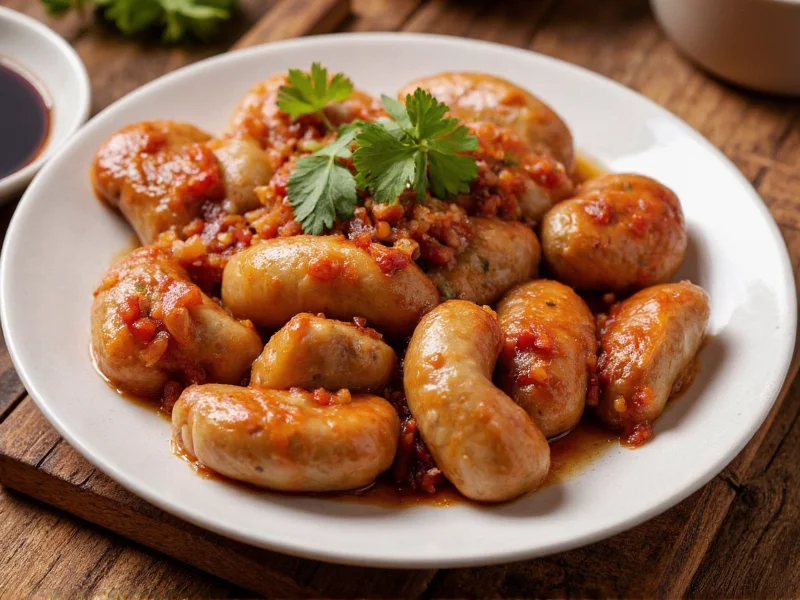
Chinese sausage, known as lap cheong (臘腸) in Cantonese, represents one of the most beloved preserved meats in Chinese culinary tradition. Originating in Southern China, particularly Guangdong province, this air-dried sausage has been a pantry staple for centuries, especially during winter preservation seasons. Unlike Western sausages, Chinese varieties feature a unique sweet-savory profile that enhances countless dishes without overpowering other ingredients.
Historical Evolution of Chinese Sausage
Chinese sausage has a rich history spanning over a millennium. Research indicates that the earliest documented production of sausage in China occurred during the Song Dynasty (960-1279 AD), primarily as a winter preservation technique for pork [Journal of Animal Science and Technology]. The following timeline highlights key developments:
- 10th-13th Century (Song Dynasty): Initial development of air-dried sausages using natural casings, soy-based seasonings, and sugar for preservation.
- 14th-17th Century (Ming Dynasty): Refinement of recipes with the addition of rice wine and regional spice variations; emergence of distinct styles in Guangdong.
- 18th-19th Century (Qing Dynasty): Spread of lap cheong production to Sichuan (spicier versions) and Yunnan (fermented styles) through internal migration.
- Early 20th Century: Commercial production begins in Guangdong province, with brands like "Tai Tung" standardizing recipes for export.
- Mid-20th Century: Traditional methods decline in mainland China during political upheavals but thrive in Hong Kong and Southeast Asian communities.
- 21st Century: Global popularity surge; modern adaptations address food safety standards while preserving traditional flavors.
Understanding Chinese Sausage Varieties
While lap cheong refers specifically to the classic pork version, Chinese cuisine features several regional sausage variations worth knowing:
| Type | Key Characteristics | Regional Origin |
|---|---|---|
| Lap Cheong (臘腸) | Sweet, firm texture, reddish-brown color | Cantonese (Southern China) |
| Xiang Chang (香腸) | Spicier, coarser grind, often includes Sichuan pepper | Sichuan Province |
| Nanxiang Lap Cheong | Smaller diameter, stronger wine flavor | Shanghai region |
| Yunnan Fermented Sausage | Strong aroma, tangy flavor from fermentation | Yunnan Province |
Traditional Homemade Chinese Sausage Recipe
Creating authentic Chinese sausage at home requires attention to ingredient ratios and proper drying conditions. This traditional lap cheong recipe yields approximately 1 pound of sausage—enough for multiple meals.
Essential Ingredients
- 1 pound pork shoulder (70% lean, 30% fat), finely ground
- 3 tablespoons light soy sauce
- 2 tablespoons Chinese rice wine (Shaoxing wine)
- 2 tablespoons granulated sugar
- 1 teaspoon freshly ground white pepper
- ½ teaspoon five-spice powder
- ¼ teaspoon ground cinnamon (optional)
- ¼ teaspoon curing salt (Prague Powder #1, optional but recommended for safety)
- Natural hog casings (26-28mm diameter), soaked in water
Step-by-Step Preparation
- Prepare the meat mixture: Combine all ingredients except casings in a large bowl. Mix thoroughly with your hands for 3-5 minutes until the mixture becomes sticky and well-emulsified.
- Rest the mixture: Cover and refrigerate for 2 hours to allow flavors to meld and meat to firm up.
- Prepare casings: Rinse soaked casings under cold water, checking for tears. Slide casing onto sausage stuffer tube, leaving a 4-inch tail.
- Stuff the sausage: Fill stuffer with meat mixture and extrude into casings at medium pressure. Avoid overfilling—casings should be snug but not tight.
- Link the sausage: Twist into 6-inch sections. Prick any air bubbles with a sterilized needle.
- Dry the sausage: Hang in a cool, well-ventilated area (55-65°F with 60-70% humidity) for 7-10 days, or until firm to the touch and reduced by about 30% in weight.
Modern Adaptations for Home Cooks
Traditional air-drying requires specific conditions that may be challenging outside of China's climate. These practical adaptations maintain authenticity while accommodating home kitchen limitations:
Refrigerator Drying Method
For those without ideal drying conditions, the refrigerator method produces excellent results:
- Place sausages on a wire rack over a baking sheet
- Position in the back of the refrigerator (not the door)
- Allow 14-21 days for proper drying
- Check daily for mold—white mold is acceptable; black or green requires discarding
Cooking Chinese Sausage Without Drying
If immediate use is needed, skip the drying process for fresh Chinese sausage:
- Steam whole sausages for 20-25 minutes before slicing
- Use in fried rice by slicing thinly and cooking until edges crisp
- Add to clay pot rice during the last 15 minutes of cooking
- Pair with leafy greens like gai lan for balanced meals
Storage and Usage Tips
Proper storage maintains quality and extends shelf life of your homemade Chinese sausage:
| Storage Method | Duration | Best Practices |
|---|---|---|
| Room temperature (dried) | 1-2 months | Store in breathable cloth; avoid plastic bags |
| Refrigerated | 3-6 months | Wrap in parchment paper before placing in container |
| Frozen | 12 months | Vacuum-seal for best results; thaw in refrigerator |
Common Mistakes to Avoid
Many home cooks encounter these pitfalls when attempting authentic Chinese sausage recipes:
- Incorrect fat ratio: Too little fat creates dry, crumbly sausage; too much causes separation during cooking
- Inadequate mixing: Proper emulsification requires thorough hand-mixing to achieve the right texture
- Rushing the drying process: Insufficient drying leads to spoilage; proper drying develops flavor complexity
- Using inappropriate casings: Natural hog casings work best; collagen casings often result in inferior texture
- Ignoring humidity levels: High humidity prevents proper drying; low humidity causes excessive drying
Contextual Considerations: When and How to Use Chinese Sausage
While versatile, Chinese sausage has specific applications where it shines and situations where alternatives might be preferable. Understanding these boundaries ensures optimal culinary results:
- Best Applications:
- As a flavor enhancer in rice and noodle dishes (e.g., fried rice, where its sweetness balances soy sauce)
- In steamed preparations (e.g., over tofu or with vegetables) to allow flavors to infuse without high heat
- During cold months when its rich fat content provides warmth and energy
- Limitations to Note:
- Not ideal for raw consumption: Despite being pre-cooked through drying, it requires additional cooking to develop flavor and texture (unlike some Western cured sausages).
- High sodium content: With approximately 300mg sodium per 28g serving (per USDA data), it's unsuitable for low-sodium diets without modification [USDA FoodData Central].
- Climate dependency: Traditional air-drying requires specific humidity (60-70%) and temperature (55-65°F); attempts in humid tropical climates often fail without climate control.
Traditional Dishes Featuring Chinese Sausage
Lap cheong enhances numerous classic Chinese dishes. When using your homemade sausage, consider these authentic applications:
- Fried Rice: Dice sausage finely and add during the final minute of cooking for bursts of sweet-savory flavor
- Clay Pot Rice: Place whole sausages on top of rice during the last 15 minutes of cooking
- Steamed Tofu: Slice thinly and layer over silken tofu with ginger and scallions
- Noodle Dishes: Add to wonton soup or lo mein for depth of flavor
- Vegetable Stir-fries: Pair with Chinese broccoli (gai lan) or bok choy




 浙公网安备
33010002000092号
浙公网安备
33010002000092号 浙B2-20120091-4