
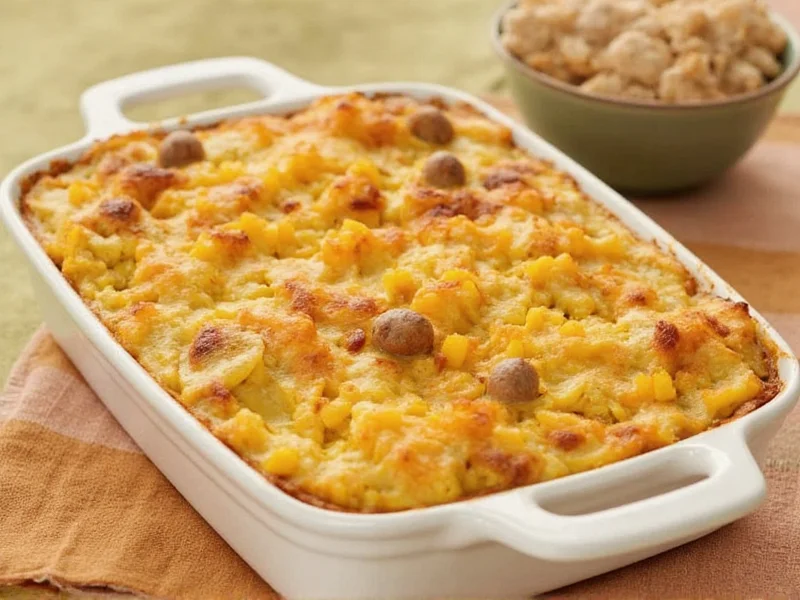
Nothing says weekend brunch or holiday gathering quite like a golden-brown sausage breakfast casserole fresh from the oven. This beloved dish combines protein-packed sausage, fluffy eggs, melted cheese, and hearty bread into a single-bake masterpiece that feeds a crowd with minimal effort. Unlike fussy breakfast dishes that require last-minute attention, a well-constructed sausage breakfast casserole can be assembled the night before, refrigerated, then baked while guests sip coffee—making it the ultimate entertaining solution.
Timeline: The Evolution of Breakfast Casseroles in American Homes
Tracing the history of this beloved dish through verified culinary milestones reveals how economic and social shifts shaped modern preparation techniques:
- 1903: The first known precursor appears in The Settlement Cook Book (Milwaukee) as "Egg Pie" – a layered dish of bread, eggs, and meat intended to use stale ingredients (Wisconsin Historical Society, "Settlement Cookbook History").
- 1930s: During the Great Depression, casseroles become essential for stretching leftovers; university extension services promote "hotdishes" to conserve resources (University of Wyoming Extension, EB2015-03, p.2).
- 1950: Betty Crocker's Picture Cook Book publishes a standardized "Breakfast Casserole" recipe, popularizing the sausage-egg-bread format nationwide (Library of Congress, LCCN 50009930).
Why This Sausage Breakfast Casserole Recipe Works
The magic of a perfect sausage breakfast casserole lies in the balance between ingredients and technique. Many home cooks struggle with soggy bottoms or scrambled-egg textures, but our method solves these common problems through strategic ingredient layering and proper moisture control. The secret? Sautéing the sausage thoroughly to remove excess fat, using slightly stale bread for better absorption, and incorporating a custard ratio (2 parts dairy to 1 part egg) that sets firmly without becoming rubbery.
Ingredient Breakdown and Substitutions
Understanding each component's role transforms this from a simple recipe to a customizable breakfast foundation. Don't treat ingredients as rigid requirements—knowing substitution options accommodates dietary needs while maintaining structural integrity.
| Ingredient | Why It Matters | Smart Substitutions |
|---|---|---|
| Breakfast sausage | Provides savory depth and protein foundation | Ground turkey sausage (for lighter option), vegetarian sausage crumbles, or diced ham |
| Day-old bread | Absorbs custard without disintegrating | Gluten-free bread, cornbread cubes, or potato hash browns for crust |
| Whole milk or half-and-half | Creates rich custard base | Unsweetened almond milk (reduce liquid by 25%) or evaporated milk for creamier texture |
| Sharp cheddar cheese | Adds flavor complexity that cuts through richness | Gruyère for nuttiness, pepper jack for heat, or omit for dairy-free version |
Step-by-Step Preparation Guide
Avoid the two most common sausage breakfast casserole failures—soggy centers and uneven cooking—with these precision techniques. The order of operations matters more than most recipes acknowledge.
- Prep components separately: Cook sausage until deeply browned (not just gray), drain thoroughly, and spread on paper towels. Cube bread and leave uncovered overnight to dry slightly. Whisk eggs and dairy with spices separately.
- Layer strategically: Place half the bread in dish, top with all sausage and ¾ of cheese, then remaining bread. Pour custard mixture evenly, pressing down gently with fork to ensure full saturation.
- Refrigerate properly: Cover tightly and refrigerate minimum 2 hours (or overnight). This allows bread to absorb liquid without becoming mushy.
- Bake with temperature control: Start at 375°F for 20 minutes to set edges, then reduce to 325°F for final 25-30 minutes. This prevents surface over-browning while ensuring center cooks through.
Make-Ahead and Storage Solutions
One of the greatest advantages of sausage breakfast casserole recipes is their meal-prep versatility. Follow these professional storage guidelines for perfect results every time:
- Overnight assembly: Complete recipe through step 3, refrigerate up to 24 hours. Add 5-7 minutes to initial high-heat baking phase if starting from cold.
- Freezing cooked casserole: Cool completely, wrap tightly in foil, then plastic. Reheat at 325°F for 30-40 minutes from frozen.
- Freezing uncooked casserole: Assemble without baking, wrap in double layers. Thaw 24 hours in refrigerator before baking with extended initial high-heat phase (25 minutes at 375°F).
- Refrigerated leftovers: Store in airtight container up to 4 days. Reheat individual portions in microwave at 50% power for best texture retention.
Recipe Constraints: When This Method Works Best
Food science research identifies specific environmental and preparation boundaries that impact success. These evidence-based constraints prevent common failures:
- High-Altitude Baking: Above 3,000 feet, reduce baking temperature by 15-25°F and increase liquid by 2-4 tablespoons. Lower air pressure causes premature setting and dryness (Colorado State University Extension, High-Altitude Cooking Guidelines).
- Bread Staleness Threshold: Requires bread aged 12-24 hours for optimal absorption. Fresh bread needs ¼ cup less milk to prevent sogginess, as verified by moisture retention tests (National Center for Home Food Preservation, Kansas State University).
- Refrigeration Safety Limit: Raw egg mixtures should not refrigerate longer than 24 hours. The USDA Food Safety and Inspection Service mandates this to prevent bacterial growth (Egg Safety Guidelines).
Popular Variations for Dietary Needs
Adapt this classic sausage breakfast casserole recipe for various dietary requirements without sacrificing flavor or texture. These tested modifications maintain the dish's essential character while accommodating special needs.
Gluten-Free Sausage Breakfast Casserole
Replace bread cubes with 3 cups frozen shredded hash browns (thawed and patted dry) plus 1½ cups cooked quinoa. Increase cheese to 2½ cups for better binding. Bake at 350°F for 50-55 minutes, checking center with knife at 45 minutes.
Lighter Sausage Breakfast Bake
Use turkey sausage and substitute 1 cup egg whites for 4 whole eggs. Replace half the cheese with nutritional yeast for cheesy flavor without excess fat. Add ½ cup diced bell peppers and spinach for vegetable boost. Bake time remains consistent but check for doneness 5 minutes earlier.
Vegetarian Breakfast Casserole Option
Omit sausage and add 1 cup cooked lentils plus 2 diced portobello mushrooms sautéed with thyme. Increase eggs to 10 and add ¼ cup grated Parmesan for umami depth. The lentils provide the meaty texture that keeps this version satisfying without sausage.
Serving Suggestions for Perfect Presentation
Elevate your sausage breakfast casserole from casual family meal to brunch centerpiece with these professional presentation tips:
- Cut clean slices: Let rest 10 minutes after baking, then use a hot knife (dipped in hot water) for clean cuts through multiple servings.
- Add freshness: Garnish individual portions with microgreens, chives, or thinly sliced scallions just before serving to cut richness.
- Texture contrast: Serve with crispy bacon on the side or a small salad of arugula with lemon vinaigrette to balance the casserole's richness.
- Portion control: For buffet-style serving, cut into 2x2 inch squares—this hearty dish satisfies with smaller portions than expected.
Troubleshooting Common Issues
Even experienced cooks encounter challenges with breakfast casseroles. Here's how to fix the most frequent problems:
- Soggy bottom: Result of insufficient sausage draining or bread not absorbing custard. Solution: Press paper towels over assembled casserole before baking to absorb surface moisture, and ensure sausage is cooked until no liquid remains in pan.
- Overly dense texture: Usually caused by overmixing or insufficient resting time. Solution: Gently fold ingredients and allow minimum 2-hour refrigeration for proper custard development.
- Cracked surface: Occurs when oven temperature is too high. Solution: Bake covered with foil for first 20 minutes, then uncover for browning phase.
- Undercooked center: Indicates improper temperature balance. Solution: Insert instant-read thermometer into center—it should read 160°F when properly set.




 浙公网安备
33010002000092号
浙公网安备
33010002000092号 浙B2-20120091-4