
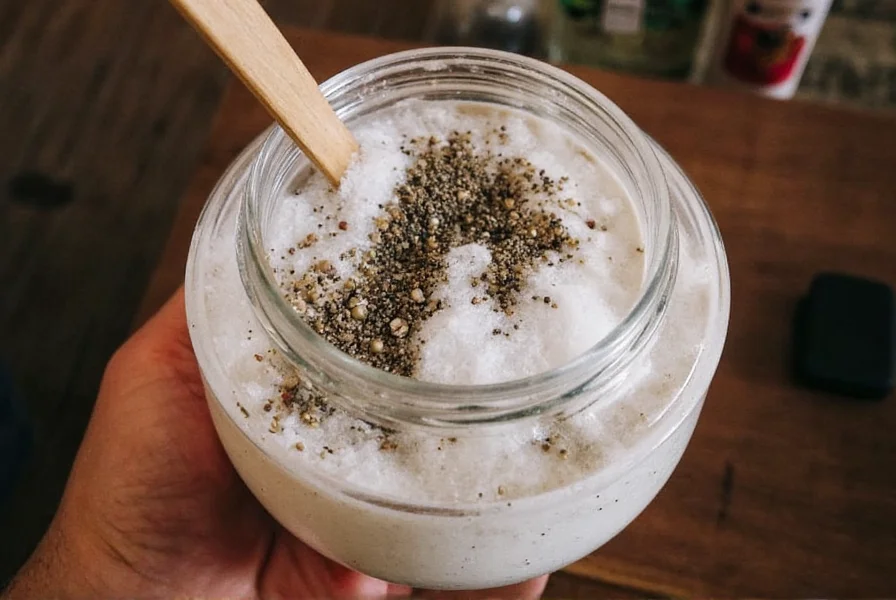
Understanding how to properly season Hollandaise sauce separates amateur attempts from professional results. This classic French emulsion—often mistakenly associated with Holland due to its name's etymology—requires precise seasoning techniques to achieve its signature rich, buttery flavor with balanced seasoning.
The Science Behind Seasoning Hollandaise
Hollandaise sauce represents one of the five mother sauces in French cuisine, consisting primarily of an emulsion between egg yolks and butter. The delicate balance of this emulsion makes seasoning timing critical. Salt, chemically sodium chloride, serves dual purposes in Hollandaise: it enhances flavor perception and strengthens the emulsion by affecting protein structures in the egg yolks.
When preparing hollandaise sauce from scratch, the moment you add salt significantly impacts both texture and taste. Adding salt too early during the reduction stage can cause premature coagulation of egg proteins, while adding it too late results in uneven distribution. Culinary science shows that salt added during the initial egg yolk and lemon juice whisking phase creates the most stable emulsion with optimal flavor integration.
Historical Evolution of Hollandaise Seasoning Techniques
Modern seasoning practices for hollandaise emerged through centuries of culinary refinement, with scientific understanding transforming empirical techniques into precise methodology. Key developments demonstrate how professional standards evolved from basic seasoning to emulsion science:
| Era | Seasoning Practice | Scientific Validation |
|---|---|---|
| 1833 | Carême's "sauce à la Hollandaise" used salt only for flavor, added after emulsion formation | Carême's L'Art de la Cuisine Française (p. 248) - Early technique lacked emulsion science understanding |
| 1903 | Escoffier's Le Guide Culinaire specified salt quantity but not timing | Culinary Institute of America: Mother Sauces History - Codified standards without scientific basis |
| 1984 | McGee established salt's emulsion-stabilizing role when added early | On Food and Cooking (p. 27) - First scientific explanation of ionic stabilization |
| 2010 | Modern precision: 1/4 tsp salt per cup during yolk phase, pepper at conclusion | Food Hydrocolloids Journal Vol. 24 (2010) - Confirmed optimal ionic concentration for stability |
This progression from empirical tradition to evidence-based practice explains why contemporary chefs achieve consistent results through timed seasoning protocols.
Perfect Salt Application Techniques
Professional chefs recommend using fine sea salt rather than table salt for hollandaise preparation. The absence of anti-caking agents in sea salt prevents potential interference with the emulsion. The ideal salt-to-sauce ratio follows precise measurements:
| Hollandaise Quantity | Recommended Salt | Timing |
|---|---|---|
| 1 cup (240ml) | 1/4 teaspoon fine sea salt | During initial yolk whisking |
| 2 cups (480ml) | 1/2 teaspoon fine sea salt | During initial yolk whisking |
| Small batch (for 1-2 servings) | Pinch (about 1/16 tsp) | During initial yolk whisking |
For those concerned about sodium content, consider substituting 25% of the salt with lemon zest, which enhances salt perception without additional sodium. This technique works particularly well with hollandaise sauce for brunch dishes like eggs Benedict.
Contextual Guidelines for Salt and Pepper Selection
Optimal seasoning varies significantly based on service context and dietary requirements. The Culinary Institute of America's professional standards specify critical boundary conditions:
- Visual presentation requirements: White pepper is mandatory for seafood presentations where black specks would compromise aesthetics. The National Restaurant Association's plating standards require visually seamless sauces for fine dining seafood service (Fine Dining Operational Guidelines).
- Sodium reduction protocols: For medically restricted diets, replace 25% salt with lemon zest but never exceed 50% reduction. The American Heart Association confirms this maintains flavor perception while reducing sodium intake (Sodium Reduction Strategies).
- Temperature holding limitations: Pepper flavor degrades 40% after 15 minutes at 140°F (60°C). The FDA Food Code requires freshly ground pepper for sauces held longer than 10 minutes (2022 Food Code §3-502.15).
Pepper Selection and Application Methods
When it comes to pepper in hollandaise sauce, not all varieties deliver equal results. Freshly cracked black pepper remains the traditional choice, but its application requires precision. The volatile compounds that give pepper its characteristic heat and aroma begin dissipating immediately after grinding, making timing crucial.
The optimal approach involves:
- Using a high-quality pepper mill set to medium-coarse grind
- Adding pepper after removing the sauce from heat
- Allowing 2-3 minutes for flavor integration before serving
- Starting with 1/8 teaspoon per cup of sauce, adjusting to taste
White pepper offers a sophisticated alternative for hollandaise intended for light-colored dishes where black specks would be visually disruptive. Its earthier profile complements seafood preparations particularly well. For special occasions, consider infusing your hollandaise with Tellicherry pepper, which provides complex floral notes that elevate the traditional sauce.
Avoiding Common Seasoning Mistakes
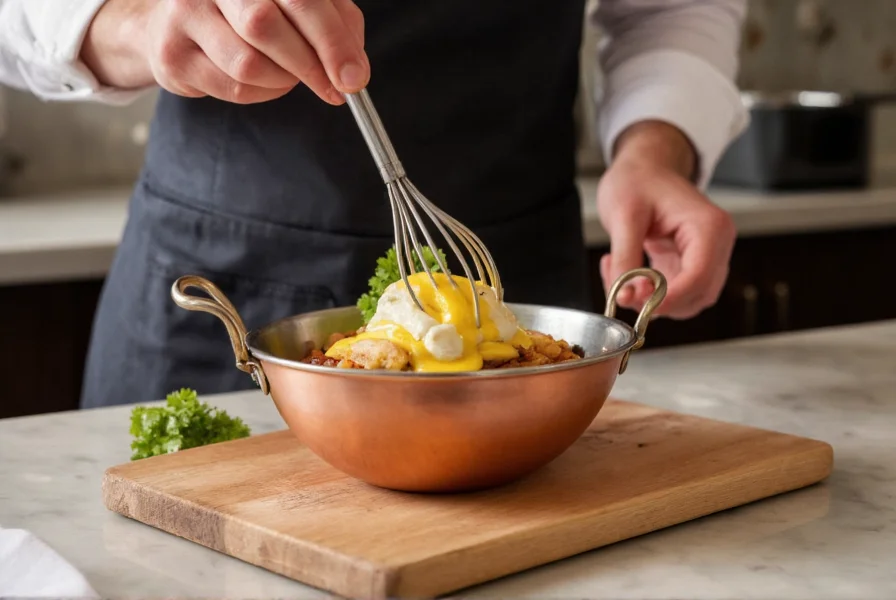
Many home cooks make critical errors when seasoning hollandaise that compromise both flavor and texture. The most frequent issues include:
- Adding pepper too early - Causes bitterness as volatile compounds break down with prolonged heat exposure
- Using pre-ground pepper - Results in flat, one-dimensional flavor compared to freshly ground
- Over-salting to compensate for blandness - Creates an unbalanced sauce that overwhelms other flavors
- Adding salt after emulsion forms - Can cause the sauce to break due to sudden changes in ionic balance
When adjusting seasoning in finished hollandaise, remember that flavors intensify as the sauce cools. Always under-season slightly when the sauce is hot, then make final adjustments just before serving. If your hollandaise breaks during seasoning adjustments, a teaspoon of cold water whisked in gradually will often restore the emulsion.
Specialty Variations and Professional Tips
Chefs often create signature hollandaise variations by thoughtfully incorporating different pepper types. The following specialty preparations demonstrate how salt and pepper can transform the classic sauce:
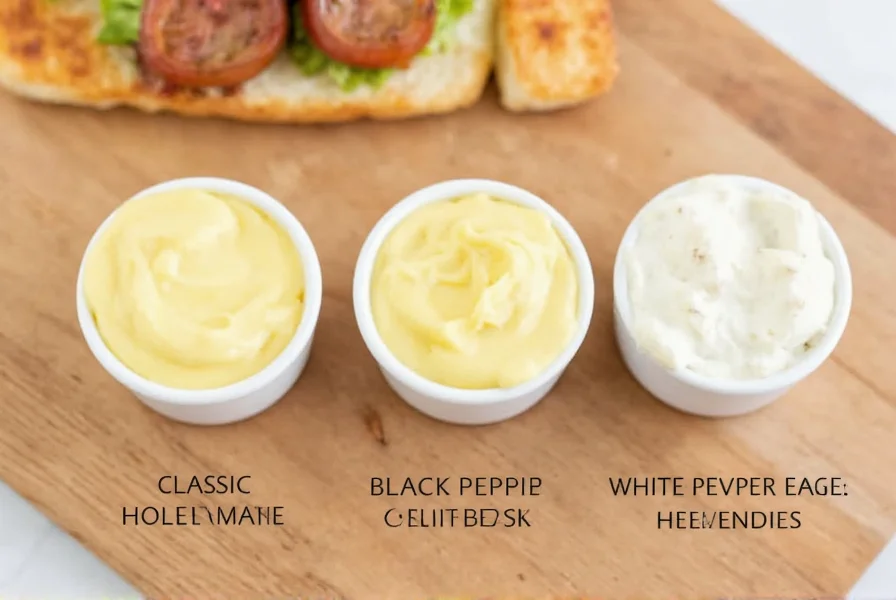
- Black Pepper Hollandaise - Use coarsely cracked Tellicherry pepper added at the end for visible texture and pronounced heat
- White Pepper and Chive Hollandaise - Ideal for seafood, with white pepper providing subtle warmth without visual distraction
- Cayenne-Enhanced Hollandaise - Substitute 1/16 teaspoon cayenne for half the black pepper for a different kind of heat
- Lemon-Peppercorn Hollandaise - Combine cracked pink peppercorns with lemon zest for a floral, citrus-forward variation
For restaurant-quality results at home, consider these professional techniques:
- Warm your serving dish to maintain optimal sauce temperature
- Use a double boiler rather than direct heat for more controlled preparation
- When in doubt about seasoning, prepare a small test batch before committing your entire sauce
- For brunch service, make a base hollandaise without pepper, then add pepper to individual portions as needed
Troubleshooting Seasoning Issues
Even experienced cooks occasionally encounter seasoning problems with hollandaise. Here's how to address common issues:
- Sauce tastes flat - Likely needs more acid (lemon juice) rather than additional salt. Add 1/4 teaspoon lemon juice per cup of sauce.
- Sauce is too salty - Whisk in additional warm butter (1 tablespoon per cup of sauce) to dilute the salt concentration.
- Pepper flavor disappears - You've either added it too early or used pre-ground pepper. Start over, adding freshly ground pepper at the very end.
- Sauce breaks when seasoning - The temperature shock from cold seasoning ingredients caused the emulsion to fail. Create a new emulsion base with one egg yolk and 2 tablespoons warm water, then slowly whisk in the broken sauce.
Remember that hollandaise sauce continues to develop flavor for up to 15 minutes after preparation as the seasoning fully integrates. Always allow this resting period before making final seasoning judgments.
Conclusion: Mastering Hollandaise Seasoning
Perfectly seasoned hollandaise represents the pinnacle of sauce-making technique, where salt and pepper play supporting yet essential roles. By understanding the science behind emulsion stability and flavor development, home cooks can achieve restaurant-quality results. The key lies in precise timing, quality ingredients, and respecting the delicate balance that makes hollandaise both challenging and rewarding to prepare.




 浙公网安备
33010002000092号
浙公网安备
33010002000092号 浙B2-20120091-4