
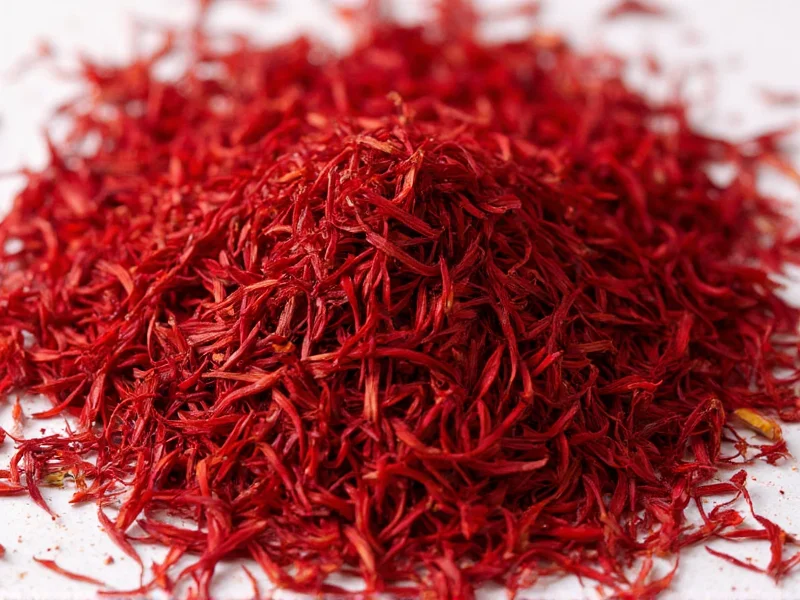
Saffron's extraordinary cost isn't merely a marketing claim—it's a direct result of agricultural reality. This crimson spice, derived from the Crocus sativus flower's stigmas, commands prices ranging from $500 to $5,000 per pound, making it more valuable by weight than many precious metals. The reason lies in its exceptionally laborious production process, which hasn't significantly changed in thousands of years.
The Labor-Intensive Harvesting Process
Unlike machine-harvested spices, saffron requires meticulous human intervention at every stage. Each crocus flower produces only three stigmas—the thread-like structures we know as saffron—which must be carefully plucked by hand before sunrise when the flowers are still closed. This early morning harvesting window lasts merely 1-2 weeks annually, creating intense time pressure for farmers.
Skilled workers move through fields at dawn, gently lifting each purple bloom to extract the precious red threads without damaging them. A single worker can harvest only about 20,000 flowers in an entire day's work, yielding approximately 0.3 pounds of fresh saffron. After harvesting, these delicate threads undergo careful drying—a process that reduces their weight by 75-80%, meaning it takes roughly 200,000 flowers to produce just one pound of market-ready saffron.
Yield Comparison with Other Spices
To understand saffron's exceptional cost, consider how it compares to other premium spices:
| Spice | Flowers Needed Per Pound | Harvest Time Required | Approximate Price Per Pound |
|---|---|---|---|
| Saffron | 75,000-200,000 | 2-3 weeks annually | $500-$5,000 |
| Vanilla | N/A (beans) | Year-round (but labor-intensive) | $100-$300 |
| Cardamom | N/A (pods) | Multiple harvests per year | $20-$50 |
| Nutmeg | N/A (seeds) | Year-round | $10-$25 |
Historical Evolution of Saffron Cultivation
Saffron's production constraints have persisted through distinct historical phases, each reinforcing its premium status. Archaeological and botanical records reveal critical evolutionary milestones:
- 3500-3000 BCE: Earliest evidence in Minoan frescoes from Crete depicting saffron harvesters (source: Brown University Joukowsky Institute)
- 300 BCE: Theophrastus documents identical hand-harvesting methods in Historia Plantarum, confirming ancient labor intensity (source: Perseus Digital Library, Tufts University)
- 10th Century CE: Persian agricultural texts establish quality standards still reflected in modern ISO grading (source: British Library Manuscripts)
- 1960s: Introduction of mechanical harvesters fails due to flower fragility, preserving manual methods (source: FAO Saffron Production Guidelines)
- 2019: UNESCO recognizes Kashmiri saffron cultivation as Intangible Cultural Heritage, validating its irreplaceable artisanal nature (source: UNESCO Intangible Cultural Heritage)
This unbroken historical continuity demonstrates that saffron's production challenges are inherent biological constraints, not temporary market conditions.
Context Boundaries: Climate and Soil Requirements
Saffron cultivation is confined by non-negotiable environmental parameters that prevent meaningful expansion beyond traditional regions. Research from agricultural authorities defines precise thresholds:
| Parameter | Optimal Range | Documented Impact of Deviation |
|---|---|---|
| Summer Temperature | 30-35°C (86-95°F) | Temperatures >35°C cause corm damage (FAO, 2002) |
| Winter Chilling Requirement | 0-10°C (32-50°F) for 4-6 weeks | Inadequate chilling reduces flowering by 60-90% (UC ANR) |
| Soil pH | 6.0-8.0 | Extreme pH causes nutrient lockout (ISO 3632-1:2011) |
| Annual Rainfall | 400-600 mm | Excess moisture triggers Fusarium rot (FAO) |
Source: University of California Agriculture and Natural Resources Saffron Cultivation Guide and FAO Saffron Production Systems
These boundaries explain why 90% of global production remains concentrated in Iran's Khorasan province. Experimental cultivation in California's Central Valley (which approaches temperature parameters) still fails to achieve Category I quality due to insufficient winter chilling and soil composition issues, confirming the impossibility of scaling production without compromising quality.
Saffron Quality Grading and Price Variation
Not all saffron carries the same price tag. The spice is graded according to ISO 3632 standards based on crocin (color), picrocrocin (taste), and safranal (aroma) content. These chemical compounds determine both quality and value:
- Category I (Super Negin): Long, deep-red threads with highest coloring strength (190+)
- Category II (Sargol): Red threads only, slightly lower coloring strength (150-190)
- Category III (Pushal): Threads with some yellow styles attached (110-150)
- Category IV (Daste): Primarily yellow styles with minimal red (80-110)
The highest grade commands premium prices because it delivers maximum color and flavor with minimal usage. Lower grades often contain yellow style parts that contribute little to saffron's characteristic properties, requiring larger quantities to achieve similar results.
Authenticity Challenges and Market Impact
The high value of genuine saffron has unfortunately created a significant counterfeit market. Many products labeled as saffron contain substitutes like safflower, marigold petals, or dyed silk fibers. This adulteration problem affects both consumers and legitimate producers.
Reputable suppliers implement strict quality controls, including laboratory testing for crocin content, but these measures add to production costs. Consumers willing to pay for authentic saffron effectively subsidize these verification processes, further contributing to the spice's premium pricing. The difficulty in identifying genuine saffron also creates market inefficiencies that maintain higher prices for verified products.
Practical Usage Considerations
Given saffron's cost, understanding how to use it efficiently becomes essential. Professional chefs and experienced home cooks maximize value through several techniques:
- Proper blooming: Soaking threads in warm liquid (water, broth, or milk) for 15-30 minutes before use releases maximum flavor and color
- Precise measurement: A single gram (about 30 threads) typically flavors 4-6 servings of rice or sauce
- Storage methods: Keeping saffron in airtight containers away from light preserves potency for up to two years
- Substitution awareness: Understanding that no true substitute exists, though some recipes use turmeric for color (without the distinctive flavor)
When used correctly, saffron's intense flavor means tiny quantities deliver significant culinary impact. A single ounce can season dozens of dishes, making it more economical than many realize despite its high per-pound cost.
Economic Factors in Saffron Production
Beyond the physical harvesting challenges, saffron's price reflects complex economic realities. In traditional growing regions like Iran and Kashmir, saffron farming supports entire communities but faces challenges from:
- Fluctuating labor costs as younger generations move to urban areas
- Climate change impacts on traditional growing regions
- Political instability affecting export markets
- Competition from lower-quality, mass-produced alternatives
These factors create economic pressures that prevent significant price reductions despite growing global demand. The artisanal nature of saffron production resists the economies of scale that have reduced costs for many other agricultural products.
Conclusion: Justifying the Premium Price
Saffron's status as the world's most expensive spice stems from an unavoidable combination of biological constraints, labor requirements, and geographical limitations. Unlike many luxury goods whose prices reflect branding rather than production costs, saffron's value directly corresponds to the extraordinary effort required to bring it from field to table.
When properly sourced and used, saffron delivers a unique sensory experience that no other spice can replicate—a complex flavor profile with floral, honey-like notes and a distinctive golden hue that transforms ordinary dishes into extraordinary culinary creations. For those who appreciate its qualities, the price represents not just a cost, but an investment in a culinary tradition spanning millennia.




 浙公网安备
33010002000092号
浙公网安备
33010002000092号 浙B2-20120091-4