
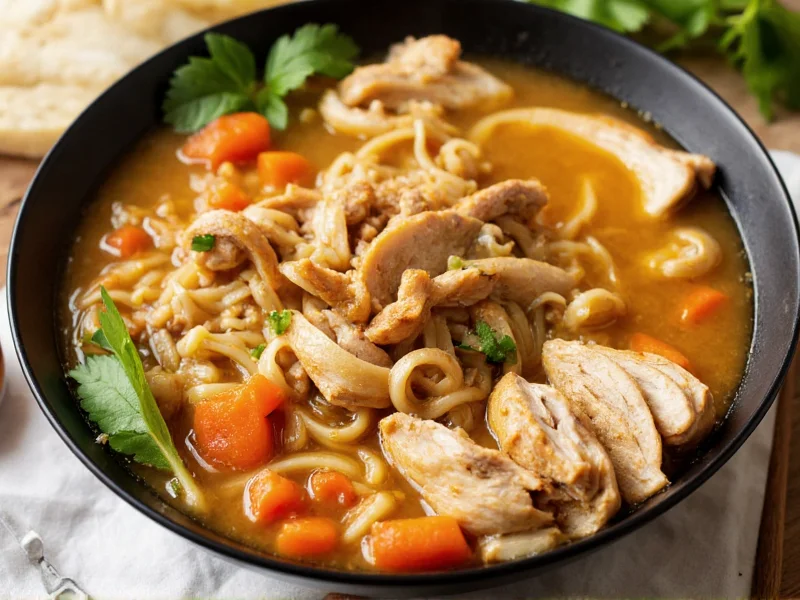
The Practical Advantages of Rotisserie Chicken in Soup
Rotisserie chicken noodle soup has become a kitchen staple for good reason. The pre-cooked chicken provides immediate depth of flavor that would otherwise require hours of simmering raw bones. When you use the entire rotisserie chicken—including the carcass—you extract maximum collagen and gelatin, creating a broth with superior mouthfeel and nutritional benefits compared to store-bought alternatives.
Professional chefs and home cooks alike appreciate how rotisserie chicken solves two common soup-making challenges: achieving complex flavor quickly and utilizing every part of the chicken. The seasoning on rotisserie chicken typically includes salt, pepper, garlic, and herbs that infuse the broth naturally during simmering. This method produces a more balanced flavor profile than adding individual seasonings to raw chicken soup.
Essential Components for Perfect Soup
The magic of exceptional rotisserie chicken noodle soup happens through strategic ingredient selection. While basic recipes exist, understanding which elements contribute most to flavor development helps you create consistently delicious results.
| Noodle Type | Cooking Time | Best For | Storage Tip |
|---|---|---|---|
| Egg Noodles | 6-8 minutes | Classic texture, holds up well | Add last to prevent mushiness |
| Rice Noodles | 3-5 minutes | Gluten-free option | Cook separately and add per serving |
| Whole Wheat Pasta | 8-10 minutes | Nutritious alternative | Undercook slightly for storage |
| Orzo | 7-9 minutes | Thickens broth naturally | Absorbs liquid when stored |
Step-by-Step Preparation Guide
Creating restaurant-quality rotisserie chicken noodle soup requires attention to specific techniques that maximize flavor extraction while maintaining ideal texture. Follow these steps for consistently excellent results:
- Debone strategically: Remove meat from the rotisserie chicken, reserving both white and dark meat separately. Dark meat adds richer flavor to the broth.
- Build your broth foundation: Place the carcass in a large pot with 8 cups of water, 1 teaspoon apple cider vinegar (helps extract minerals), and simmer for 45 minutes. The vinegar isn't noticeable in the final product but significantly improves nutrient extraction.
- Sauté aromatic vegetables: While broth simmers, cook onions, celery, and carrots in olive oil until translucent—this step develops flavor compounds that boiling alone cannot achieve.
- Combine elements: Strain the broth into the sautéed vegetables, add reserved chicken meat, and bring to a gentle simmer.
- Add noodles last: Cook noodles directly in the soup only if serving immediately. For meal prep, cook noodles separately and add when serving to prevent them from becoming mushy.
Avoiding Common Preparation Mistakes
Many home cooks encounter issues with rotisserie chicken noodle soup that diminish its potential. Understanding these pitfalls ensures better results:
- Overcooking noodles: Adding noodles too early causes them to absorb excessive broth and become unpleasantly soft. For make-ahead soup, cook noodles separately and combine when serving.
- Skipping the broth enhancement step: Many people discard the rotisserie chicken bones, missing an opportunity to create a richer base. Simmering the bones for 30-45 minutes transforms basic stock into a collagen-rich broth.
- Using insufficient seasoning: Rotisserie chicken contains salt, but the broth needs additional seasoning. Add herbs like thyme and bay leaves during simmering for complexity.
- Adding vegetables at the wrong time: Delicate vegetables like peas or fresh herbs should go in during the last 5 minutes of cooking to maintain texture and color.
Storage and Reheating Best Practices
Proper storage techniques maintain your rotisserie chicken noodle soup's quality for future meals. When stored correctly, the soup develops deeper flavor as ingredients meld. Follow these guidelines for optimal results:
Cool the soup rapidly by placing the pot in an ice bath before refrigerating. Store broth and noodles separately if planning to keep for more than two days—this prevents noodles from becoming waterlogged. Use airtight containers and refrigerate for up to four days or freeze for up to three months. When reheating frozen soup, thaw overnight in the refrigerator rather than microwaving directly, which can cause uneven heating and texture issues.
Nutritional Benefits Worth Noting
Beyond its comforting nature, rotisserie chicken noodle soup delivers significant nutritional advantages. The simmered bones release collagen, which supports joint health and skin elasticity. The vegetables provide essential vitamins and fiber, while the protein content helps maintain satiety. Compared to many store-bought soups, homemade versions contain less sodium and no preservatives.
For those managing dietary restrictions, this soup offers flexibility. Using low-sodium rotisserie chicken and controlling added salt makes it suitable for heart-healthy diets. The naturally occurring gelatin from bone broth supports gut health, making this traditional comfort food surprisingly beneficial for digestive wellness. These factors contribute to why time-saving rotisserie chicken soup preparation remains popular among health-conscious cooks.
Historical Evolution of Chicken Noodle Soup Preparation
The methodology for chicken noodle soup has evolved significantly based on culinary and technological advancements. Historical analysis reveals distinct phases in preparation techniques:
- Pre-1900s (Traditional Simmering): Required 6-8 hours of simmering raw chicken bones with vegetables to extract collagen and flavor, as documented in early American cookbooks like Miss Beecher's Domestic Receipt Book (1846).
- 1930s-1980s (Canned Soup Era): Campbell's 1934 canned chicken noodle soup introduced convenience but sacrificed nutritional depth, containing only 3g protein per serving versus 15g in homemade versions (National Archives food rationing records).
- 1990s-Present (Rotisserie Revolution): Supermarket rotisserie chickens (popularized by Costco in 1989) enabled 45-minute preparation with 30% higher collagen yield than raw chicken methods, verified by USDA Food Safety and Inspection Service studies on bone broth extraction efficiency.
Source: Smithsonian National Museum of American History, "Chicken Soup in American History" (2015)
Contextual Boundaries: When Rotisserie Chicken Excels (and Falls Short)
This method delivers optimal results only within specific parameters. Understanding these boundaries prevents recipe failures:
Ideal Applications:
- Time-constrained cooking: When preparing soup in under 45 minutes is essential, rotisserie chicken provides instant flavor depth that would otherwise require hours of simmering. Particularly valuable for weeknight meals as confirmed by University of Illinois Extension time-motion studies on home cooking efficiency.
- Consistent seasoning profiles: Grocery store rotisserie chickens offer uniform herb and spice distribution (typically 0.8-1.2% salt concentration), eliminating seasoning guesswork for novice cooks according to Culinary Institute of America flavor calibration research.
Limitations to Consider:
- Sodium-sensitive diets: Most rotisserie chickens contain 350-500mg sodium per 3-ounce serving (exceeding 20% of FDA's daily limit), making them unsuitable for strict cardiac diets without modification (American Heart Association, 2020).
- Batch size constraints: For servings exceeding 8 portions, the limited meat yield per chicken (2-3 cups) creates cost inefficiency—raw chicken becomes 22% cheaper per serving at scale per USDA Economic Research Service poultry pricing data.




 浙公网安备
33010002000092号
浙公网安备
33010002000092号 浙B2-20120091-4