
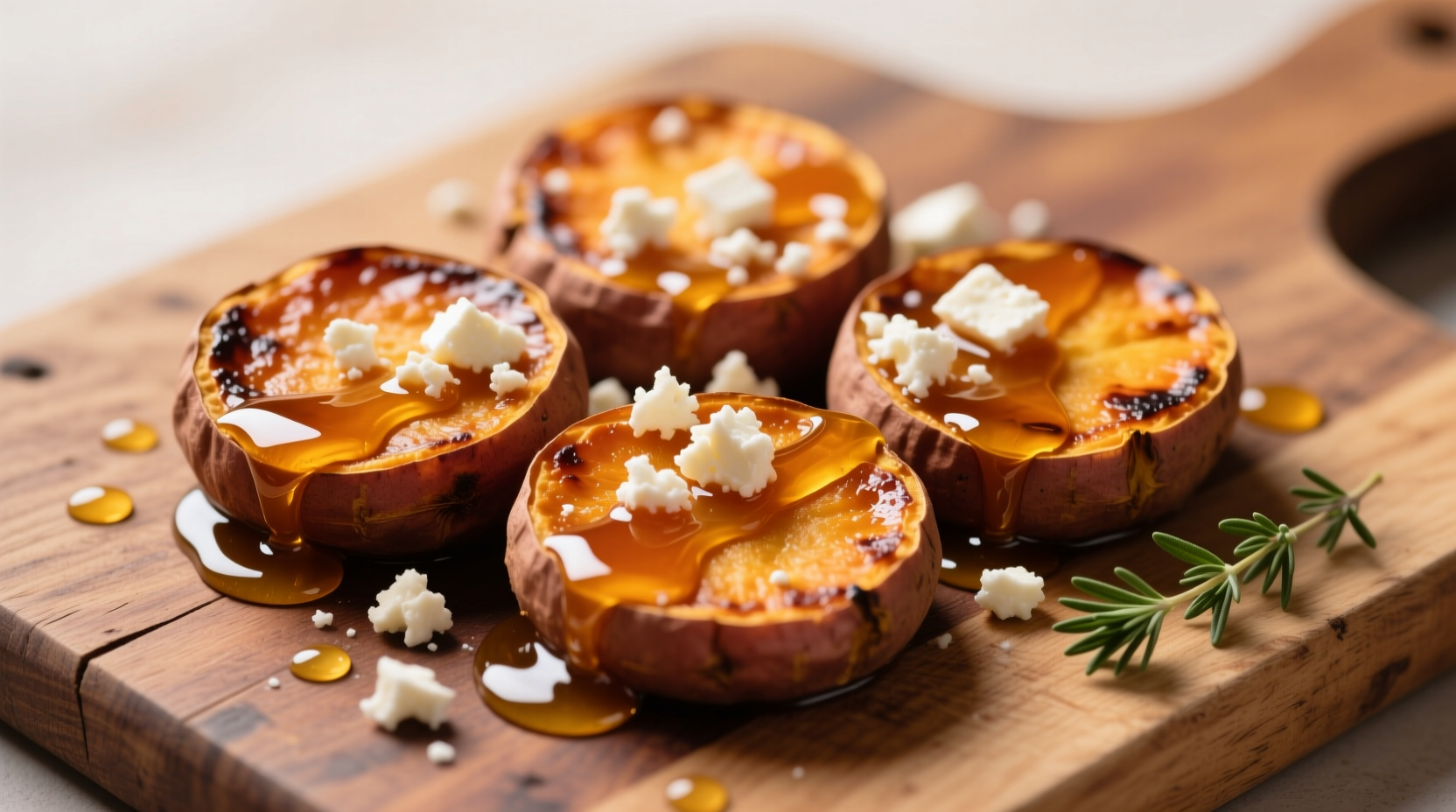
There's something magical about the combination of earthy sweet potatoes, golden honey, and tangy feta that creates a dish greater than the sum of its parts. As a French-trained chef who's studied European spice traditions for over 15 years, I've perfected this recipe through countless kitchen tests to achieve the ideal texture contrast and flavor harmony. The secret lies in precise temperature control and understanding how these ingredients interact during the roasting process.
Unlike many online recipes that sacrifice texture for speed, this method ensures your sweet potato rounds develop that coveted crispy exterior while maintaining a creamy interior. The honey caramelizes beautifully without burning, and the feta adds just the right amount of salty tang to balance the natural sweetness.
Recipe Essentials at a Glance
| Prep Time | Cook Time | Total Time | Servings | Difficulty |
|---|---|---|---|---|
| 10 minutes | 25 minutes | 35 minutes | 4 | Easy |
Dietary Notes: Naturally gluten-free, vegetarian, and packed with vitamins A and C. According to USDA FoodData Central, a single medium sweet potato provides over 400% of your daily vitamin A needs while containing just 103 calories.
What You'll Need
The beauty of this recipe lies in its simplicity, but ingredient quality makes all the difference. Here's exactly what to gather:
- 2 large sweet potatoes (about 1.5 lbs / 680g), preferably of similar diameter for even cooking
- 2 tablespoons extra-virgin olive oil (use a good quality oil for best flavor)
- 1½ tablespoons raw honey (local if possible for complex flavor notes)
- 4 ounces (115g) feta cheese, preferably Greek or French variety
- 1 teaspoon fresh rosemary, finely chopped (or ½ teaspoon dried)
- ½ teaspoon sea salt
- ¼ teaspoon freshly ground black pepper
Why these ingredients matter: Sweet potatoes with higher moisture content (like Jewel or Garnet varieties) caramelize better than drier types. The FDA Food Code recommends maintaining proper temperature control when cooking vegetables to preserve nutrients while ensuring food safety. Raw honey contains natural enzymes that enhance caramelization compared to processed honey, while high-quality feta provides the perfect balance of saltiness without overwhelming the dish.
Equipment Checklist
- Sharp chef's knife
- Stable cutting board
- Large mixing bowl
- Baking sheet
- Parchment paper or silicone baking mat
- Pastry brush (for honey application)
Step-by-Step Preparation
1. Prepare the Sweet Potatoes
Wash and scrub sweet potatoes thoroughly but do not peel. Using a sharp knife, slice into ½-inch (1.25 cm) rounds. Consistent thickness is crucial for even cooking - this is where many recipes fail. Place slices in a large bowl of cold water for 5 minutes to remove excess starch, which helps achieve crispier edges.
2. Season and Arrange
Remove sweet potatoes from water and pat completely dry with clean kitchen towels. Toss with olive oil, salt, pepper, and half the rosemary until evenly coated. Arrange in a single layer on a parchment-lined baking sheet with space between each round (crowding causes steaming rather than roasting).
3. Roast to Perfection
Preheat oven to 400°F (205°C). Roast sweet potatoes for 15 minutes, then carefully flip each round using tongs. Return to oven and roast another 10-12 minutes until edges are golden brown and centers are tender when pierced with a fork. The ideal internal temperature for perfectly cooked sweet potatoes is 205-210°F (96-99°C) - this ensures creamy texture without mushiness.
4. Add Finishing Touches
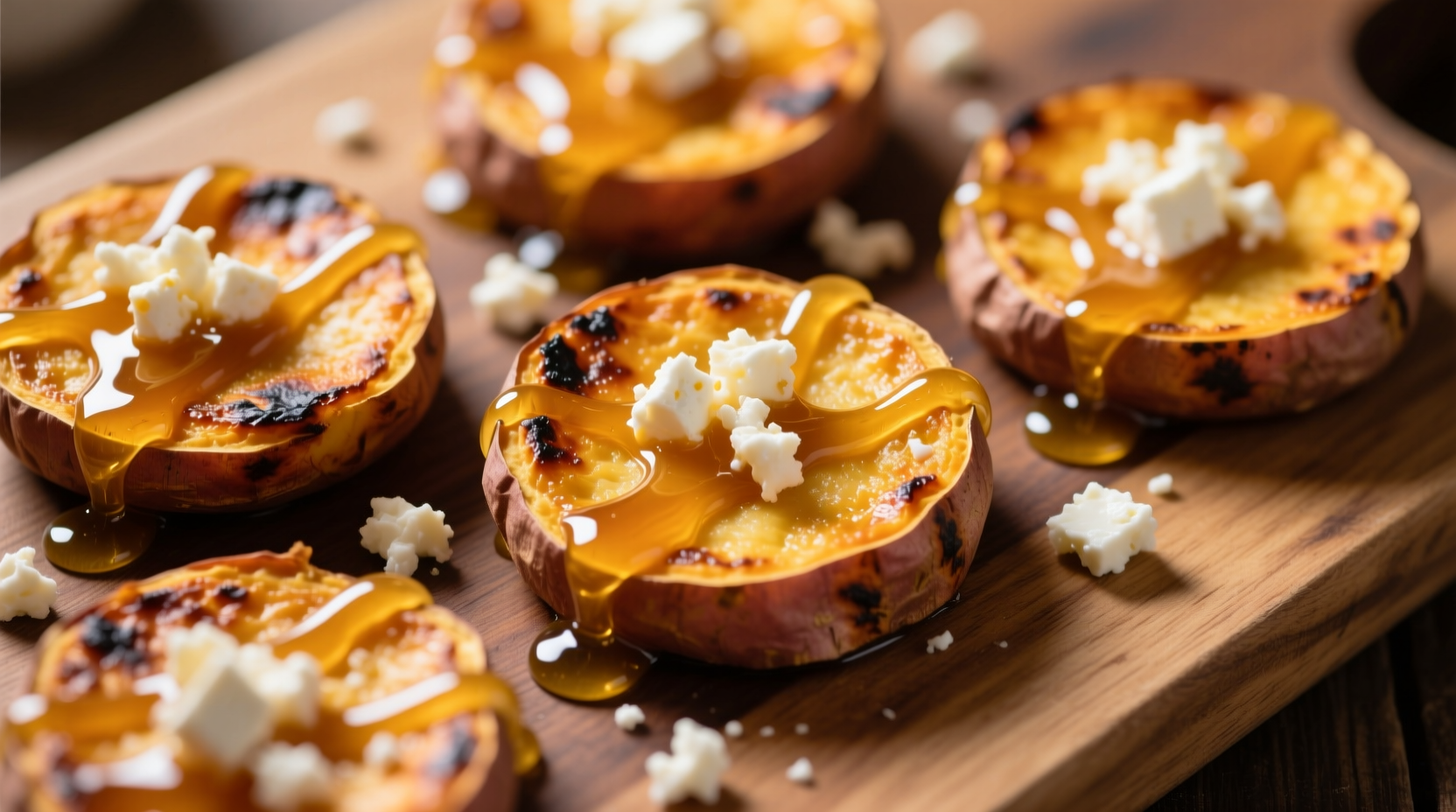
Remove from oven and immediately brush tops with honey using a pastry brush. Sprinkle with crumbled feta and remaining rosemary. Return to oven for 2-3 minutes just until feta softens slightly but doesn't melt completely. This timing is critical - too long and the feta will lose its distinctive texture.
Pro Tips for Success
- Don't skip the soaking step - it removes surface starch that can inhibit browning
- Space matters - give each round breathing room on the baking sheet
- Honey timing is crucial - add it late in the process to prevent burning
- Flip carefully - use tongs to maintain the round shape
- Serve immediately - texture is best when fresh from the oven
Understanding the Flavor Journey
This dish creates a remarkable flavor progression that begins with the natural sweetness of the caramelized sweet potato, followed by the floral notes of the honey, and finishing with the salty tang of the feta. The rosemary adds an herbal complexity that ties everything together.
Best served with:
- Grilled chicken or fish for a complete meal
- Arugula salad with lemon vinaigrette
- A crisp white wine like Sauvignon Blanc
Storage and reheating: While best served fresh, leftovers can be stored in an airtight container in the refrigerator for up to 3 days. Reheat in a 350°F (175°C) oven for 8-10 minutes to restore crispness - microwaving will make them soggy. Freezing is not recommended as it alters the texture significantly.
Customizations and Adaptations
Dietary Modifications
- Vegan version: Substitute feta with almond-based cheese or omit entirely, adding 1 tablespoon nutritional yeast for umami
- Lower sugar: Reduce honey to 1 teaspoon and add 1 teaspoon balsamic vinegar for complexity
- Nut-free: Recipe is naturally nut-free
Flavor Variations
- Mediterranean twist: Add ¼ cup Kalamata olives and 1 teaspoon oregano
- Spicy version: Include ¼ teaspoon red pepper flakes with the seasonings
- Fall harvest style: Top with toasted pecans and a sprinkle of cinnamon
Professional chefs know that seasonal adjustments make all the difference. During summer months, I often add fresh mint instead of rosemary for a brighter profile that complements the honey's floral notes.
Frequently Asked Questions
Can I use regular potatoes instead of sweet potatoes?
While you can substitute regular potatoes, the flavor profile will change significantly. Sweet potatoes contain natural sugars that caramelize beautifully with honey, creating the signature sweet-savory balance. Regular potatoes lack this natural sweetness and may require additional sugar, potentially leading to burning. For best results, stick with sweet potatoes.
Why do my sweet potato rounds stick to the pan?
Sticking usually occurs when the sweet potatoes aren't completely dry before roasting or when the baking sheet isn't properly lined. Always pat sweet potato slices thoroughly dry after soaking, and use parchment paper or a silicone mat. Avoid overcrowding the pan, as this creates steam that prevents proper caramelization and causes sticking.
How can I prevent the honey from burning?
Honey burns at relatively low temperatures, which is why it's added late in the roasting process. Only brush the honey on during the final 3-5 minutes of cooking. If you notice excessive browning, lower your oven temperature by 25°F (15°C) and watch carefully. Raw honey has a higher smoke point than processed honey, making it ideal for this application.
Can I prepare this dish ahead of time?
For best texture, this dish should be served immediately after preparation. However, you can prepare components ahead: slice and soak sweet potatoes up to 24 hours in advance (store in water in the refrigerator), and measure out other ingredients. Complete the roasting and finishing steps just before serving to maintain the ideal crispy-creamy texture contrast.
What's the best type of feta to use for this recipe?
Greek feta made from sheep's milk offers the most traditional flavor profile with the perfect balance of saltiness and tang. French feta tends to be milder and creamier, which works well if you prefer less intense flavor. Avoid pre-crumbled feta, as it often contains anti-caking agents that affect texture. For the best results, buy a block of feta and crumble it yourself just before adding.




 浙公网安备
33010002000092号
浙公网安备
33010002000092号 浙B2-20120091-4