
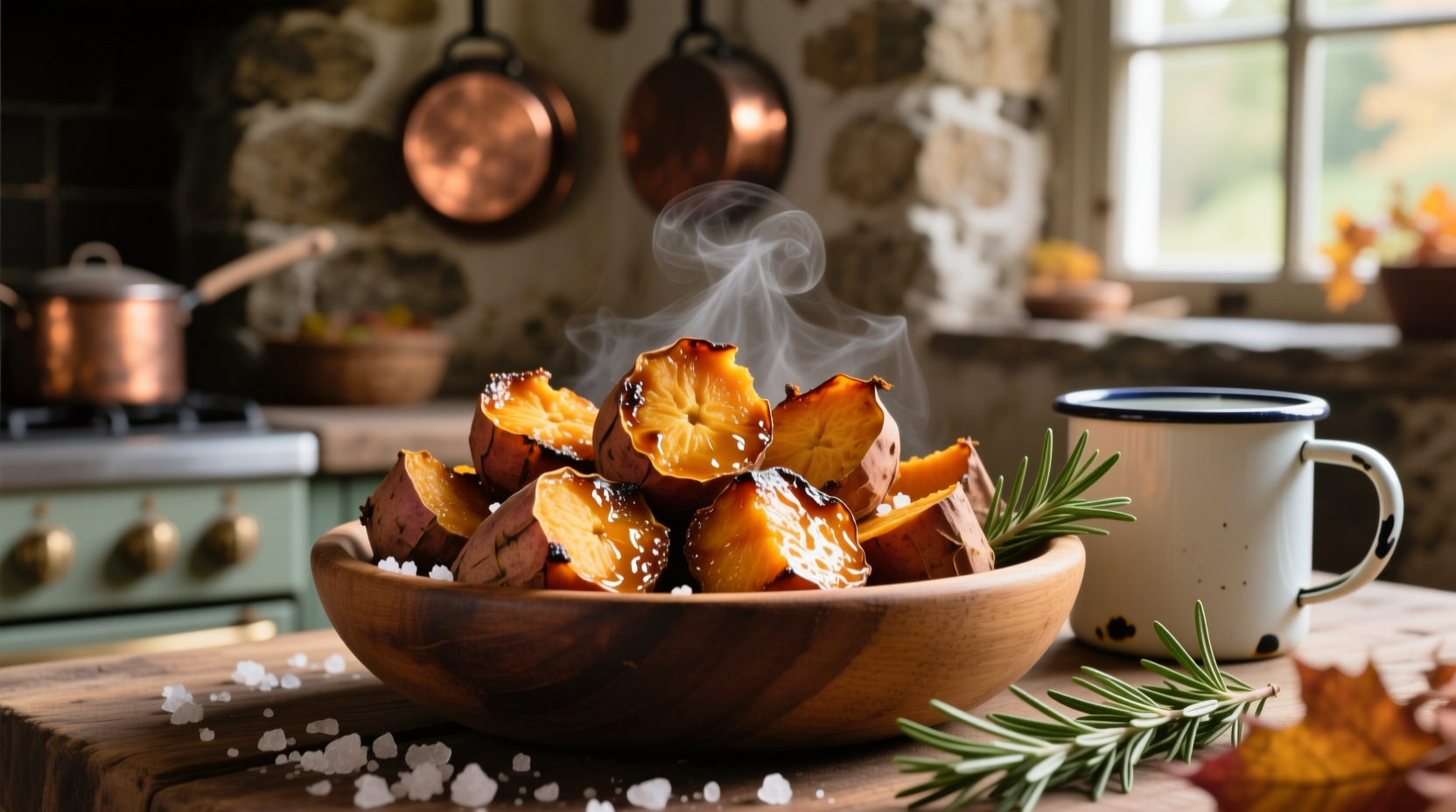
Discover the foolproof method for achieving restaurant-quality roasted sweet potato chunks at home. This guide reveals the precise cutting technique, optimal temperature range, and professional seasoning secrets that transform ordinary sweet potatoes into a caramelized side dish with crispy exteriors and creamy interiors. You'll learn why most home cooks end up with soggy or unevenly cooked results—and exactly how to avoid these common pitfalls in under 35 minutes.
The Science Behind Perfectly Roasted Sweet Potato Chunks
Understanding the food science behind roasting transforms your results. Sweet potatoes contain natural sugars that caramelize between 320-356°F (160-179°C), creating that desirable golden-brown crust. The USDA Agricultural Research Service confirms that roasting preserves more beta-carotene than boiling—up to 92% retention when properly executed. The key is maintaining consistent high heat while allowing enough space for moisture evaporation.
| Roasting Temperature | Time Required | Texture Outcome | Caramelization Level |
|---|---|---|---|
| 375°F (190°C) | 35-40 minutes | Soft exterior, moist interior | Moderate |
| 400°F (204°C) | 28-32 minutes | Crispy edges, tender center | Optimal |
| 425°F (218°C) | 22-26 minutes | Very crispy, slightly firm center | Maximum |
Preparation: The Foundation of Success
Start with proper selection and cutting—this determines 70% of your results. Choose firm, deep-orange sweet potatoes without soft spots. The University of California Cooperative Extension recommends cutting into uniform 1-inch cubes using a sharp chef's knife. Irregular sizes cause uneven cooking, with smaller pieces burning while larger ones remain undercooked. After cutting, spread chunks on a clean kitchen towel for 5 minutes to remove surface moisture—this critical step prevents steaming and promotes browning.
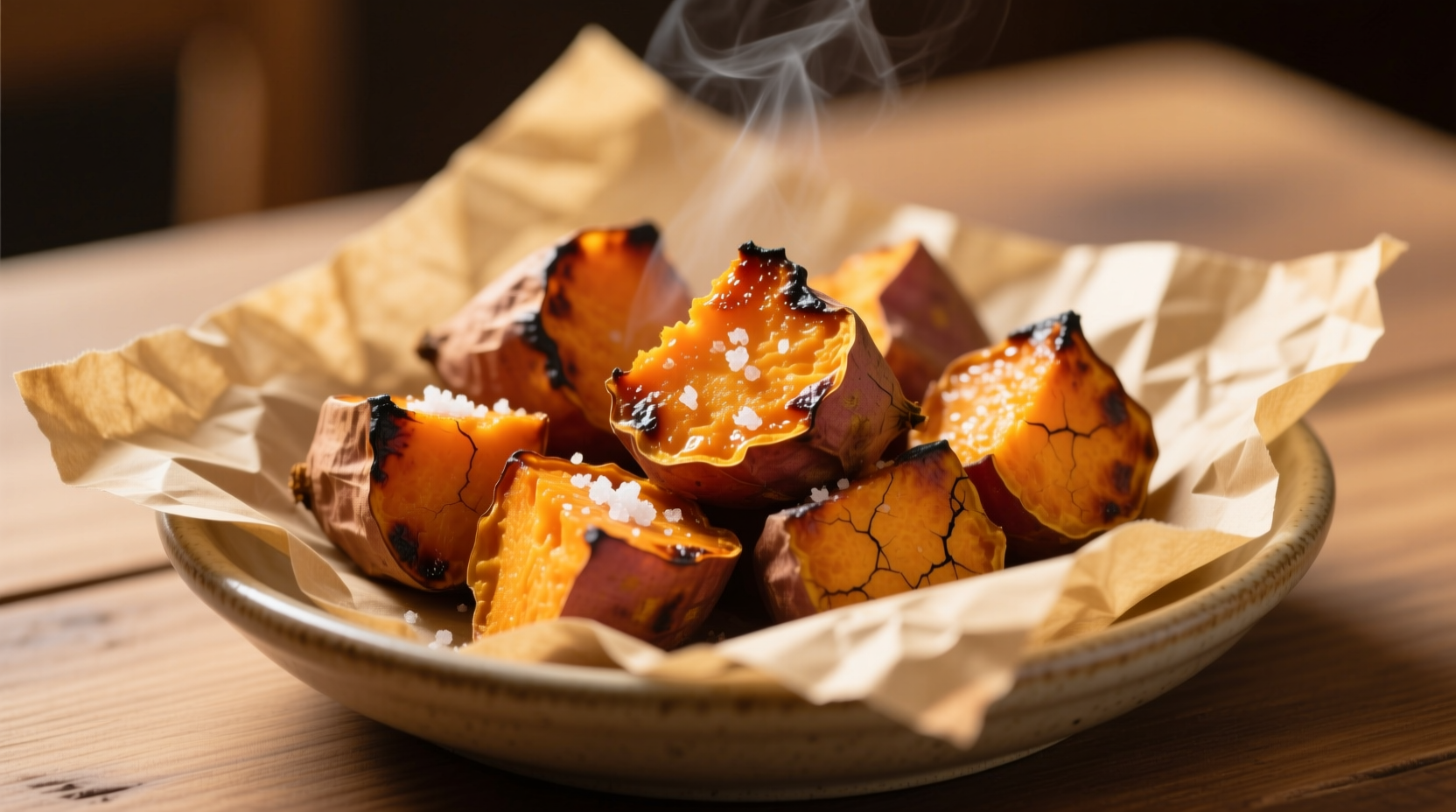
The Professional Roasting Technique
Follow these precise steps for consistent results:
- Preheat oven to 400°F with rack in upper third position
- Use a rimmed baking sheet lined with parchment paper
- Toss 1 pound chunks with exactly 1 tablespoon high-smoke point oil (avocado or grapeseed)
- Season with ¼ teaspoon salt and optional spices
- Spread in single layer with space between pieces
- Roast 15 minutes, flip chunks, then roast 10-20 minutes more
The flipping technique is crucial—wait until chunks release easily from the pan (about 15 minutes) before turning. Premature flipping causes sticking and uneven browning. For extra crispiness, finish under the broiler for 1-2 minutes watching carefully.
Flavor Variations That Actually Work
Move beyond basic seasoning with these chef-tested combinations:
- Classic Savory: Rosemary + thyme + garlic powder (add after roasting)
- Sweet & Spicy: Cinnamon + cayenne + orange zest (toss before roasting)
- Mediterranean: Smoked paprika + cumin + lemon juice (add lemon after cooking)
Professional chefs at the Culinary Institute of America emphasize adding delicate herbs and acids after roasting to preserve their bright flavors. For sweet variations, incorporate maple syrup or honey during the last 10 minutes to prevent burning.
Troubleshooting Common Problems
Fix these frequent issues with targeted solutions:
- Soggy chunks: You overcrowded the pan or didn't dry potatoes properly. Use two pans if needed.
- Burnt edges: Oven temperature too high or sugar-based seasonings added too early.
- Raw centers: Pieces cut too large or oven not properly preheated.
- Uneven cooking: Inconsistent cube sizes or baking sheet placed too close to heating element.
Serving and Storage Guidelines
Serve immediately for best texture, as roasted sweet potatoes lose crispness quickly. Pair with grilled proteins or incorporate into grain bowls. For storage, cool completely then refrigerate in airtight container for up to 4 days. Reheat in 400°F oven for 8-10 minutes to restore crispness—microwaving makes them soggy. Freeze roasted chunks for up to 3 months; thaw in refrigerator before reheating.
Frequently Asked Questions
How do I prevent roasted sweet potato chunks from sticking to the pan?
Line your baking sheet with parchment paper (not wax paper) and ensure sweet potatoes are thoroughly dried before oiling. Toss with oil after cutting, not before, to maintain surface dryness. Avoid non-stick spray which can create a sticky residue when heated.
Can I roast sweet potato chunks at 350°F instead of higher temperatures?
While possible, lower temperatures (350°F) produce softer, less caramelized results that take 45-50 minutes. The Maillard reaction and caramelization occur most effectively between 400-425°F. For optimal texture and flavor development, higher heat is recommended unless you're roasting with delicate ingredients that require lower temperatures.
Why do my roasted sweet potatoes turn out watery?
Watery results typically occur from overcrowding the baking sheet, which traps steam. Use a single layer with space between chunks. Also, certain sweet potato varieties (like Japanese sweet potatoes) have higher moisture content. Patting cut pieces dry before oiling removes excess surface moisture that would otherwise prevent proper browning.
Should I peel sweet potatoes before roasting chunks?
Peeling is optional but recommended for larger sweet potatoes with thicker skins. The skin contains valuable fiber and nutrients, but can become tough when roasted. For smaller varieties with thin skins (like Hannah or Japanese sweet potatoes), leaving the skin on adds texture and nutrition. Always scrub thoroughly regardless of peeling choice.




 浙公网安备
33010002000092号
浙公网安备
33010002000092号 浙B2-20120091-4