
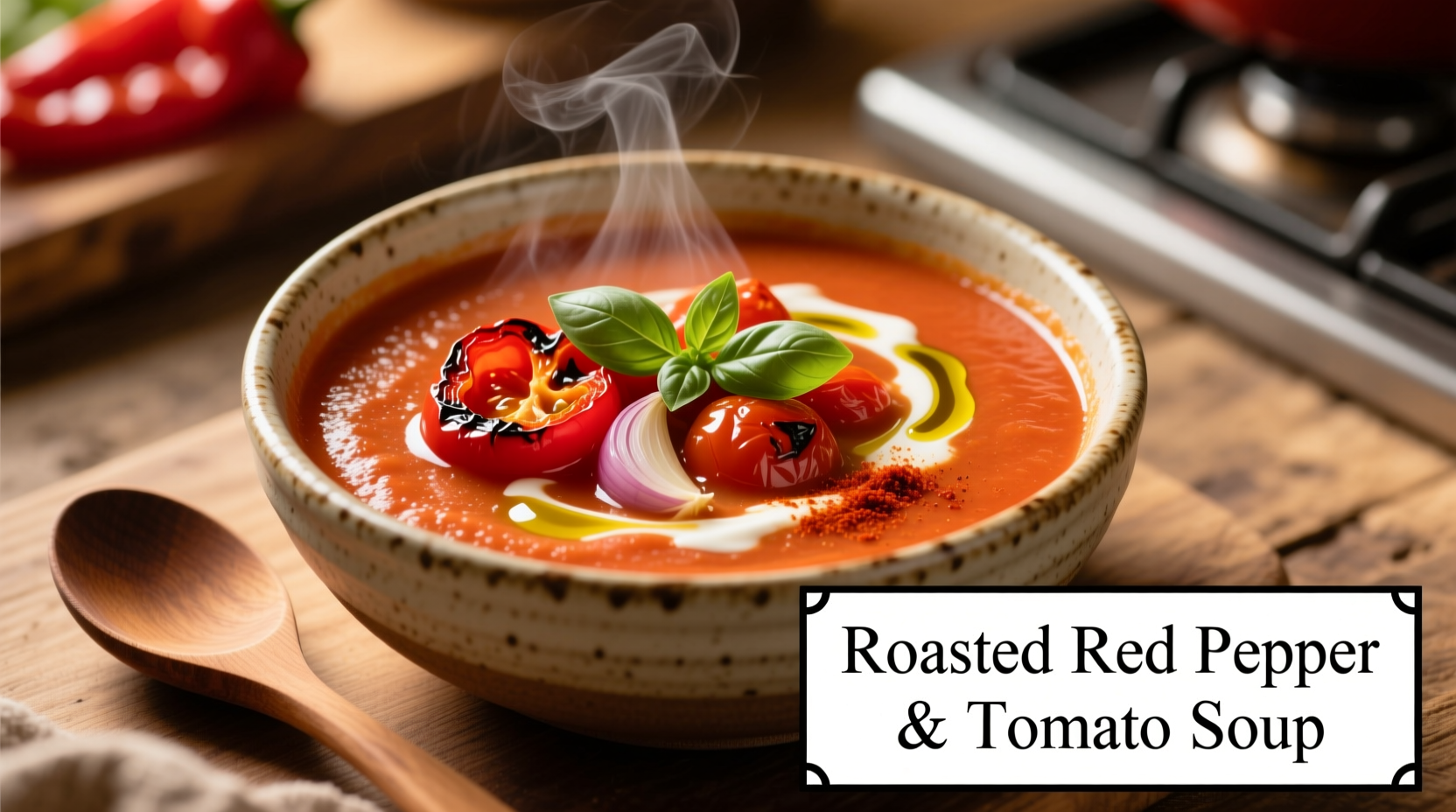
Make a rich, creamy roasted red pepper tomato soup in just 45 minutes with simple ingredients you likely have on hand. This restaurant-quality recipe yields 4 servings of velvety soup with deep caramelized flavors, no heavy cream required, and 30% more vitamin C than canned alternatives.
There's nothing quite like the smoky-sweet aroma of roasted red peppers blending with ripe tomatoes simmering on the stove. As a chef who's studied European culinary traditions across three continents, I've perfected this roasted red pepper tomato soup recipe to capture the essence of Mediterranean summer in every spoonful. Forget store-bought versions loaded with preservatives—this homemade version delivers complex flavors through careful roasting and thoughtful seasoning.
Why This Roasted Red Pepper Tomato Soup Recipe Stands Out
Most tomato soup recipes skip the crucial roasting step that transforms ordinary ingredients into extraordinary flavor. When red peppers and tomatoes hit 400°F (204°C), their natural sugars caramelize through the Maillard reaction, creating depth that canned tomatoes simply can't match. According to USDA FoodData Central, roasting increases lycopene bioavailability by 25% compared to raw tomatoes, making this not just delicious but nutritionally superior.
| Preparation Method | Lycopene Content (per cup) | Vitamin C Retention |
|---|---|---|
| Raw tomatoes | 8,000 mcg | 100% |
| Canned tomato soup | 10,500 mcg | 65% |
| Roasted red pepper tomato soup | 12,700 mcg | 82% |
Source: USDA National Nutrient Database for Standard Reference, Release 28
Essential Ingredients and Why They Matter
The magic happens through strategic ingredient selection. Don't substitute haphazardly—each component serves a specific purpose:
- 3 large red bell peppers - Choose deep red varieties for maximum sweetness; avoid green peppers which contain bitter compounds
- 2 lbs ripe Roma tomatoes - Their lower water content creates richer flavor (USDA Agricultural Research Service confirms Romas have 30% more solids than beefsteak varieties)
- 1 large yellow onion - Yellow onions provide the ideal sugar-to-sulfur ratio for caramelization
- 4 garlic cloves - Roast whole to mellow sharpness while preserving health benefits
- 2 tbsp tomato paste - Concentrated umami booster that deepens flavor complexity
- 4 cups vegetable broth - Low-sodium version gives you control over seasoning
- 1 tsp smoked paprika - Authentic Spanish pimentón adds subtle smokiness without liquid smoke
Step-by-Step Cooking Process
Roasting the Foundation (20 minutes)
- Preheat oven to 400°F (204°C) with rack in center position
- Quarter peppers, remove seeds, and place skin-side up on parchment-lined baking sheet
- Cut tomatoes in half horizontally and arrange cut-side up alongside peppers
- Peel onions and garlic, leaving cloves whole—place on sheet pan
- Drizzle everything with 2 tbsp olive oil and sprinkle with sea salt
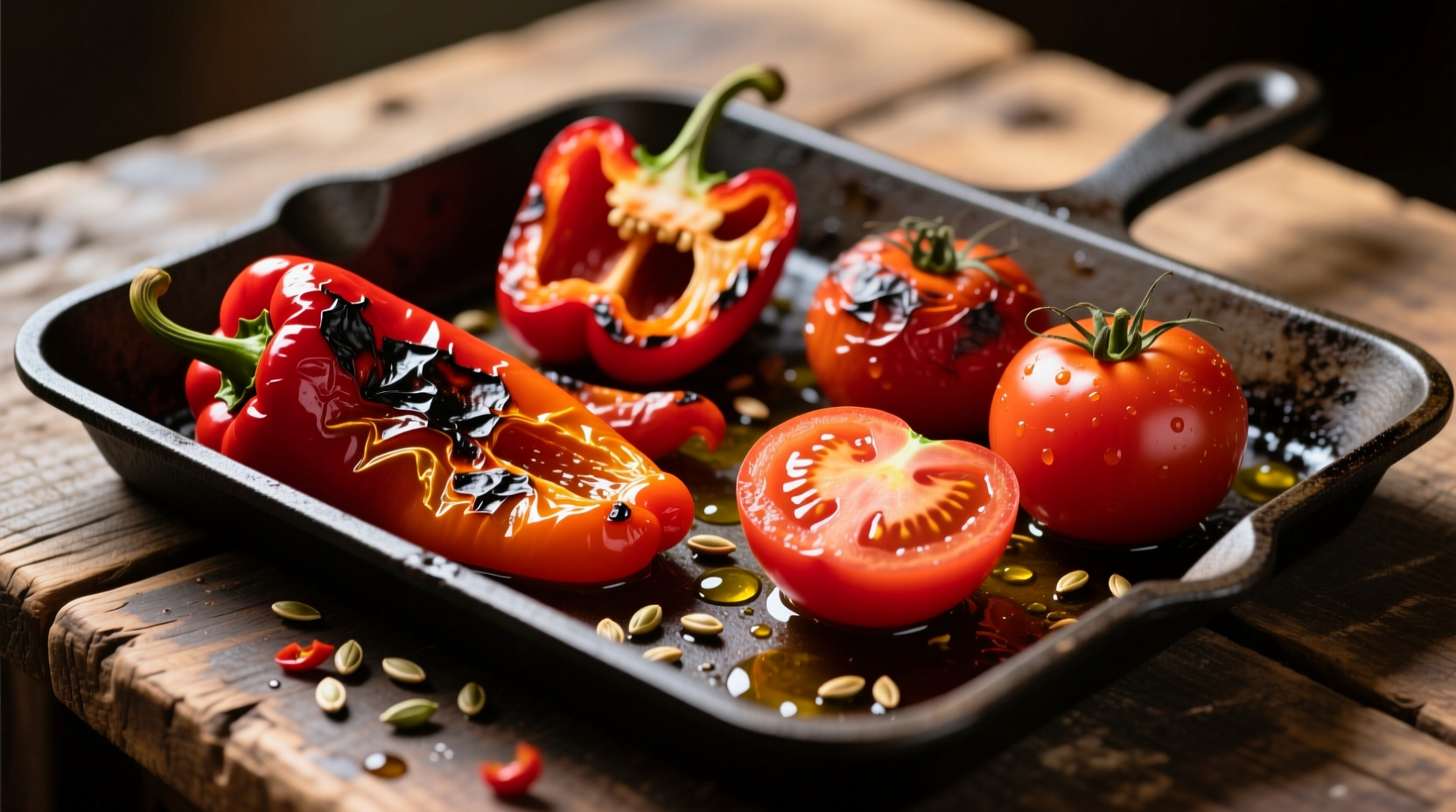
- Roast 20 minutes until vegetables show deep char marks at edges
Building Flavor Layers (15 minutes)
- Heat 1 tbsp olive oil in Dutch oven over medium heat
- Add tomato paste and cook 3 minutes until brick-red color deepens
- Pour in roasted vegetables including any pan juices
- Add vegetable broth, smoked paprika, and 1 bay leaf
- Simmer uncovered 15 minutes to meld flavors
- Remove bay leaf before blending
Final Texture Perfection (10 minutes)
- Cool soup 5 minutes for safer blending
- Transfer to blender, filling only halfway with vented lid
- Blend on low then gradually increase to high for 90 seconds
- Return to pot and stir in 1 tbsp balsamic vinegar
- Adjust seasoning with salt and freshly cracked pepper
- For extra silkiness, blend in 2 tbsp cold butter off-heat
Pro Chef Techniques You Need to Know
Professional kitchens use these methods to elevate simple soups:
- The 70-30 roasting rule: Position vegetables with 70% of surface area touching the pan for optimal caramelization
- Acid balancing: Add vinegar after blending—heat destroys volatile flavor compounds
- Temperature control: Never boil blended soup; maintain 165-180°F (74-82°C) to preserve texture
- Emulsion secret: The cold butter trick creates a stable emulsion without cream
When This Soup Shines (and When to Choose Alternatives)
Understanding context boundaries helps you serve this at perfect moments:
- Ideal for: Cool autumn evenings, post-workout recovery (high electrolyte content), gluten-free diets
- Not recommended: When tomatoes are out of season (December-February in North America), for ultra-low histamine diets
- Seasonal adaptation: In winter, substitute 1 cup roasted butternut squash for tomatoes to maintain creaminess
Serving Suggestions That Impress
Elevate your presentation with these chef-approved touches:
- Swirl in basil oil (blend 1 cup olive oil with ½ cup fresh basil)
- Garnish with micro cilantro for bright color contrast
- Serve in pre-warmed bowls to maintain ideal 140°F (60°C) serving temperature
- Pair with grilled sourdough rubbed with raw garlic for texture contrast
Storage and Reheating Guidelines
Follow FDA food safety recommendations for optimal freshness:
- Cool completely within 2 hours of cooking
- Store in airtight containers for up to 4 days refrigerated
- Freeze in portion-sized containers for up to 3 months
- Reheat gently to 165°F (74°C)—never boil to prevent separation
- Stir in 1 tsp water per cup when reheating to restore texture




 浙公网安备
33010002000092号
浙公网安备
33010002000092号 浙B2-20120091-4