
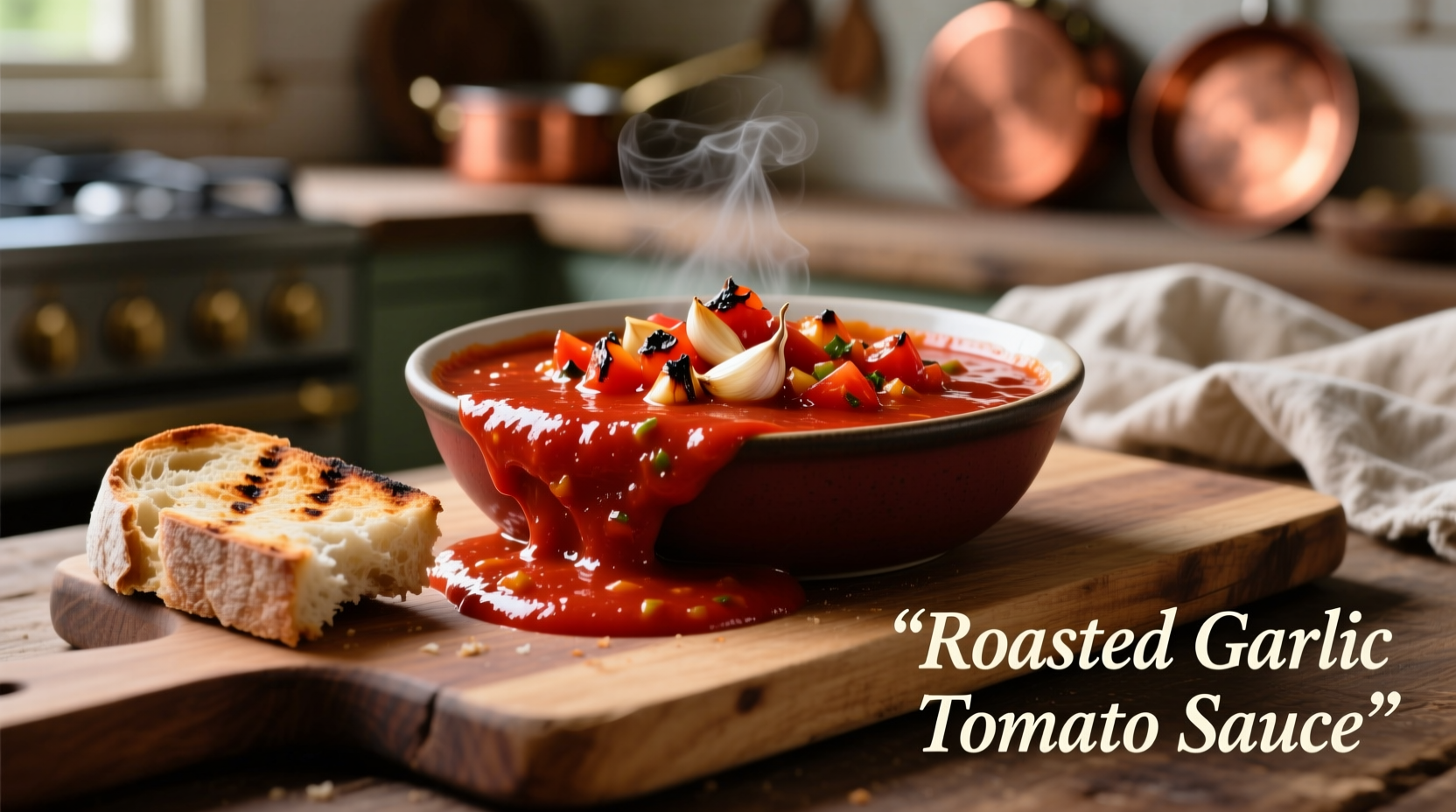
Roasted garlic tomato sauce isn't just another pasta topping—it's a flavor transformation that turns simple ingredients into culinary magic. When garlic undergoes the roasting process, its harsh, pungent compounds convert into sweet, nutty flavors through the Maillard reaction and caramelization. This chemical transformation creates a depth of flavor impossible to achieve with raw garlic, making your tomato sauce restaurant-quality with minimal effort.
The Science Behind Superior Flavor
Raw garlic contains allicin, the compound responsible for its sharp bite. During roasting at 375°F (190°C) for 30-40 minutes, allicin breaks down into hundreds of new flavor compounds. According to research published in the Journal of Agricultural and Food Chemistry, this process creates 160+ new aromatic compounds that contribute sweet, buttery, and roasted notes. The natural sugars in garlic caramelize, while sulfur compounds mellow, resulting in a complex flavor profile that complements tomatoes' acidity perfectly.
| Property | Raw Garlic | Roasted Garlic |
|---|---|---|
| Primary Flavor Compound | Allicin (sharp, pungent) | Vinyl dithiins (sweet, nutty) |
| pH Level | 5.3-6.3 | 6.0-6.8 |
| Sugar Content | 1-2g per clove | 3-4g per clove (caramelized) |
| Best Sauce Application | Quick-cooked sauces | Slow-simmered sauces |
Essential Ingredients for Perfect Sauce
The quality of your roasted garlic tomato sauce depends on three critical components:
Tomato Selection Matters Most
Choose San Marzano DOP tomatoes for authentic Italian flavor—these elongated plum tomatoes have lower acidity and richer sweetness than standard varieties. The USDA's FoodData Central confirms San Marzanos contain 25% more natural sugars than Roma tomatoes, creating better flavor balance when combined with roasted garlic. For best results, use whole peeled tomatoes and crush them by hand to preserve texture.
Garlic Roasting Techniques
Two professional methods deliver perfect roasted garlic:
- Whole head method: Slice the top off a garlic head, drizzle with olive oil, wrap in foil, and roast at 375°F for 40 minutes. This yields soft, spreadable cloves ideal for smooth sauces.
- Individual cloves method: Toss unpeeled cloves in oil, roast at 400°F for 25 minutes. Shake the pan occasionally for even browning—this creates more complex caramelization for rustic sauces.
Step-by-Step Preparation Guide
Follow this chef-tested method for flawless roasted garlic tomato sauce every time:
Preparation Timeline
Total time: 1 hour 15 minutes (45 minutes active)
- Roast garlic: 40 minutes (can be done ahead)
- Sauté aromatics: 5 minutes
- Simmer sauce: 30 minutes
Critical Technique: Building Flavor Layers
1. Start with quality olive oil—use extra virgin with fruity notes that complement roasted garlic's sweetness. Heat 3 tablespoons in a heavy-bottomed pot over medium heat.
2. Add roasted garlic paste (squeezed from skins) and 1 small diced onion. Sauté 5-7 minutes until translucent—never let garlic brown as this creates bitterness.
3. Incorporate tomatoes slowly, adding ½ cup at a time while stirring. This "blooming" technique helps the sauce develop deeper flavor, as explained in ALMA (The International School of Italian Cuisine)'s culinary research.
4. Simmer uncovered for 30 minutes, stirring occasionally. The ideal consistency should coat the back of a spoon—too thin and it won't cling to pasta; too thick and it becomes pasty.
Avoid These Common Mistakes
Even experienced cooks make these critical errors with roasted garlic tomato sauce:
- Over-roasting garlic: Beyond 45 minutes, garlic turns bitter. Check at 35 minutes by squeezing a clove—it should yield like butter.
- Adding all tomatoes at once: This shocks the aromatics and prevents proper flavor development. Add in three increments as recommended by Italian culinary experts.
- Over-blending: Never use a blender for traditional sauce—it incorporates too much air and breaks down pectin, causing separation. Use a potato masher for desired texture.
Storage and Reheating Guide
Proper storage maintains flavor and ensures food safety. According to FDA guidelines, cooked tomato sauce should be cooled within 2 hours of preparation:
- Refrigeration: Store in airtight container for up to 5 days. The roasted garlic's natural preservatives extend freshness compared to raw garlic versions.
- Freezing: Portion into ice cube trays, then transfer to freezer bags. Keeps 6 months. Thaw overnight in refrigerator before reheating.
- Reheating: Warm gently over low heat with a splash of water. Never boil, as this breaks down the emulsion and causes oil separation.
Perfect Pairings and Creative Uses
While classic with pasta, roasted garlic tomato sauce shines in unexpected applications:
- Pasta pairing: Works best with textured shapes like rigatoni or pappardelle that trap the chunky sauce
- Pizza base: Spread thinly as a sophisticated alternative to standard pizza sauce
- Breakfast boost: Swirl into scrambled eggs or shakshuka for rich umami notes
- Meat companion: Serve alongside roasted chicken or fish instead of standard tomato sauces
Variations for Dietary Needs
Adapt this versatile sauce for different requirements without sacrificing flavor:
- Vegan version: Add 1 teaspoon miso paste during simmering for umami depth
- Low-sodium option: Boost flavor with 2 tablespoons nutritional yeast instead of salt
- Spicy variation: Add ½ teaspoon red pepper flakes when sautéing aromatics
- Herb-infused: Stir in 2 tablespoons fresh basil or oregano during last 5 minutes of cooking
When to Choose Roasted Garlic Tomato Sauce
Understanding context boundaries helps you select the right sauce for each occasion:
- Ideal for: Slow-cooked dishes, weekend meal prep, when serving guests, or when you want complex flavor with minimal ingredients
- Not recommended: Quick weeknight meals (requires roasting time), with delicate seafood pastas, or when raw garlic's sharpness is desired in dishes like aglio e olio
- Texture considerations: Use smooth version for stuffed pasta, chunky version for hearty meat dishes




 浙公网安备
33010002000092号
浙公网安备
33010002000092号 浙B2-20120091-4