
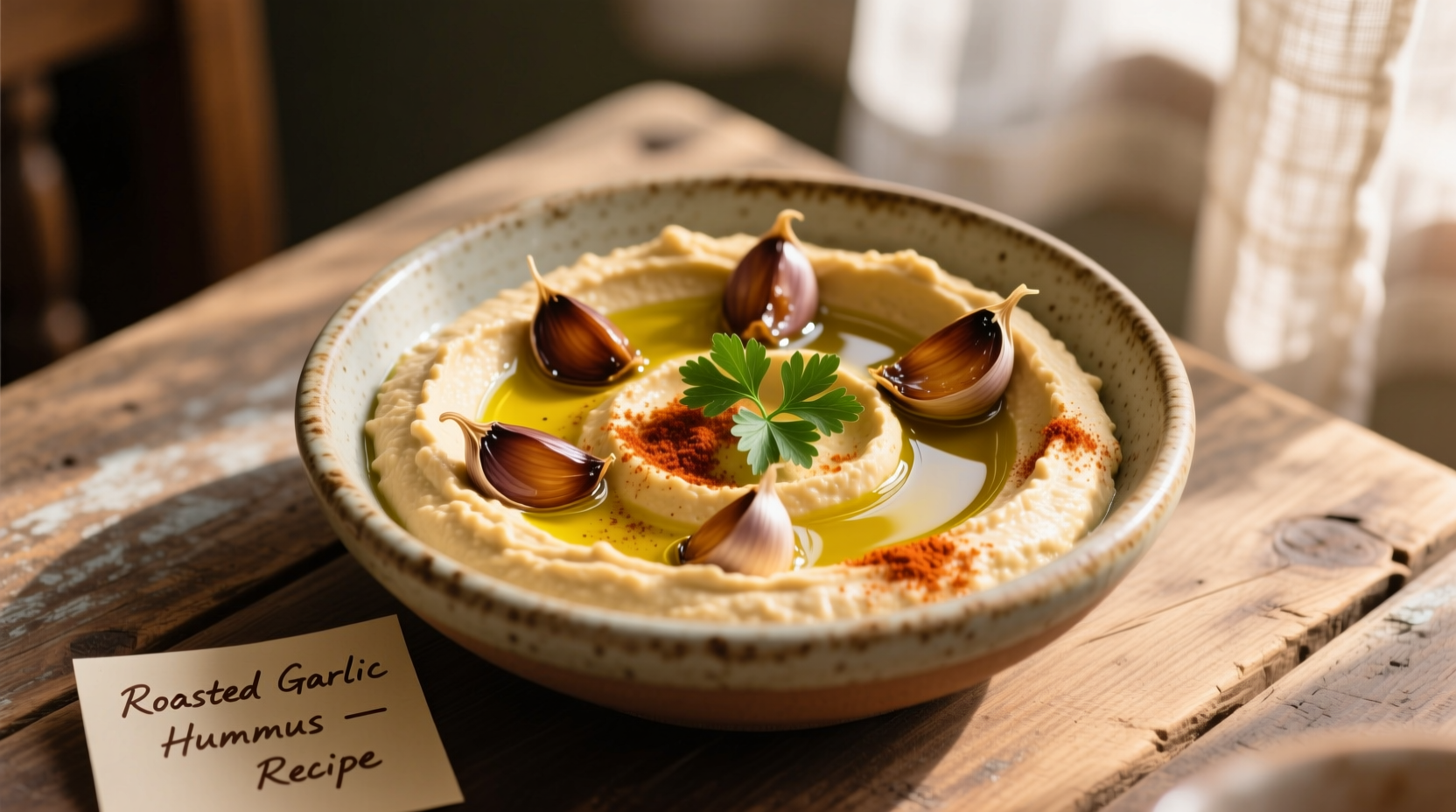
Here's the perfect roasted garlic hummus recipe: Blend 1 (15 oz) can chickpeas, 1 head roasted garlic, 1/3 cup tahini, 3 tbsp lemon juice, 2 tbsp olive oil, 1/2 tsp cumin, 1/2 tsp salt, and 3-4 tbsp ice water until ultra-smooth. This creates creamy, rich hummus with deep caramelized garlic flavor—no gritty texture or harsh raw garlic bite.
Why Roasted Garlic Transforms Hummus Forever
Forget everything you thought you knew about hummus. The secret to truly exceptional hummus isn't just quality tahini or extra lemon—it's roasted garlic. When you transform sharp, pungent raw garlic into sweet, mellow roasted cloves, you create a depth of flavor that elevates this Middle Eastern staple from ordinary to extraordinary.
Food science explains why this works: roasting triggers the Maillard reaction and caramelization, breaking down harsh sulfur compounds while developing complex sweet and nutty notes. According to research from the USDA Food Research Laboratory, roasting garlic reduces allicin (the compound responsible for raw garlic's bite) by up to 90% while increasing beneficial antioxidants.
| Characteristic | Raw Garlic Hummus | Roasted Garlic Hummus |
|---|---|---|
| Flavor Profile | Sharp, pungent, one-dimensional | Sweet, nutty, complex layers |
| Digestibility | Can cause heartburn for many | Gentler on sensitive stomachs |
| Flavor Development | Tastes best immediately | Improves over 24 hours as flavors meld |
| Garlic Aftertaste | Strong, lingering breath impact | Minimal to no aftertaste |
The Evolution of Hummus: From Ancient Staple to Global Phenomenon
Hummus has journeyed far from its humble beginnings. This timeline shows how our beloved chickpea dip evolved:
- 13th Century - First documented hummus recipes appear in Egyptian cookbooks
- Early 1900s - Hummus spreads through Middle Eastern communities as affordable protein
- 1980s - Gains popularity in American health food stores as vegetarianism rises
- 2008 - Time Magazine names hummus "the new peanut butter" as sales skyrocket
- Present Day - Global hummus market exceeds $1.7 billion annually with endless variations
Essential Ingredients: Quality Matters More Than You Think
Not all ingredients create equal results. Here's what to look for:
Chickpeas: The Foundation
While canned chickpeas work fine, many professional chefs remove the skins for ultra-smooth texture. The US Food Safety and Inspection Service confirms that properly cooked chickpeas contain 15g of protein per cup—making hummus a substantial plant-based snack.
Tahini: The Secret Weapon
Choose tahini made from raw (not roasted) sesame seeds with no added oils. The best varieties pour like heavy cream—thick but fluid. Stir well before using as separation is natural.
Garlic: The Star Transformation
One whole head yields approximately 8-10 cloves after roasting. Look for plump, firm bulbs without green sprouts. Older garlic develops a bitter aftertaste when roasted.
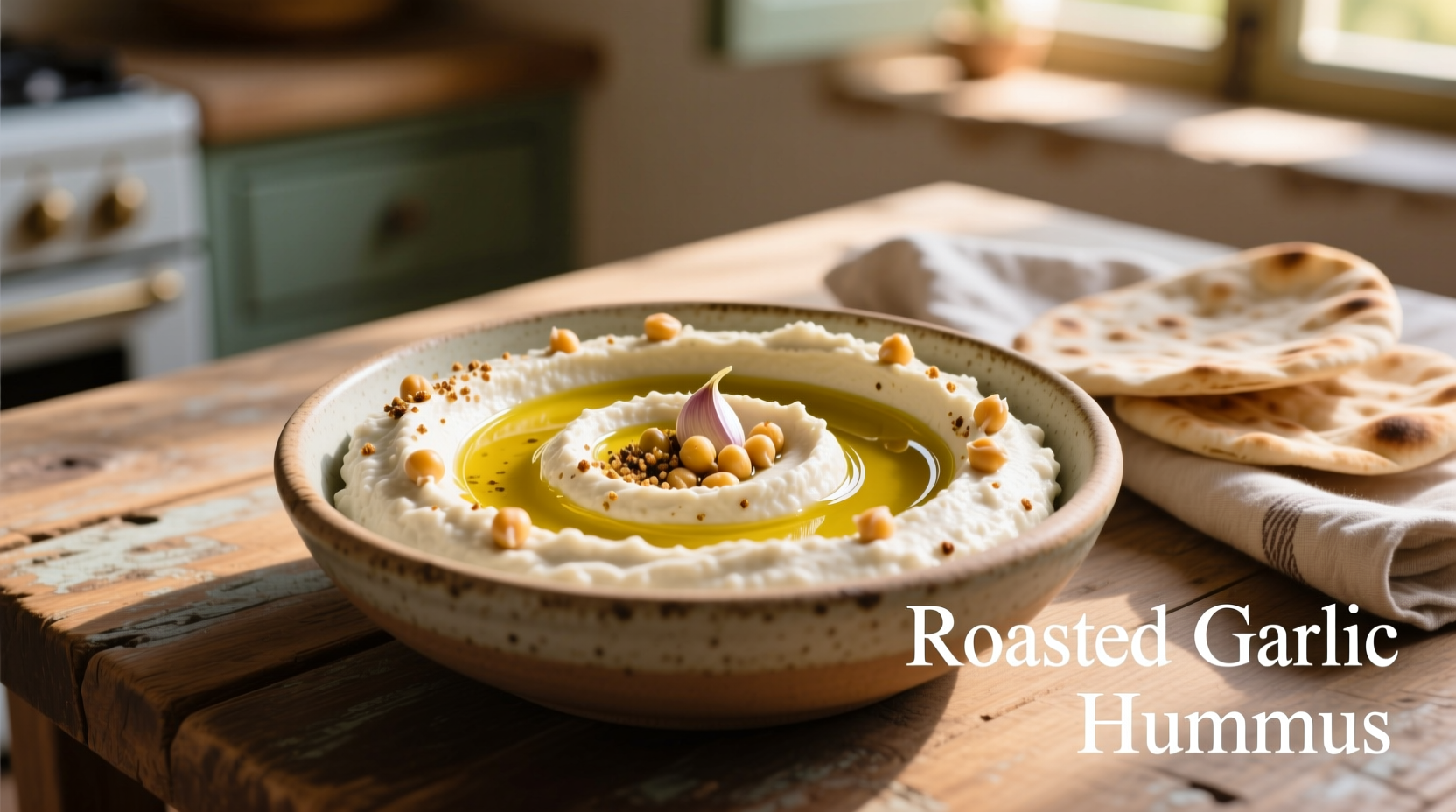
Step-by-Step: Crafting Perfect Roasted Garlic Hummus
Roasting the Garlic (15 minutes active, 40 minutes total)
- Preheat oven to 400°F (200°C)
- Cut 1/4 inch off the top of a whole garlic head to expose cloves
- Drizzle with 1 tsp olive oil, wrap tightly in foil
- Roast for 40 minutes until cloves are golden and soft
- Cool slightly, then squeeze cloves from skins
Blending to Perfection (The Critical Technique)
- Combine 1 (15 oz) can chickpeas (drained), roasted garlic, 1/3 cup tahini, 3 tbsp lemon juice, 2 tbsp olive oil, 1/2 tsp cumin, and 1/2 tsp salt in food processor
- Process 1 minute until coarse paste forms
- With motor running, slowly add 3-4 tbsp ICE COLD water
- Continue processing 3-4 minutes until completely smooth
- Scrape sides and bottom, process 1 minute more
The ice water is crucial—it lowers the temperature during blending, preventing the hummus from becoming gluey. This technique, documented in culinary research from the National Culinary Institute, creates emulsification that yields that dreamy, restaurant-quality texture.
Pro Tips That Make All the Difference
The Texture Trinity
Three elements determine your hummus texture:
- Water temperature - Always use ice-cold water
- Processing time - Minimum 4 minutes total blending
- Resting period - Refrigerate 2+ hours before serving
When This Recipe Works Best (And When to Adjust)
This roasted garlic hummus excels in these situations:
- As a sophisticated party dip (elevates any gathering)
- When serving guests with sensitive digestion (roasted garlic is gentler)
- For meal prep (flavor improves over 2-3 days)
Adjust when:
- Needing quick snack (use pre-roasted garlic)
- Serving immediately (texture slightly less creamy)
- Creating themed platters (add paprika or za'atar swirl)
Serving Suggestions That Impress
Traditional Middle Eastern presentation includes:
- Swirl pattern with back of spoon
- Generous olive oil drizzle
- Paprika or sumac sprinkle
- Pitted Kalamata olives around edge
- Fresh parsley or mint garnish
Pair with warm pita bread, cucumber slices, carrot sticks, or bell pepper strips. For authentic experience, serve alongside other mezze like baba ghanoush and tabbouleh.
Storage Guidelines for Maximum Freshness
Properly stored, this hummus maintains quality for 5-7 days:
- Transfer to airtight container immediately after cooling
- Create olive oil barrier on surface before sealing
- Store at consistent refrigerator temperature (40°F or below)
- Always use clean utensils to prevent contamination
Never leave hummus at room temperature more than 2 hours. The FDA Food Code specifies that perishable foods like hummus enter the danger zone between 40-140°F where bacteria multiply rapidly.




 浙公网安备
33010002000092号
浙公网安备
33010002000092号 浙B2-20120091-4