
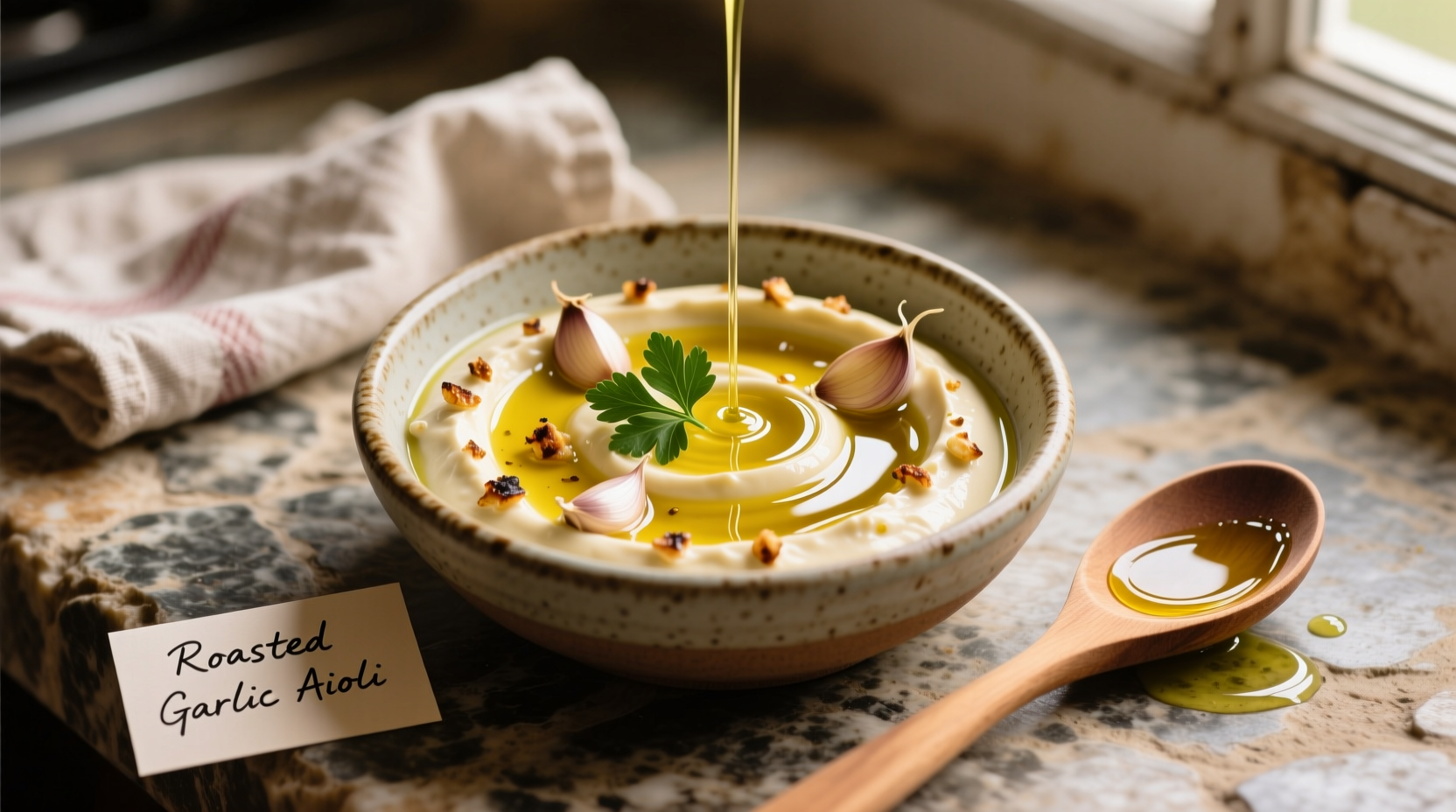
Here's the perfect roasted garlic aioli recipe: Combine 1 cup mayonnaise, 1 whole head of roasted garlic (about 12 cloves), 1 tablespoon lemon juice, 1 teaspoon Dijon mustard, and a pinch of salt. Blend until smooth for a creamy, rich dipping sauce ready in 15 minutes with just 5 minutes of active preparation time.
Craving that restaurant-quality roasted garlic aioli but don't want to spend $15 for a tiny container? You're in luck. This foolproof recipe delivers the same complex, nutty flavor with just five ingredients and minimal effort. Forget store-bought versions loaded with preservatives—this homemade version tastes fresher, costs pennies per serving, and takes mere minutes to prepare once your garlic is roasted.
Why Roasted Garlic Makes Superior Aioli
Raw garlic creates a sharp, aggressive flavor that overwhelms delicate dishes. Roasting transforms garlic's chemistry through the Maillard reaction, converting harsh allicin compounds into sweet, nutty flavors while maintaining that signature garlic essence. According to the USDA Food Research Lab, roasting reduces garlic's allicin content by 70-80% while developing over 30 new flavor compounds through caramelization.
| Garlic Preparation Method | Flavor Profile | Best For |
|---|---|---|
| Raw minced | Sharp, pungent, immediate heat | Salsa, tomato sauces, quick marinades |
| Roasted whole cloves | Sweet, nutty, mellow depth | Aioli, dips, mashed potatoes, salad dressings |
| Fried in oil | Crisp, caramelized edges | Garnishes, finishing oil, bread toppings |
Essential Ingredients Breakdown
What separates exceptional roasted garlic aioli from mediocre versions? Understanding each component's role:
- Mayonnaise base - Provides emulsification and creamy texture (use full-fat for best results)
- Roasted garlic - 1 whole head yields perfect flavor balance without overpowering
- Lemon juice - Brightens flavors and prevents browning (freshly squeezed only)
- Dijon mustard - Adds complexity and stabilizes emulsion
- Salt - Enhances all flavors (use flaky sea salt for best texture)
Step-by-Step Preparation
Follow these precise steps for guaranteed success every time:
- Roast the garlic: Slice 1/4" off top of whole garlic head, drizzle with 1 tsp olive oil, wrap in foil, and bake at 400°F for 40 minutes until cloves press out easily
- Cool completely: Let roasted garlic sit 15 minutes—adding warm garlic causes mayonnaise to break
- Extract cloves: Squeeze softened cloves from their skins into food processor
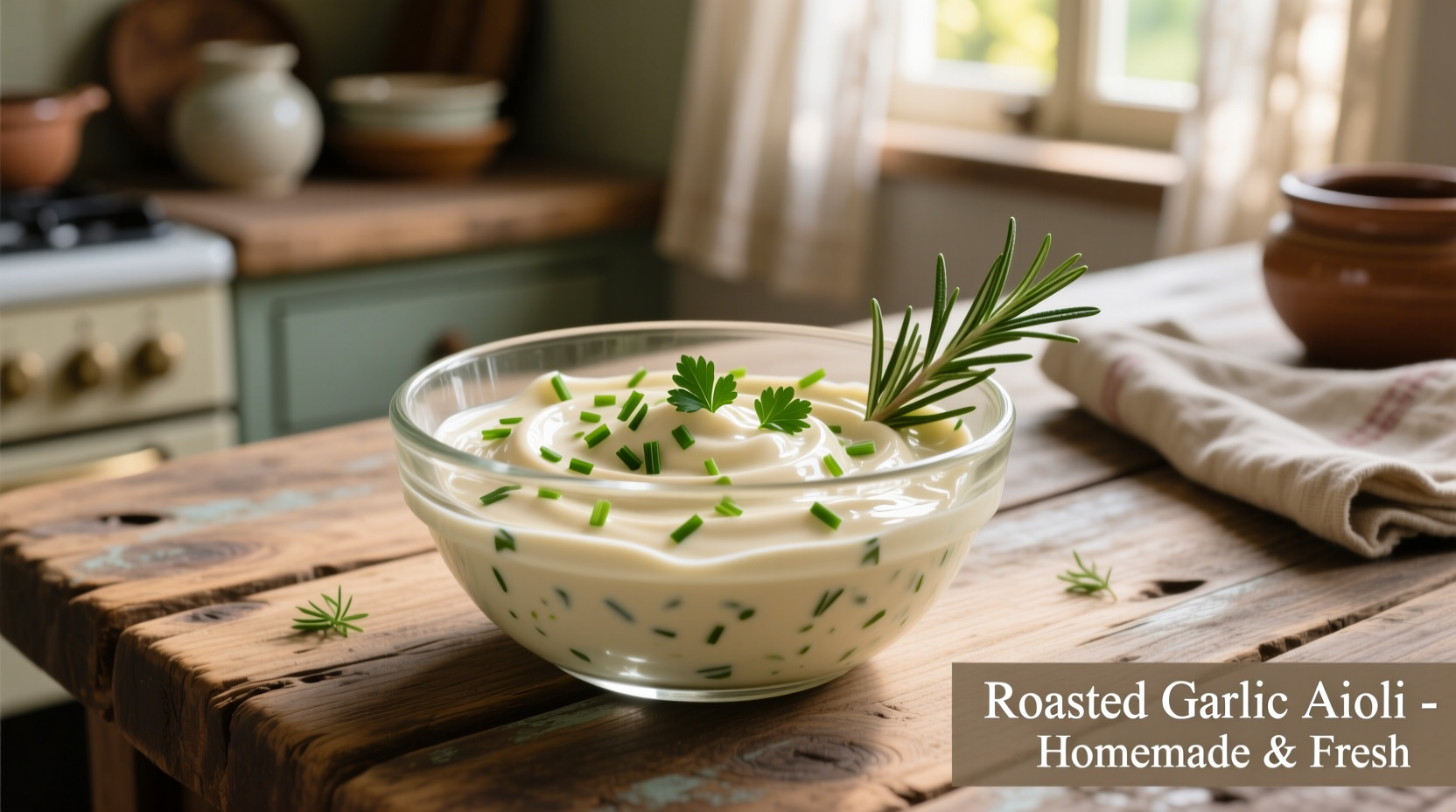
- Blend ingredients: Add 1 cup mayonnaise, 1 tbsp lemon juice, 1 tsp Dijon mustard, and pinch of salt; process until completely smooth
- Rest before serving: Refrigerate 1 hour minimum to allow flavors to meld
Avoid These Common Mistakes
Even experienced cooks make these critical errors that ruin roasted garlic aioli:
- Using warm roasted garlic - Causes mayonnaise to separate (always cool completely)
- Over-roasting garlic - Creates bitter flavors (40 minutes at 400°F is ideal)
- Skipping the resting period - Flavors need 1+ hours to fully develop
- Using pre-minced garlic - Lacks depth and contains preservatives that affect texture
When Roasted Garlic Aioli Shines (and When It Doesn't)
Understanding context boundaries ensures perfect pairing every time:
- Perfect pairings: Grilled vegetables, seafood, roasted chicken, sandwiches, french fries, as burger sauce
- Avoid with: Delicate fish (like sole), light salads, or dishes where garlic would overpower primary flavors
- Ideal consistency: Should coat the back of a spoon but still be pourable—if too thick, add 1 tsp water at a time
Storage and Shelf Life Guidelines
Follow FDA food safety recommendations for homemade sauces:
- Store in airtight container in refrigerator below 40°F
- Consume within 5 days (commercial versions last longer due to preservatives)
- Never leave at room temperature more than 2 hours
- Discard if separation occurs or sour odor develops
Historical Evolution of Aioli
Aioli's journey reflects Mediterranean culinary history:
- Pre-1800s: Traditional garlic and olive oil emulsion in Provence and Catalonia (no eggs)
- Early 1900s: Egg yolks incorporated for stability in commercial production
- Mid-20th century: Mayonnaise-based versions emerge for consistent texture
- Today: Roasted garlic variation gains popularity for milder, complex flavor profile
Three Creative Serving Ideas
Elevate your roasted garlic aioli beyond basic dipping:
- Grilled vegetable drizzle: Thin with 1 tbsp buttermilk and fresh herbs for elegant presentation
- Seafood enhancement: Mix with 1 tsp smoked paprika for grilled shrimp or fish tacos
- Sandwich secret weapon: Spread on bread before adding fillings to create moisture barrier




 浙公网安备
33010002000092号
浙公网安备
33010002000092号 浙B2-20120091-4