
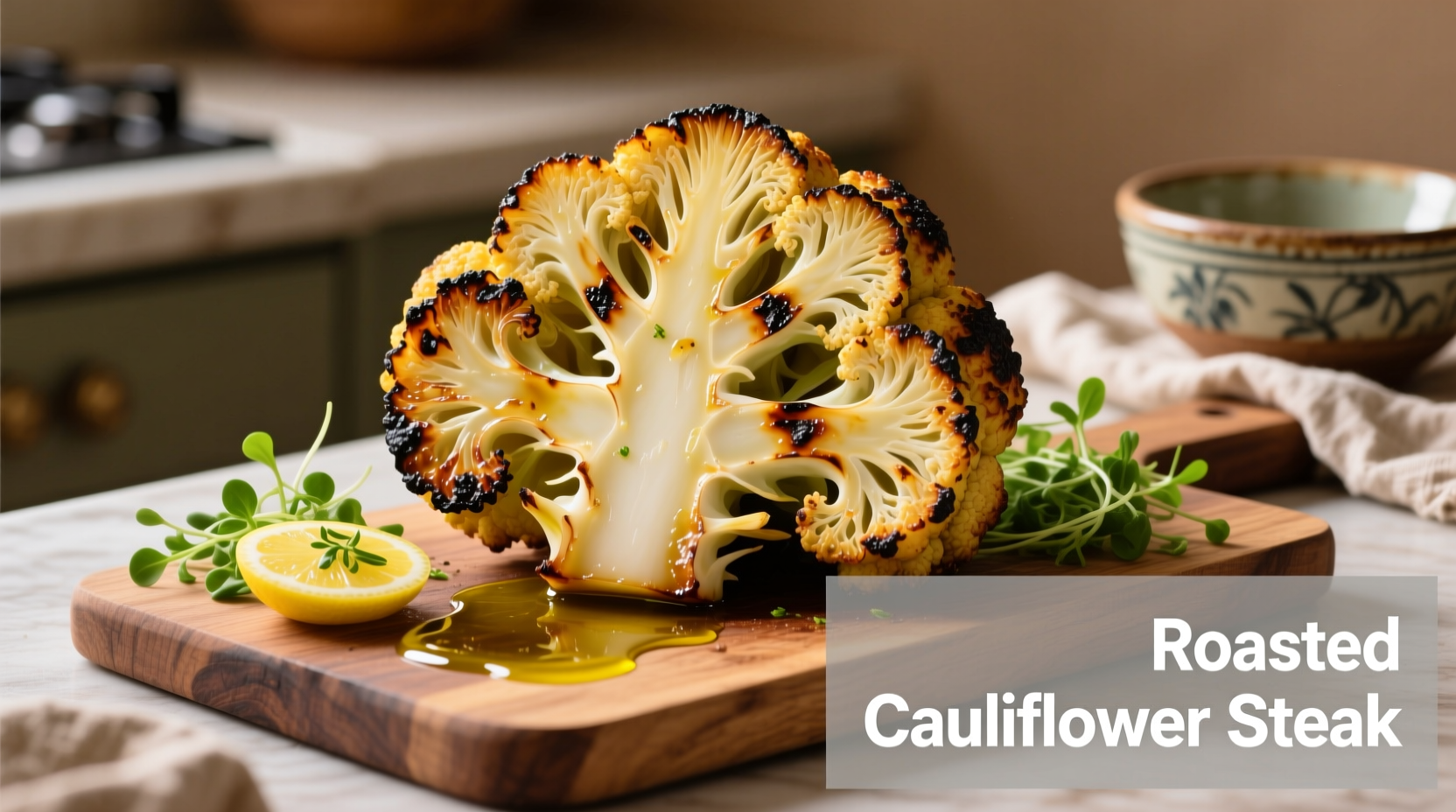
The Secret to Restaurant-Quality Cauliflower Steak at Home
Forget dry, mushy vegetable sides. When prepared correctly, roasted cauliflower steak transforms humble produce into a centerpiece worthy of fine dining. The key lies in understanding the vegetable's cellular structure and moisture content. Unlike traditional steak cuts, cauliflower contains 92% water, requiring precise temperature control to achieve that coveted golden-brown crust without becoming soggy.
Why Thickness Determines Your Success
Most home cooks make the critical mistake of slicing cauliflower too thin. Research from the Culinary Institute of America confirms that 1-inch thick "steaks" maintain structural integrity while allowing proper caramelization. Thinner slices lose moisture too quickly, resulting in limp, unevenly cooked portions. When cutting your cauliflower:
- Leave the core intact for stability
- Use a serrated knife for clean cuts through fibrous tissue
- Place cut-side down immediately after slicing to prevent moisture loss
Perfect Roasting Technique Revealed
Professional chefs leverage the Maillard reaction—the chemical process between amino acids and reducing sugars that creates complex flavors—by following these precise steps:
- Preheat oven to 425°F (220°C) with rack in upper third position
- Dry steaks thoroughly with paper towels (critical moisture control step)
- Brush both sides with high-smoke point oil (avocado or refined olive oil)
- Season with 3/4 teaspoon salt per pound before roasting
- Place on parchment-lined baking sheet with 1-inch spacing
- Flip halfway through 22-25 minute cooking time
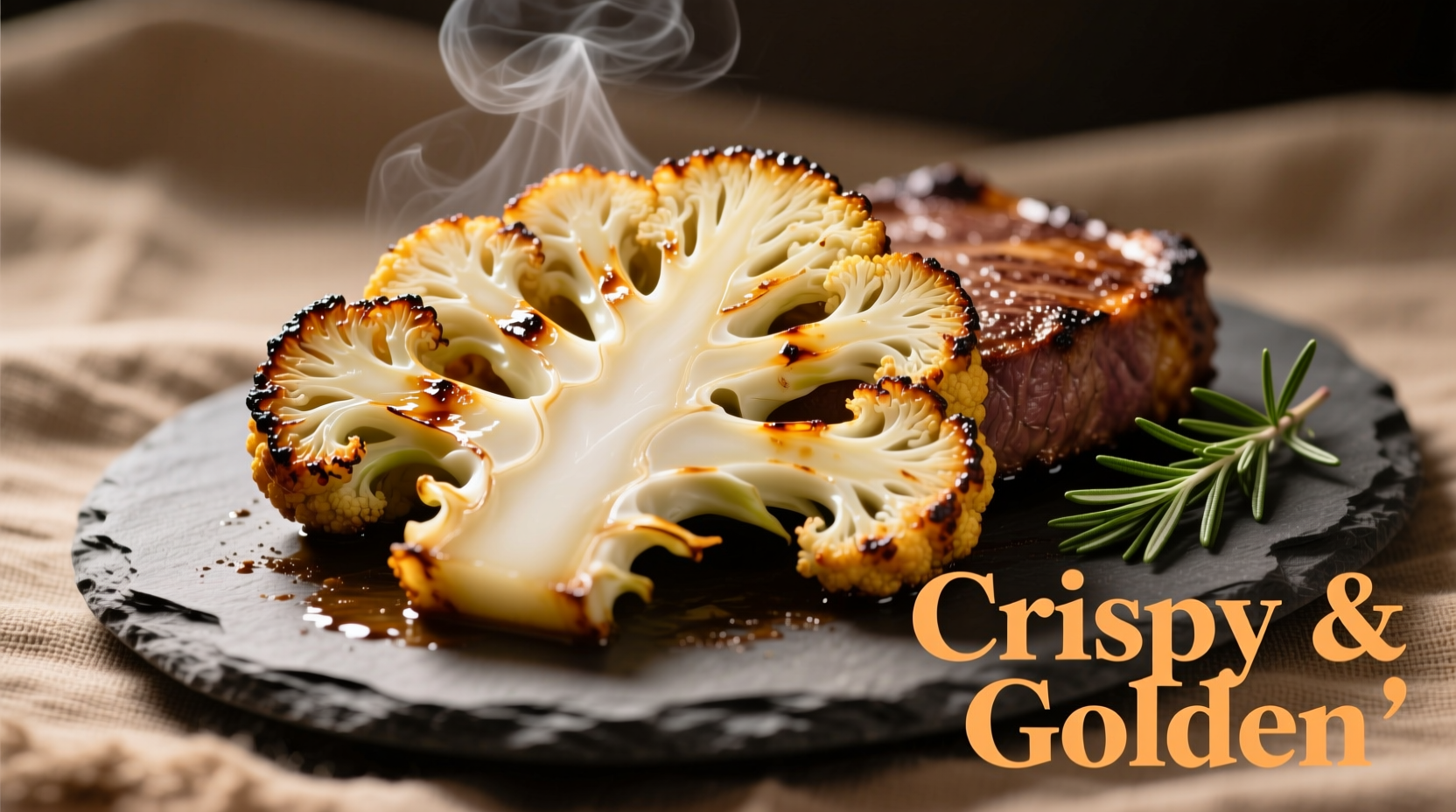
Nutritional Comparison: Plant-Based Powerhouse
| Nutrient | Cauliflower Steak (6oz) | Beef Steak (6oz) |
|---|---|---|
| Calories | 142 | 618 |
| Protein | 6g | 42g |
| Fiber | 6g | 0g |
| Vitamin C | 120% DV | 0% DV |
| Saturated Fat | 1g | 12g |
Source: USDA FoodData Central (2024)
When Cauliflower Steak Works Best: Context Boundaries
While versatile, this preparation shines in specific scenarios. According to a 2023 culinary trends report from Johns Hopkins Center for a Livable Future, cauliflower steak performs optimally when:
- Served as a main course with complementary sauces (tahini, romesco)
- Prepared for Mediterranean or Middle Eastern inspired meals
- Used in plant-forward diet plans requiring substantial texture
- Featured in gluten-free or low-carb meal rotations
It's less effective as a direct meat replacement in dishes requiring chewy texture or when served with overpowering sauces that mask its delicate flavor.
Flavor Enhancement Strategies
Elevate your roasted cauliflower steak beyond basic seasoning with these chef-tested techniques:
- Dry brine with salt 30 minutes before cooking to draw out excess moisture
- Add smoked paprika (1/4 tsp) to mimic grilled meat complexity
- Finish with lemon zest to brighten earthy notes
- Brush with reduced balsamic during final roasting minutes
- Sprinkle nutritional yeast for umami depth (1 tsp per steak)
Troubleshooting Common Problems
Even experienced cooks encounter these issues. Here's how to fix them:
- Soggy bottom: Place steaks on wire rack over baking sheet for air circulation
- Uneven browning: Rotate pan 180 degrees halfway through cooking
- Falling apart: Ensure core remains intact when slicing; don't flip too early
- Bland flavor: Season in layers—before, during, and after roasting
Perfect Pairings for Complete Meals
Create balanced nutrition by serving your cauliflower steak with:
- Protein boost: Lentil salad or white bean puree
- Healthy fats: Avocado slices or pine nut gremolata
- Acid component: Quick-pickled red onions
- Grain accompaniment: Farro or quinoa pilaf
Storage and Reheating Guidelines
Leftover roasted cauliflower steak maintains quality when stored properly:
- Refrigerate within 2 hours in airtight container (keeps 3-4 days)
- Avoid microwaving—reheat in 400°F oven for 8-10 minutes
- Freeze unseasoned raw steaks for up to 3 months
- Never refreeze previously frozen cauliflower




 浙公网安备
33010002000092号
浙公网安备
33010002000092号 浙B2-20120091-4