
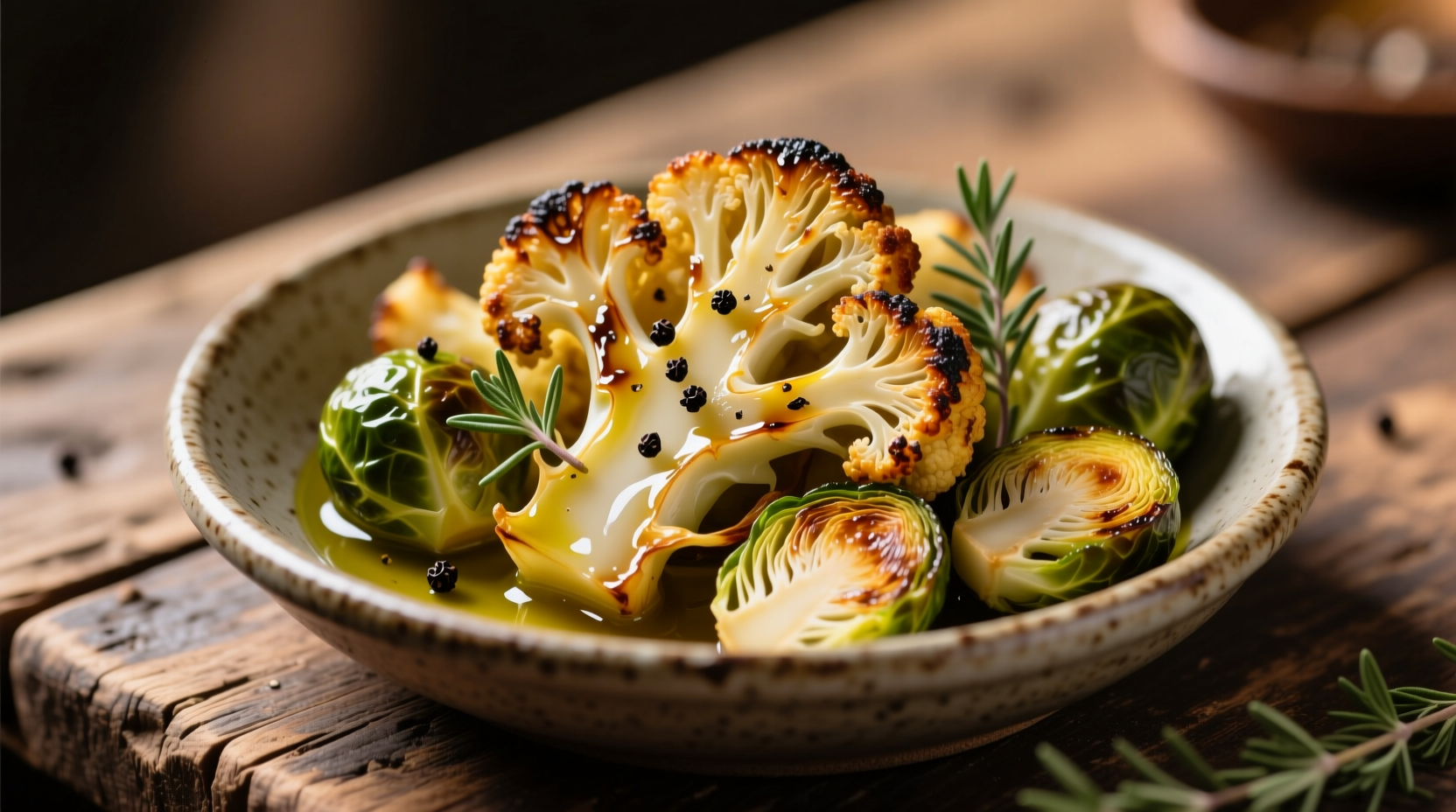
The Secret to Crispy, Flavorful Roasted Vegetables
Many home cooks struggle with soggy or bland roasted vegetables, but achieving restaurant-quality roasted cauliflower and Brussels sprouts requires just three critical elements: proper temperature control, strategic cutting techniques, and optimal seasoning timing. When executed correctly, these cruciferous vegetables develop complex caramelized flavors while maintaining a satisfying texture contrast between crispy exteriors and tender interiors.
Why This Vegetable Combination Works Scientifically
The magic of roasted cauliflower and Brussels sprouts lies in their shared chemical composition. Both belong to the Brassica family, containing glucosinolates that break down during roasting into flavorful compounds. When exposed to high heat, the natural sugars in these vegetables undergo the Maillard reaction—a chemical process between amino acids and reducing sugars that creates hundreds of flavor compounds responsible for that irresistible roasted taste.
Professional chefs understand that moisture control is the make-or-break factor. Brussels sprouts contain about 86% water, while cauliflower is approximately 92% water. Excess moisture steams the vegetables rather than roasting them, preventing proper browning. This explains why tossing vegetables in oil after patting them completely dry yields dramatically better results than the reverse approach.
Essential Preparation Techniques
Follow these professional chef techniques to guarantee perfect results every time:
Cutting for Maximum Caramelization
Cut cauliflower into 1.5-inch florets with some stem attached—this provides structural integrity during roasting. For Brussels sprouts, slice vertically through the stem to create flat surfaces that maximize contact with the baking sheet. The flat sides develop superior caramelization compared to rounded surfaces.
Oil Application Method
Use a 90-degree turn technique: toss vegetables with 1½ tablespoons oil per pound, spread in a single layer on the baking sheet, then rotate the sheet 90 degrees halfway through cooking. This ensures even browning on all surfaces without constant stirring that releases moisture.
Temperature Zones Matter
Place vegetables in the oven's hottest zone—typically the lower third of the oven. Position the baking sheet on the lowest rack for the first 15 minutes, then move to the center rack. This mimics professional convection ovens where heat rises from below.
| Nutrient | Per Serving (1 cup) | Daily Value % |
|---|---|---|
| Calories | 150 | 8% |
| Fiber | 8g | 29% |
| Vitamin C | 120mg | 133% |
| Vitamin K | 180mcg | 150% |
Nutritional data sourced from USDA FoodData Central (2023) for roasted cauliflower and Brussels sprouts with olive oil
Flavor-Boosting Variations
While classic preparation shines with simple seasoning, these tested variations elevate your dish:
Umami Powerhouse
Add 1 teaspoon nutritional yeast and ½ teaspoon smoked paprika before roasting. The glutamates in nutritional yeast amplify savory notes through synergistic umami enhancement, creating depth without additional salt.
Lemon-Herb Finish
Toss with 2 tablespoons fresh lemon juice and 1 tablespoon chopped rosemary immediately after roasting. The residual heat infuses the herbs without cooking away volatile flavor compounds.
Balsamic Glaze Technique
Drizzle with 1 tablespoon reduced balsamic vinegar during the last 5 minutes of roasting. The sugar concentration in reduced vinegar (simmered 15 minutes until syrupy) prevents burning while creating glossy caramelization.
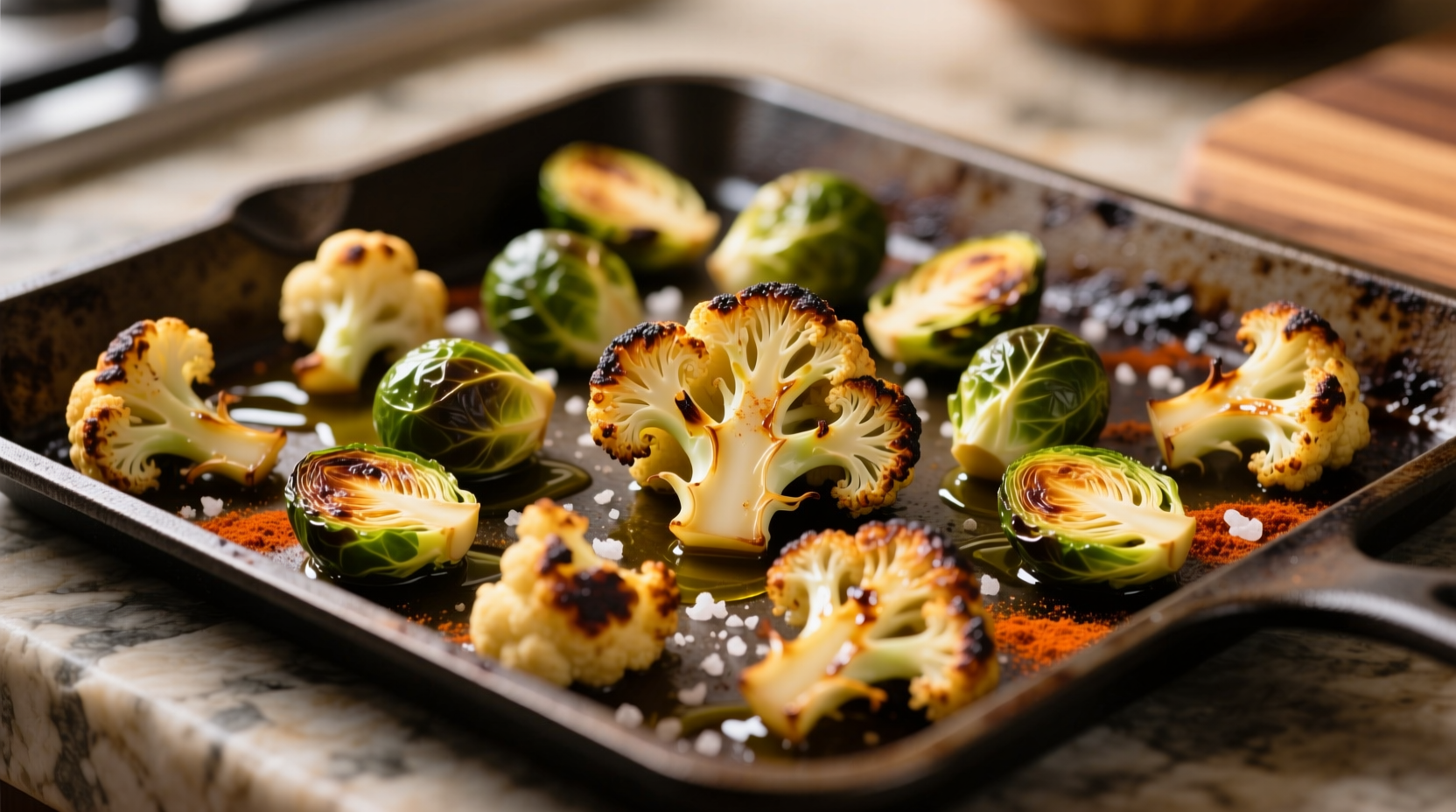
Avoid These Common Mistakes
Even experienced cooks make these critical errors that sabotage results:
- Overcrowding the pan: Vegetables need space for moisture to evaporate. Use two baking sheets if necessary—crowded vegetables steam instead of roast
- Seasoning too early: Salt draws out moisture. Add salt in the last 10 minutes of roasting for optimal texture
- Using cold oil: Room temperature oil coats vegetables more evenly than refrigerated oil
- Stirring too frequently: Limit stirring to once halfway through cooking to allow proper caramelization
Serving and Storage Guidelines
For best texture, serve immediately after roasting when crispness peaks. If preparing ahead, under-roast by 3-5 minutes, then finish in a 400°F oven for 5 minutes before serving. Store leftovers in an airtight container for up to 4 days—reheat on a baking sheet at 400°F for 8-10 minutes to restore crispness (microwaving creates sogginess).
Perfect Pairing Suggestions
This versatile side complements various proteins:
- With poultry: Pair with lemon-herb roasted chicken—the bright acidity cuts through the richness
- With fish: Serve alongside seared salmon for an omega-3 rich meal
- Vegan option: Top with toasted pine nuts and dried cranberries for added texture contrast
- Meal prep: Combine with quinoa and chickpeas for a complete roasted vegetable bowl




 浙公网安备
33010002000092号
浙公网安备
33010002000092号 浙B2-20120091-4