
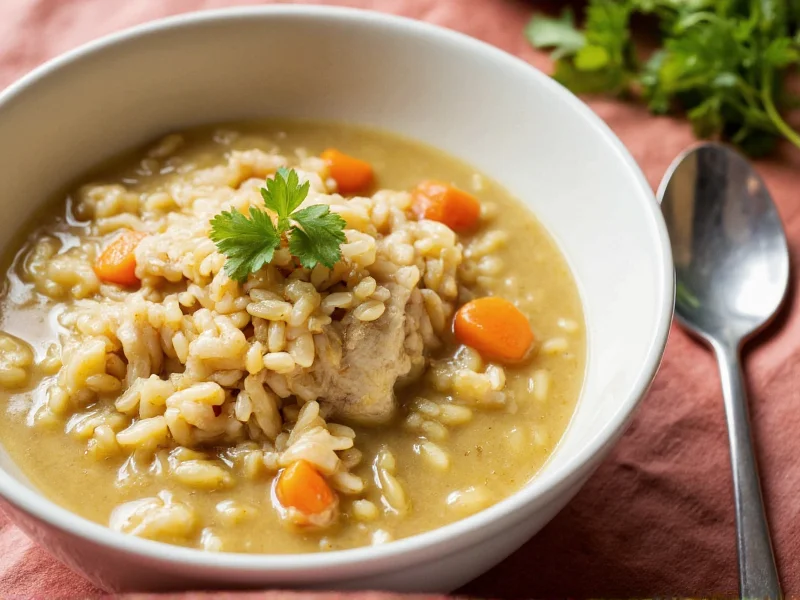
Creating the perfect rice and chicken soup requires understanding the delicate balance between tender chicken, properly cooked rice, and flavorful broth. This classic combination has sustained cultures worldwide for centuries due to its simplicity, affordability, and nourishing properties. Whether you're seeking comfort during illness or a wholesome weeknight meal, mastering this recipe provides culinary versatility that adapts beautifully to various dietary needs and cultural interpretations.
Essential Ingredients and Their Purpose
Quality ingredients form the foundation of exceptional rice and chicken soup. Each component serves a specific purpose in building flavor, texture, and nutritional value. Understanding these roles helps you make informed substitutions without compromising the final result.
| Ingredient | Function | Key Substitutions |
|---|---|---|
| Bone-in chicken pieces | Provides collagen-rich broth and tender meat | Boneless thighs (less flavorful broth) |
| Aromatic vegetables (onion, celery, carrots) | Creates flavor base (mirepoix) | Leeks, fennel, or parsnips |
| Long-grain white rice | Holds shape during cooking | Basmati or jasmine rice (avoid instant) |
| Fresh herbs (parsley, thyme) | Adds brightness and complexity | Dill or tarragon for different flavor profiles |
| Garlic and ginger | Provides depth and warmth | White pepper for subtle heat |
Step-by-Step Preparation Method
The traditional approach to making rice and chicken soup involves a two-stage cooking process that maximizes flavor while preventing common pitfalls like mushy rice or stringy chicken. This technique has been refined through generations of home cooks seeking the perfect balance.
Stage 1: Building the Broth Foundation
- Place 1.5 lbs bone-in chicken pieces in a large pot with 8 cups cold water
- Add 1 chopped onion, 2 celery stalks, and 2 carrots (all roughly chopped)
- Bring to a gentle simmer (not boil) over medium heat
- Skim foam that rises to the surface during first 10 minutes
- Cover and simmer gently for 30-40 minutes until chicken is cooked through
- Remove chicken, strain broth through fine mesh sieve
- Pick meat from bones, discarding skin and bones
Stage 2: Completing the Soup
- Return clean broth to pot with 1 cup rinsed long-grain rice
- Add 2 minced garlic cloves and 1 tbsp grated ginger
- Simmer uncovered for 15-18 minutes until rice is tender
- Return chicken to pot with 2 tbsp chopped fresh parsley
- Season with salt and white pepper to taste
- Rest 5 minutes before serving to allow flavors to meld
Avoiding Common Preparation Mistakes
Even experienced cooks encounter challenges with rice and chicken soup. Understanding these pitfalls ensures consistent results:
- Rice texture issues: Adding rice directly to boiling broth causes uneven cooking. Always add rice to gently simmering liquid and avoid stirring excessively, which releases starch and creates mushiness
- Bland broth: Skipping the initial poaching step with bones results in flavorless soup. The collagen from bones creates the rich mouthfeel characteristic of professional-quality soup
- Dry chicken: Overcooking during the initial poaching makes chicken stringy. Use a thermometer to remove chicken at 165°F (74°C)
- Cloudy appearance: Boiling instead of simmering emulsifies fat into the broth. Maintain a gentle simmer with occasional small bubbles breaking the surface
Cultural Variations Worth Exploring
Rice and chicken soup appears in nearly every culinary tradition, each with distinctive characteristics that reflect local ingredients and techniques:
- Asian-inspired version: Replace Western mirepoix with ginger, garlic, and scallions. Use jasmine rice and finish with soy sauce, sesame oil, and cilantro. Add a splash of rice vinegar for brightness just before serving
- Latin American arroz caldo: Incorporate annatto for color, cumin for earthiness, and finish with hard-boiled eggs and fried garlic. Squeeze fresh lime over individual servings
- Mediterranean style: Add lemon zest and juice during the last minutes of cooking. Include chopped fresh dill and a swirl of good olive oil before serving
- Gluten-free adaptation: Ensure broth is certified gluten-free. Add extra vegetables like zucchini or spinach for additional texture and nutrients
Historical Evolution: Global Adaptation Timeline
Archaeological and historical records reveal how this humble dish evolved across civilizations. Key milestones demonstrate its transformation from medicinal remedy to global comfort food:
- 12th century CE: Maimonides documents chicken soup's efficacy for respiratory ailments in De Medicinis Cordialibus, establishing its therapeutic reputation in medieval medicine (National Center for Biotechnology Information, 2011)
- 1521 CE: Spanish colonizers combine Old World chicken with New World rice in Mexico, creating arroz caldo by blending with indigenous ingredients like annatto (Campbell's Corporate Archives)
- 1930: Campbell's Soup Company introduces condensed chicken soup, making broth-based meals accessible to American households during economic hardship (Smithsonian National Museum of American History)
- 2000: University of Nebraska Medical Center validates anti-inflammatory properties through peer-reviewed research confirming inhibition of neutrophil migration (Rennard et al., CHEST Journal)
Sources: Maimonides' Medical Works (NCBI), Smithsonian Food History, Chicken Soup Clinical Study (NCBI)
Storage and Reheating Best Practices
Proper storage techniques maintain quality when making rice and chicken soup ahead of time:
- Cool soup completely before refrigerating to prevent condensation
- Store broth and rice separately if meal prepping for more than 2 days
- Refrigerate for up to 4 days or freeze for 3 months
- When reheating, add small amounts of water or broth as rice absorbs liquid during storage
- Microwave gently at 50% power to prevent rubbery chicken texture
Contextual Applications and Limitations
While versatile, this soup has specific scenarios where it excels and important constraints requiring awareness:
- Optimal use cases:
- Recovery from mild viral gastroenteritis (CDC recommends broth-based fluids for rehydration)
- Rapid weeknight meals using pre-cooked components (reduces active preparation time to 15 minutes)
- Cold-weather nutrition where high fluid/electrolyte content combats dehydration (per American College of Sports Medicine)
- Key limitations:
- Severe dehydration (requires WHO-formulated oral rehydration solutions with precise electrolyte ratios)
- Keto diets (1 cup cooked rice contains 45g carbs, exceeding typical 20-50g daily limits)
- Rice allergies (affects 0.1% of Western populations per NIH clinical studies)
Sources: CDC Viral Gastroenteritis Guidelines, ACSM Hydration Guidelines, NIH Rice Allergy Prevalence Study
Nutritional Benefits Beyond Comfort
While often considered merely comfort food, properly prepared rice and chicken soup offers significant nutritional advantages. The combination provides complete protein from the chicken, complex carbohydrates from the rice, and essential vitamins from the vegetables. The gentle cooking method preserves nutrients that might be lost in more aggressive preparation techniques. This makes it particularly valuable during recovery from illness, as it's easily digestible while providing necessary calories and protein.
Perfecting Your Technique
Mastering rice and chicken soup requires attention to timing and temperature. The ideal soup features distinct rice grains suspended in a clear, flavorful broth with tender chicken pieces. Professional chefs emphasize the importance of patience—rushing the simmering process compromises texture and flavor development. For special occasions, consider using homemade broth with extra bones for enhanced richness, or adding a Parmesan rind during simmering for umami depth without altering the fundamental character of this classic dish.




 浙公网安备
33010002000092号
浙公网安备
33010002000092号 浙B2-20120091-4