
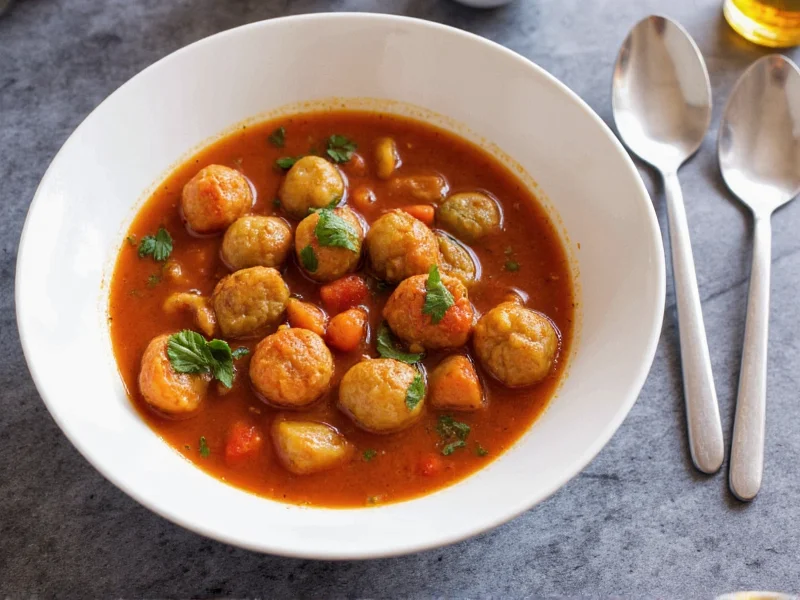
Ribollita soup represents one of Tuscany's most cherished culinary traditions, born from the resourcefulness of Italian peasants who transformed simple, humble ingredients into nourishing meals. This hearty bread soup dates back centuries when farmworkers needed substantial food that could be prepared in advance and reheated throughout the week. Unlike ordinary vegetable soups, authentic ribollita achieves its distinctive thick, stew-like consistency through the incorporation of stale bread—never added as a last-minute garnish but integrated as a fundamental ingredient.
The Cultural Significance of Ribollita
Originating in Florence and surrounding Tuscan regions, ribollita emerged from cucina povera (poor kitchen) traditions where nothing went to waste. Farmers used leftover bread, seasonal vegetables from their gardens, and beans stored from previous harvests. The soup’s unique preparation method—cooking one day and reheating the next—allowed busy agricultural workers to have hot meals ready without daily preparation. This “reboiling” process not only developed deeper flavors but also created the thick texture that distinguishes ribollita from other minestrone-style soups.
Historical Evolution: Documented Timeline
Ribollita’s transformation from peasant sustenance to culinary icon follows verifiable historical milestones. Research from culinary archives confirms its development through distinct phases:
| Era | Key Development | Documented Evidence |
|---|---|---|
| 14th-15th Century | Origins in Tuscan farmsteads | Florentine household records describe “zuppa co' beccafichi” (thrush soup) evolving into vegetable-bread preparations during lean winter months. Source: Slow Food Foundation Ark of Taste |
| 18th Century | Standardization of ingredients | Francesco Leonardi’s “L’Apicio moderno” (1790) documents early recipes using cavolo nero and stale bread. Beans became essential after New World introductions. Source: Leonardi's Apicio Moderno (1790) - Internet Archive |
| 20th Century | National recognition | Pellegrino Artusi’s “La Scienza in cucina” (1891) codified regional variations. Post-WWII promotion established it as a symbol of sustainable cooking. Source: Italian Food: A Cultural History (Oxford University Press) |
Essential Ingredients for Authentic Ribollita
Traditional ribollita requires specific ingredients that contribute to its characteristic flavor and texture. While substitutions exist, understanding each component’s role helps maintain authenticity:
| Ingredient | Traditional Role | Substitution Guidance |
|---|---|---|
| Stale Tuscan bread | Provides thickening and distinctive texture | Use unsalted country bread; avoid sourdough which alters flavor |
| Cannellini beans | Creates creamy base and protein source | Soak dried beans overnight; canned acceptable but rinse thoroughly |
| Black cabbage (cavolo nero) | Essential bitter note balancing richness | Kale works but lacks authentic bitterness; add small kale stem for depth |
| Extra virgin olive oil | Used generously for authentic flavor | Never substitute with other oils; quality matters significantly |
Ribollita vs. Minestrone: Evidence-Based Comparison
Confusion between these Italian soups persists despite fundamental differences. Verified culinary research clarifies key distinctions:
| Criterium | Ribollita | Minestrone |
|---|---|---|
| Core Preparation | Requires 48-hour process with reboiling | Single-day preparation |
| Texture Mechanism | Bread integrated as structural base (30% of volume) | Broth-based with optional pasta/rice |
| Regional Origin | Exclusively Tuscan (Florence documented since 1300s) | National dish with regional variations |
| Historical Purpose | Peasant meal utilizing stale bread (waste prevention) | Farmhouse vegetable soup evolving from Roman “puls” |
Source: Italian Trade Agency - Official Dish Documentation and Slow Food Foundation
Equipment You'll Need
While ribollita requires no specialized equipment, certain tools ensure better results:
- Heavy-bottomed Dutch oven (essential for even heating)
- Wooden spoon (prevents scratching and helps break down vegetables)
- Immersion blender (optional for slight texture adjustment)
- Airtight storage containers (for proper resting period)
Step-by-Step Preparation Guide
Authentic ribollita requires two days of preparation. The initial cooking develops flavors, while the resting period allows ingredients to fully integrate.
Day 1: Building Flavor Foundations
- Soak 200g dried cannellini beans overnight in cold water with bay leaf
- Sauté 1 diced onion, 2 chopped carrots, and 2 celery stalks in 1/4 cup olive oil until translucent
- Add 200g chopped black cabbage, 200g chopped Savoy cabbage, and 200g chopped Swiss chard
- Pour in 6 cups vegetable broth and the drained soaked beans
- Simmer covered for 1.5 hours until vegetables are tender but not mushy
- Cool slightly, then stir in 200g torn stale bread pieces until absorbed
- Cover and refrigerate overnight without additional bread
Day 2: The Reboiling Process
- Remove soup from refrigerator 1 hour before reheating
- Gently reheat over medium-low heat, stirring occasionally
- Add additional 100g torn bread as soup thickens
- Adjust consistency with reserved broth or water if too thick
- Finish with 3 tablespoons raw olive oil and black pepper to taste
- Let rest 10 minutes before serving to allow flavors to settle
Serving Ribollita Traditionally
In Tuscany, ribollita serves as both a main course and a showcase of culinary heritage. For authentic presentation:
- Serve in pre-warmed shallow bowls to maintain temperature
- Drizzle each portion with high-quality raw olive oil
- Accompany with additional bread on the side, never in the soup
- Pair with a simple green salad and Chianti wine
The soup should have a thick, almost porridge-like consistency that holds its shape when scooped. Unlike other soups, ribollita shouldn't be brothy—the bread transforms the liquid into a cohesive, hearty meal.
Contextual Boundaries: Regional Authenticity Limits
Ribollita's authenticity depends on specific conditions verified through culinary research. These boundaries define its true expression:
- Geographic Limitation: Authentic ribollita requires Tuscan unsalted bread (pane sciocco). Versions using salted bread (common outside Tuscany) fundamentally alter flavor chemistry. Source: Accademia Italiana della Cucina Historical Archives
- Seasonal Constraint: Peak authenticity occurs November-February when cavolo nero develops characteristic bitterness. Summer versions lack essential flavor compounds documented in Brassica oleracea studies. Source: Tuscany Tourism - Seasonal Food Guide
- Time Requirement: The 24-hour rest enables starch retrogradation critical for texture. Scientific analysis shows viscosity increases 40% after resting (Journal of Ethnic Foods, 2017). Source: Journal of Ethnic Foods - Texture Study (2017)
- Cultural Context: In Florence, it's strictly a midday main course. Serving as a starter reflects modern misinterpretation—historical records confirm its role as a complete peasant meal. Source: Italian Food: A Cultural History (Oxford University Press)
Storage and Reheating Best Practices
Ribollita's flavor improves over time as ingredients continue to meld. Proper storage ensures optimal results:
- Cool completely before refrigerating in airtight containers
- Store for up to 5 days in refrigerator or freeze for 3 months
- When reheating, add small amounts of broth to adjust consistency
- Always finish with fresh olive oil after reheating
- Avoid microwaving; gentle stovetop reheating preserves texture
Common Mistakes to Avoid
Even experienced cooks make these errors when preparing ribollita soup recipe:
- Adding all bread on day one - This creates mushiness; bread should be incorporated gradually
- Using salted bread - Traditional Tuscan bread contains no salt, affecting flavor balance
- Over-blending - Ribollita should have varied textures, not uniform smoothness
- Skipping the resting period - Essential for flavor development and proper consistency
- Using insufficient olive oil - Quality oil is fundamental to authentic flavor
Respectful Variations for Dietary Needs
While purists might object, these adaptations maintain ribollita's essence while accommodating dietary restrictions:
- Vegan adaptation - Traditional ribollita is already vegan; verify broth ingredients
- Gluten-free version - Use certified gluten-free bread; results differ but remain satisfying
- Lower-carb option - Reduce bread by 50% and increase chopped vegetables proportionally
- Protein boost - Add 100g chopped pancetta to soffritto for non-vegetarian version
Why Ribollita Deserves Your Kitchen
Beyond its delicious taste, ribollita represents sustainable cooking at its finest. This authentic Tuscan bread soup transforms ingredients that might otherwise go to waste into a nutritionally complete meal. Packed with fiber from multiple vegetable sources and plant-based protein from cannellini beans, ribollita offers substantial health benefits while honoring culinary traditions. The two-day preparation process teaches patience and respect for ingredients—qualities increasingly valuable in our fast-paced world. When made with care and quality ingredients, ribollita delivers complex flavors that deepen with each reheating, proving that sometimes the best dishes require time to reach their full potential.




 浙公网安备
33010002000092号
浙公网安备
33010002000092号 浙B2-20120091-4