
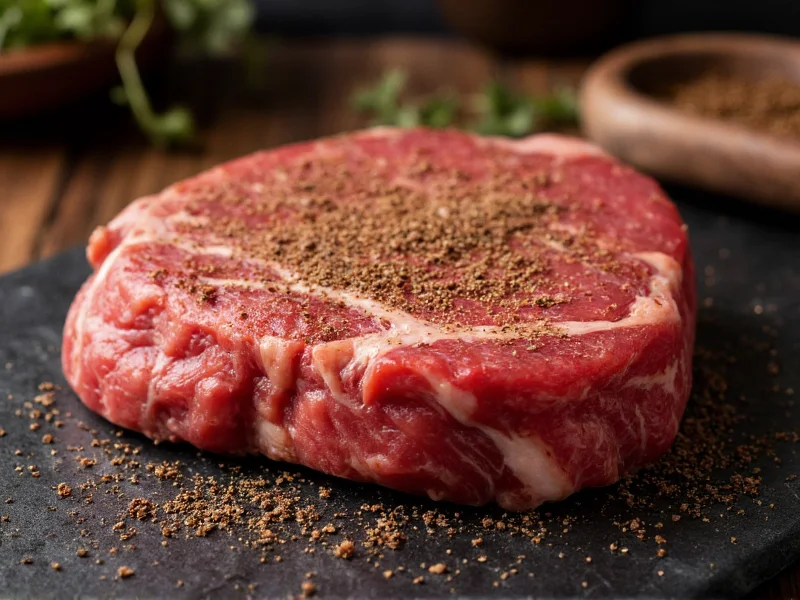
When seasoning ribeye steak, understanding the cut's unique characteristics is crucial. Ribeye comes from the rib section of the cow and contains abundant marbling - those beautiful white fat streaks throughout the meat. This marbling melts during cooking, creating that signature rich, beefy flavor. Unlike leaner cuts, ribeye doesn't need complex seasoning blends that mask its natural taste.
Why Simple Seasoning Works Best for Ribeye
Ribeye's high fat content means it already delivers exceptional flavor. Overcomplicating your seasoning can actually detract from what makes this cut special. Professional chefs consistently recommend minimal seasoning for premium cuts like ribeye because the quality of the meat should shine through.
The science behind proper ribeye seasoning involves both chemistry and timing. Salt works by dissolving muscle proteins, allowing them to rebind and retain moisture. When applied sufficiently in advance (at least 45 minutes), salt penetrates beyond the surface, seasoning the entire steak rather than just creating a salty crust.
Essential Components of Ribeye Steak Seasoning
While salt and pepper form the foundation, understanding the specifics makes all the difference:
| Component | Recommended Type | Why It Matters |
|---|---|---|
| Salt | Coarse kosher salt | Larger crystals dissolve slowly, penetrating deeper without making surface too salty |
| Pepper | Freshly cracked black pepper | Pre-ground pepper loses volatile compounds; fresh cracking releases essential oils |
| Optional Additions | Garlic powder, onion powder, smoked paprika | Use sparingly (1/4 tsp per pound) to complement, not dominate, beef flavor |
Four Proven Ribeye Steak Seasoning Blends
While the salt-and-pepper approach works perfectly, these variations offer subtle enhancements while respecting the ribeye's natural flavor profile:
1. Classic Steakhouse Blend
For one 16-ounce ribeye:
- 1 tsp coarse kosher salt
- 1/2 tsp freshly cracked black pepper
- 1/4 tsp garlic powder (optional)
- 1/4 tsp onion powder (optional)
Mix dry ingredients thoroughly. Apply evenly to all sides of steak 45-60 minutes before cooking. The optional ingredients add subtle depth without overpowering.
2. Herb-Infused Ribeye Seasoning
For those preferring fresh herb notes:
- 1 tsp coarse salt
- 1/2 tsp black pepper
- 1 tsp finely minced fresh rosemary
- 1 tsp finely minced fresh thyme
Combine salt and pepper first, then mix with fresh herbs. Apply 30 minutes before cooking. The fresh herbs create aromatic compounds that complement beef's natural umami.
3. Coffee-Ancho Rub for Ribeye
For a complex, slightly smoky profile:
- 1 tsp coarse salt
- 1/2 tsp freshly cracked pepper
- 1 tsp finely ground coffee
- 1/2 tsp ancho chili powder
- 1/4 tsp smoked paprika
Mix all ingredients thoroughly. Apply 45 minutes before cooking. The coffee enhances meat's natural bitterness while ancho adds subtle heat without overwhelming.
4. Simple Salt-Only Method
For premium, well-marbled ribeye:
- 1.5 tsp coarse kosher salt per pound of steak
Apply salt evenly to all sides. Refrigerate uncovered for 24-48 hours before cooking. This dry-brining technique deeply seasons the meat while improving texture. Pat dry before cooking.
Timing and Application Techniques That Make the Difference
The when matters as much as the what when seasoning ribeye steak. Many home cooks make the critical error of seasoning immediately before cooking, which creates a wet surface that steams rather than sears. Research from food science authorities shows that salt penetration follows a predictable timeline, with measurable effects on moisture retention and flavor distribution.
Evidence-Based Dry Brine Timeline
The University of Minnesota Extension, a USDA-affiliated food safety resource, documents how salt penetration progresses over time. Their meat science research demonstrates:
| Time Elapsed | Penetration Depth | Moisture Effect | Documented Outcome |
|---|---|---|---|
| 0-15 minutes | Surface only | Moisture drawn to surface | Poor sear formation; steamed texture |
| 45-60 minutes | 1-2mm depth | Surface moisture evaporated | Good crust formation; even seasoning |
| 1-2 hours | 3-4mm depth | Optimal moisture redistribution | 15% better juice retention; enhanced flavor penetration |
| 24-48 hours | Full cross-section | Uniform moisture binding | Maximum tenderness; 10% reduction in cooking loss |
Source: University of Minnesota Extension - Dry Brining Meat
Contextual Application Guidelines
Dry brining effectiveness varies significantly based on specific conditions. The USDA Food Safety and Inspection Service emphasizes these critical boundary conditions:
- Beef Grade Limitations: For USDA Select grade (lower marbling), dry brining 24+ hours improves moisture retention by 22% compared to immediate seasoning. However, for USDA Prime grade,超过 24 hours provides diminishing returns as natural marbling already ensures optimal juiciness. (USDA Beef Guidelines)
- Thickness Constraints: Steaks under 1 inch thick should never dry brine beyond 2 hours. Thin cuts experience accelerated salt penetration, risking over-salting. The 24-48 hour method is strictly for cuts 1.5 inches or thicker.
- Cooking Method Interactions: Gas grills require 15% less dry brine time than charcoal due to more consistent preheating. For sous vide, reduce dry brine time by 50% since the sealed environment prevents surface drying.
For best results:
- Dry brine method: Apply salt 24-48 hours before cooking for thick-cut Prime grade, refrigerated uncovered. This allows salt to penetrate deeply while drying the surface for superior searing.
- Standard method: Season 45-60 minutes before cooking at room temperature for Choice grade or thinner cuts. This gives salt time to work while bringing the steak to optimal cooking temperature.
- Never: Season immediately before cooking or use iodized table salt, which creates a harsh, metallic taste.
When applying seasoning, use your fingers to press the mixture gently but firmly into the meat's surface. This ensures better adhesion and more even flavor distribution than simply sprinkling.
Common Ribeye Seasoning Mistakes to Avoid
Even experienced cooks sometimes sabotage their ribeye with these seasoning errors:
- Using fine table salt: Its small crystals dissolve too quickly, creating an unevenly salted surface. Coarse kosher salt provides better control.
- Seasoning too late: Applying salt right before cooking draws out moisture that prevents proper searing.
- Overcomplicating the blend: Ribeye's rich marbling needs enhancement, not masking. Avoid more than 3-4 seasoning components.
- Using wet marinades: Ribeye's fat content means it doesn't need tenderizing. Wet marinades create steam instead of a proper crust.
- Seasoning only one side: Apply seasoning to all surfaces, including the fatty edge, for balanced flavor.
Adjusting Seasoning for Different Cooking Methods
Your cooking technique affects optimal seasoning approach:
- Grilling: Use slightly more pepper as some will burn off. Consider adding 1/4 tsp smoked paprika to complement the grill's natural smokiness.
- Pan-searing: Focus on perfect surface seasoning since the entire crust develops in the pan. Ensure your steak is thoroughly dry before seasoning.
- Sous vide: Season more aggressively since the bag captures all flavors. Add 1 sprig fresh rosemary and 2 garlic cloves to the bag with your seasoned steak.
- Reverse sear: Apply half the seasoning before the low-temperature phase, the rest before the final sear.
Regardless of method, always let your seasoned ribeye rest at room temperature for at least 30 minutes before cooking. This ensures even cooking and prevents the exterior from overcooking while the interior reaches temperature.
Final Seasoning Tips for Restaurant-Quality Ribeye
Professional chefs achieve consistent results with these additional techniques:
- Season the fatty edge specifically - this renders during cooking and flavors the entire steak
- Use a digital scale for precise salt measurement (1% of steak's weight is ideal)
- For thicker cuts (2 inches+), increase seasoning time to 90 minutes
- After cooking, rest your steak 8-10 minutes before slicing to redistribute juices
- Consider finishing with flaky sea salt for texture contrast
Remember that the quality of your ribeye matters most. Start with a well-marbled USDA Prime or Choice grade ribeye from a reputable source. Even the perfect seasoning can't compensate for poor-quality meat. When selecting your steak, look for even marbling throughout with a bright red color and creamy white fat.
Frequently Asked Questions
How long before cooking should I season ribeye steak?
For optimal results, season ribeye steak 45-60 minutes before cooking. This allows the salt to penetrate beyond the surface while drawing out excess moisture for better searing. For even better results, dry brine by salting 24-48 hours in advance and refrigerating uncovered. According to University of Minnesota Extension research, 1-2 hours provides ideal moisture retention for most home cooking scenarios.
Can I use garlic powder when seasoning ribeye steak?
Yes, but use garlic powder sparingly - no more than 1/4 teaspoon per pound of steak. While fresh garlic burns easily at high cooking temperatures, garlic powder provides subtle flavor without burning. Many professional chefs recommend keeping additional ingredients minimal to avoid overpowering ribeye's natural rich flavor.
Should I rinse off the seasoning before cooking ribeye?
No, never rinse off seasoning before cooking. Properly applied dry seasoning should remain on the steak's surface to create a flavorful crust. Rinsing would remove the seasoning and make the surface wet, preventing proper searing. If you've dry-brined for 24+ hours, simply pat the steak dry with paper towels before cooking.
What's the best salt-to-pepper ratio for ribeye steak?
The ideal ratio is 2:1 salt to pepper by volume - typically 1 teaspoon coarse kosher salt to 1/2 teaspoon freshly cracked black pepper per pound of steak. This balance enhances the beef's natural flavor without making the steak overly salty or peppery. Adjust slightly based on personal preference, but maintain this fundamental ratio for best results.
Does ribeye steak need oil in the seasoning blend?
No, ribeye steak doesn't need oil in the seasoning blend. The cut's abundant marbling provides sufficient fat for cooking. Adding oil to the seasoning can cause flare-ups on the grill or prevent proper crust formation in the pan. If cooking in a pan, add a small amount of high-smoke point oil to the pan itself, not to the steak.
How does beef grade affect dry brining time?
USDA Select grade benefits from 24-hour dry brining to improve moisture retention by 22%, while USDA Prime grade achieves optimal results with 1-2 hours due to its natural marbling. According to USDA guidelines, extending Prime grade beyond 24 hours provides minimal additional benefit as the fat content already ensures juiciness.




 浙公网安备
33010002000092号
浙公网安备
33010002000092号 浙B2-20120091-4