Best Chipotle Paste Substitutes: 5 Practical Alternatives
By Maya Gonzalez
Chipotle Paste Has No True Replacement—Only Contextual Substitutes
Most home cooks waste time matching heat or smoke level—but what actually breaks the dish is texture mismatch in the final sauce or marinade.
In a home kitchen, chipotle paste is rarely the thing that ruins a recipe. What does ruin it is assuming any substitute must replicate its dual identity: thick, oily, fermented-smoky, and mildly acidic all at once. This misunderstanding starts with supermarket labeling—'chipotle in adobo' jars are sold as 'paste', but their consistency varies wildly by brand, and many households treat them as interchangeable with canned chipotles, dried chipotle powder, or even smoked paprika blends. The real consequence? A marinade that separates, a chili that won’t cling to beans, or a creamy dip that tastes flat because the fat-soluble smoke never emulsifies. It’s not about missing heat—it’s about losing suspension.
Chipotle paste matters only when the dish relies on its physical behavior—not its flavor profile. In slow-simmered stews where paste dissolves fully, smoked paprika + a drop of vinegar often works fine. In quick-cooked salsas or blended dressings where the paste holds body and sheen, nothing else delivers the same mouthfeel without added oil or stabilizers. That boundary isn’t about authenticity or tradition; it’s about whether the recipe depends on viscosity and fat dispersion. If your dish sets in under 15 minutes—or gets blended cold—the paste’s rheology becomes non-negotiable.
Two common fixations are functionally irrelevant. First: ‘Is the smoke level identical?’ Not unless you’re serving it straight from the spoon. Smoke compounds bind differently in oil versus water-based liquids—and most home kitchens don’t control ambient temperature or reduction time tightly enough for that distinction to register. Second: ‘Does it contain the same lactic fermentation notes?’ Only if you’re tasting it solo. In layered dishes—like black bean soup or grilled chicken glaze—those notes vanish beneath cumin, garlic, or lime. They’re background harmonics, not structural chords.
The real constraint isn’t flavor fidelity—it’s fridge shelf life after opening. Most households keep chipotle paste for weeks, but substitutes behave differently: canned chipotles in adobo dry out fast once exposed; smoked paprika loses volatility within days if stored near heat; reconstituted chipotle powder clumps and oxidizes. This isn’t about ‘best before’ dates—it’s about how much you’ll actually use before it degrades *in your own container*, under your lighting, next to your toaster. If you cook chipotle-based dishes less than once every three weeks, paste isn’t practical—and no substitute fixes that reality.
Quick-cook tacos? Use canned chipotles mashed with ½ tsp olive oil—texture stays close, no prep lag. Weeknight chili with canned tomatoes? Smoked paprika + splash of apple cider vinegar gives depth without gumminess. Meal-prepped smoky lentil bowls? Skip paste entirely—roast fresh jalapeños with cumin, then blend with tahini. Grilled shrimp marinade? Chipotle powder works *only* if mixed with mustard or yogurt first—otherwise it dusts off. Vegan cashew cream sauce? Paste is mandatory—powder won’t suspend, and canned chipotles add too much liquid. Batch-made adobo sauce for freezing? Don’t substitute—make extra paste and freeze in ice-cube trays.
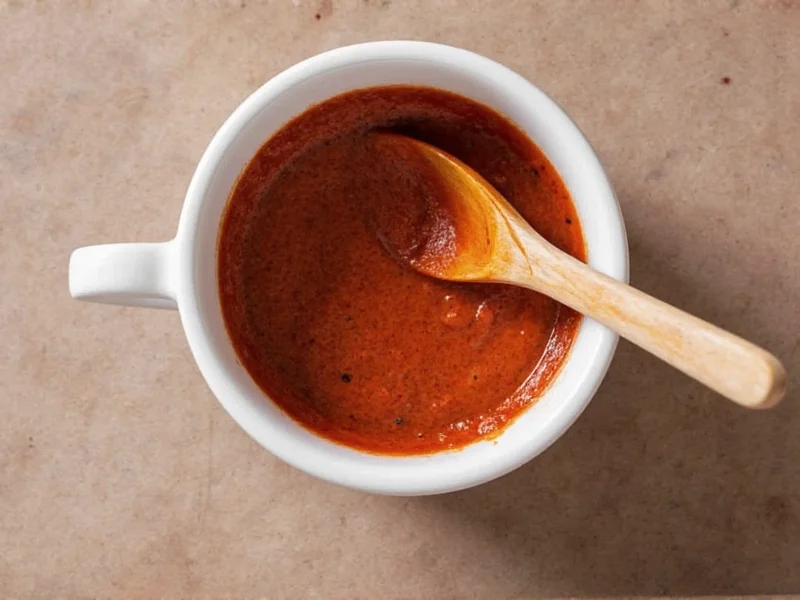
Here’s the quieter truth: You don’t need to replace chipotle paste. You need to ask whether the dish *requires* its physical signature—not its name. That decision point arrives only after you’ve stirred the mixture and watched how it coats the spoon. If it beads, splits, or slides off too fast, no amount of smoke or heat will save it. That visual cue—not ingredient lists or origin stories—is your only reliable signal. Stop comparing labels. Start observing behavior.
What people fixate on
What it affects
When it matters
When it doesn't
Smokiness intensity (mild vs strong)
Perceived depth in standalone tasting
When served raw or as finishing drizzle
In simmered soups, baked casseroles, or blended dips
Heat level (Scoville approximation)
Immediate tongue sensation
In uncooked salsas or ceviche-style applications
In slow-cooked meats or grain bowls where capsaicin mellows
Adobo sauce presence
Acidity and salt balance
In low-acid bases like mashed potatoes or coconut milk
In tomato-based sauces or lime-marinated proteins
Oil-to-solids ratio
Emulsion stability and cling
In cold dressings, glazes, or pan sauces reduced under 3 mins
In long-simmered braises or pressure-cooked beans
Quick verdicts for home cooks
If your recipe blends the paste into yogurt or mayo, skip substitutes—powder won’t suspend, canned chipotles add water.
For weeknight sheet-pan fajitas, smoked paprika + garlic powder + pinch of cayenne mimics effect without texture risk.
When doubling a batch for freezing, make extra paste—not a substitute—then portion and freeze.
If your household dislikes smokiness but loves heat, use ancho chile powder instead—it adds fruit-forward warmth without wood notes.
For gluten-free or low-sodium diets, avoid commercial 'chipotle blends'—they often hide wheat starch or added salt.
If you opened a jar last month and it’s still glossy and pliant, keep using it—even if color darkened slightly.
Frequently asked questions
Why do people think chipotle powder is a direct swap for chipotle paste? Because packaging implies equivalence—but powder lacks oil, acidity, and fermented complexity. It delivers heat and smoke, not structure.
Is it actually necessary to soak dried chipotles before using them as paste? No—soaking creates a watery slurry that dilutes fat-soluble smoke and won’t thicken like true paste. Better to blend soaked chiles with oil and vinegar separately.
What happens if you ignore texture and just match flavor notes? The sauce breaks, the marinade pools, or the dip separates—especially in refrigerated leftovers. Flavor survives; cohesion doesn’t.
Lately, more home cooks are abandoning the search for ‘the best substitute’ altogether—instead, they’re labeling jars with usage intent: ‘for blending’, ‘for slow braise’, ‘for finishing’. That shift isn’t driven by new products or influencer trends. It reflects a quiet recalibration: flavor is negotiable; physics isn’t.
Maya Gonzalez
A Latin American cuisine specialist who has spent a decade researching indigenous spice traditions from Mexico to Argentina. Maya's field research has taken her from remote Andean villages to the coastal communities of Brazil, documenting how pre-Columbian spice traditions merged with European, African, and Asian influences. Her expertise in chili varieties is unparalleled - she can identify over 60 types by appearance, aroma, and heat patterns. Maya excels at explaining the historical and cultural significance behind signature Latin American spice blends like recado rojo and epazote combinations. Her hands-on demonstrations show how traditional preparation methods like dry toasting and stone grinding enhance flavor profiles. Maya is particularly passionate about preserving endangered varieties of local Latin American spices and the traditional knowledge associated with their use.





 浙公网安备
33010002000092号
浙公网安备
33010002000092号 浙B2-20120091-4