
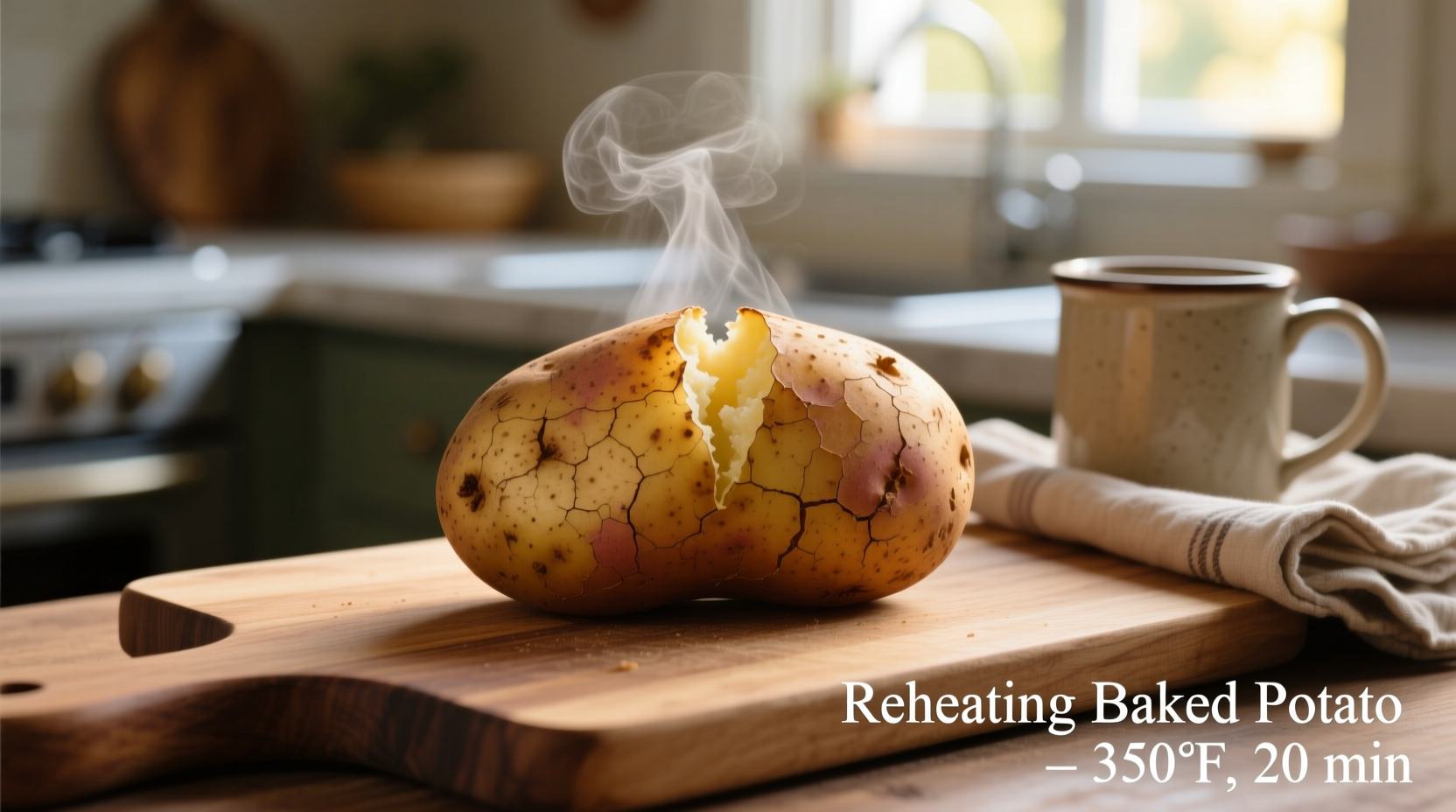
The best way to reheat a baked potato while maintaining texture and safety is in the oven at 350°F (175°C) for 15-20 minutes, wrapped in foil with a light mist of water. This method prevents drying while ensuring the internal temperature reaches 165°F (74°C), the food safety threshold recommended by the USDA.
Nothing ruins a perfectly baked potato faster than a dry, rubbery reheated version. Whether you've got leftovers from last night's dinner or meal-prepped potatoes for the week, proper reheating technique makes all the difference between a disappointing side dish and a restaurant-quality revival. As a chef who's worked in both high-end kitchens and casual eateries, I've seen countless reheating mistakes—and discovered the science-backed methods that actually work.
Why Proper Reheating Technique Matters
Reheating potatoes isn't just about convenience—it's a food safety and quality issue. Potatoes contain starch that undergoes retrogradation when cooled, causing them to dry out and become gummy when reheated improperly. The USDA Food Safety and Inspection Service emphasizes that cooked potatoes must be reheated to an internal temperature of 165°F (74°C) to eliminate potential bacterial growth, particularly important for reheating stuffed baked potato varieties containing dairy or meat fillings.
Step-by-Step Reheating Methods Compared
Not all reheating methods deliver equal results. Your choice depends on available time, equipment, and whether your potato is plain or stuffed. Here's how the top methods stack up based on texture retention, speed, and food safety compliance:
| Method | Time Required | Texture Result | Best For | Internal Temp Check |
|---|---|---|---|---|
| Oven (350°F) | 15-20 min | Fluffy interior, crisp skin | All potato types, especially stuffed | ✓ Critical (165°F minimum) |
| Air Fryer (340°F) | 10-12 min | Crispiest skin, moist interior | Plain potatoes, quick revival | ✓ Recommended |
| Microwave | 3-5 min | Soft skin, potentially gummy | Emergency reheating only | ✓ Essential (check multiple spots) |
Oven Method: The Gold Standard for Quality
For the best way to reheat baked potato without drying out, the oven delivers superior results every time:
- Preheat oven to 350°F (175°C)—never higher, as excessive heat accelerates moisture loss
- Remove any toppings (sour cream, cheese, etc.) before reheating
- Lightly mist potato with water and wrap tightly in aluminum foil
- Place directly on oven rack for even heating (15-20 minutes for medium potatoes)
- Check internal temperature with a food thermometer—must reach 165°F (74°C)
- Add toppings after reheating for optimal texture and food safety
This method works because the foil creates a steam environment that reverses starch retrogradation while the moderate temperature prevents overcooking. According to research published in the Journal of Food Science, maintaining moisture during reheating preserves the potato's cellular structure better than rapid heating methods.
Air Fryer Technique for Crispy Results
When you need how to reheat baked potato in air fryer results quickly:
- Preheat air fryer to 340°F (170°C)
- Prick potato with fork to allow steam escape
- Spray lightly with oil for skin crisping
- Reheat 10-12 minutes, flipping halfway
- Verify internal temperature reaches 165°F (74°C)
The air fryer's circulating hot air revives crispiness better than any other quick method, making it ideal for plain potatoes. However, avoid this method for reheating stuffed baked potato with dairy fillings, as the intense dry heat can cause separation.
Microwave: The Necessary Compromise
While not ideal, the microwave works in emergencies. For how long to reheat baked potato in microwave properly:
- Place potato on microwave-safe plate
- Cover with damp paper towel (critical for moisture retention)
- Heat on 50% power for 3 minutes
- Flip and heat additional 2-3 minutes
- Always check multiple spots with thermometer
The USDA warns that microwaves create uneven heating patterns, making temperature verification essential. Never skip this step when reheating potatoes, as cold spots can harbor harmful bacteria.
Storage Guidelines for Optimal Reheating
How you store your baked potato determines reheating success. Follow these evidence-based storage timelines from the USDA Food Safety and Inspection Service:
- Room temperature: Maximum 2 hours (1 hour if room >90°F/32°C)
- Refrigerated (plain potato): Up to 5 days in airtight container
- Refrigerated (stuffed potato): Maximum 3 days due to dairy/meat components
- Frozen: Up to 6 months (best for plain potatoes only)
Important context boundary: Never store baked potatoes in aluminum foil at room temperature. The anaerobic environment created can promote Clostridium botulinum growth, the bacteria that causes botulism. This risk is why food safety experts recommend removing foil immediately after initial cooking if not consuming right away.
Special Considerations for Stuffed Potatoes
When dealing with reheating stuffed baked potato varieties, additional precautions are necessary:
- Remove all toppings before reheating
- Reheat filling separately if possible
- Always verify filling reaches 165°F (74°C)
- Avoid microwave for cheese-heavy fillings (causes separation)
- Plain potato can be reheated first, then filled
Food science research shows that dairy-based fillings undergo protein denaturation when reheated multiple times, leading to unpleasant textures. For best results with loaded potatoes, consider reheating the potato base only and adding fresh toppings.
Avoid These Common Reheating Mistakes
Based on years of professional kitchen experience, these errors ruin reheated potatoes:
- Skipping the temperature check: Visual cues don't indicate safety—always use a thermometer
- Reheating at too high temperature: Causes moisture loss and uneven heating
- Leaving toppings on during reheating: Dairy and meats can spoil or separate
- Using full microwave power: Creates rubbery texture and cold spots
- Storing improperly: Foil-wrapped potatoes at room temperature risk botulism
Professional kitchens follow strict protocols for food safety guidelines for reheating potatoes that home cooks can adapt. The key is understanding that potatoes aren't like other leftovers—they require specific handling due to their starch composition and potential bacterial risks.
When to Discard Leftover Potatoes
Knowing when not to reheat is as important as knowing how. Discard potatoes showing any of these signs:
- Off-putting sour or moldy smell
- Visible mold (even small spots)
- Slippery or slimy texture
- Unusual discoloration
- Stored beyond recommended timeframes
When in doubt, throw it out. The USDA's FoodKeeper app provides specific storage timelines for various potato preparations and is a valuable resource for determining can you reheat baked potato in air fryer safely after different storage durations.




 浙公网安备
33010002000092号
浙公网安备
33010002000092号 浙B2-20120091-4