
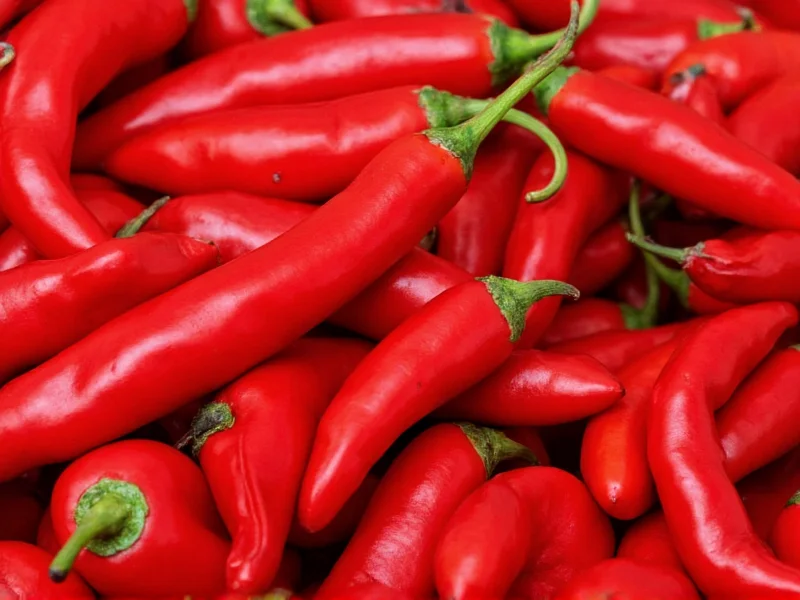
Understanding the heat levels of red chili peppers is essential for both culinary enthusiasts and professional chefs. The Scoville scale, developed by pharmacist Wilbur Scoville in 1912, remains the standard measurement for chili pepper pungency. This comprehensive guide explores how different red chili varieties compare on the Scoville scale and what these measurements mean in practical terms.
What Is the Scoville Scale?
The Scoville Organoleptic Test originally measured capsaicin concentration—the compound responsible for chili heat—through human taste panels. Today, high-performance liquid chromatography provides precise measurements, converted to Scoville Heat Units (SHU) for consumer understanding. One SHU represents the dilution point at which capsaicin becomes undetectable to human taste.
Why Do Chili Peppers Turn Red?
Most chili peppers start green and ripen to red as they mature. This color change indicates increased sugar content and often higher capsaicin levels. The red stage typically represents peak ripeness, though heat intensity varies significantly by variety. Understanding red chili pepper Scoville scale comparison helps select appropriate peppers for specific culinary applications.
Common Red Chili Peppers and Their Scoville Ratings
| Chili Pepper Variety | Color When Mature | Scoville Heat Units (SHU) | Heat Comparison |
|---|---|---|---|
| Red Bell Pepper | Bright red | 0 SHU | No heat |
| Cherry Pepper | Bright red | 100-500 SHU | Mild, sweet |
| Poblano (Ancho when dried) | Deep red | 1,000-2,000 SHU | Very mild |
| Pepperoncini | Red when mature | 100-500 SHU | Mild |
| Cayenne | Bright red | 30,000-50,000 SHU | Moderately hot |
| Tabasco | Bright red | 30,000-50,000 SHU | Moderately hot |
| Serrano | Red when mature | 10,000-23,000 SHU | Hot |
| Habanero (Red Savina) | Bright red | 100,000-350,000 SHU | Very hot |
| Scotch Bonnet | Bright red | 100,000-350,000 SHU | Very hot |
| Ghost Pepper (Bhut Jolokia) | Bright red | 800,000-1,041,427 SHU | Extremely hot |
| Carolina Reaper | Bright red | 1,400,000-2,200,000 SHU | World's hottest until 2023 |
Practical Limitations of Scoville Ratings
While Scoville ratings provide a scientific benchmark, real-world heat perception operates within critical contextual boundaries that affect culinary outcomes:
- Geographic and Cultural Differences: Heat tolerance varies significantly by region. A 50,000 SHU pepper may be considered "moderately hot" in Mexico but "extremely hot" in Northern Europe due to generational dietary adaptation (source: National Center for Biotechnology Information study on global spice adaptation patterns)
- Individual Biological Factors: Genetic variations in TRPV1 receptors cause up to 10-fold differences in capsaicin sensitivity among individuals. Research confirms these biological differences account for significant perception gaps even at identical SHU levels (source: National Library of Medicine genetic study)
- Measurement Variability: Natural variation within single varieties can cause SHU ranges to span 50% or more. University agricultural studies demonstrate how soil composition, water stress, and sunlight exposure directly impact final heat levels (source: University of Minnesota Extension cultivation research)
- Application-Specific Effects: In liquid sauces, heat disperses more evenly than in solid dishes, making identical SHU ratings feel hotter. Conversely, in fatty foods, capsaicin binds to lipids, reducing perceived heat—a phenomenon validated through sensory testing (source: Penn State Extension food science analysis)
Culinary Applications by Heat Level
Understanding the Scoville scale for red chili peppers helps match peppers to appropriate dishes:
Mild Red Peppers (0-5,000 SHU)
Perfect for stuffed peppers, salads, and dishes where color and flavor matter more than heat. Red bell peppers and cherry peppers add sweetness without significant heat.
Moderate Heat (5,000-50,000 SHU)
Cayenne and Tabasco peppers work well in sauces, soups, and spice blends. These medium heat red chili peppers Scoville ratings provide noticeable warmth without overwhelming other flavors.
High Heat (50,000-350,000 SHU)
Habaneros and Scotch Bonnets bring tropical fruit notes along with intense heat. Ideal for hot sauces, Caribbean cuisine, and dishes where heat is a featured element. Use sparingly—a little goes a long way with these hot red chili peppers Scoville scale varieties.
Extreme Heat (350,000+ SHU)
Ghost peppers and Carolina Reapers serve primarily as novelty ingredients or in specialized hot sauces. These super hot red chili peppers Scoville measurements require careful handling and minimal usage.
Modern Heat Measurement Beyond Scoville
While the Scoville scale remains popular, modern laboratories use high-performance liquid chromatography (HPLC) to measure capsaicinoids precisely. This method provides more consistent results than the original taste-test approach. The American Spice Trade Association (ASTA) pungency units have largely replaced subjective Scoville testing in professional settings, though consumer-facing information still commonly uses Scoville Heat Units for familiarity.
Evolution of the Scoville Scale and Record-Holding Peppers
Measurement methodology and heat records have evolved significantly since the scale's inception. Key developments include:
| Year | Development | Verification Source |
|---|---|---|
| 1912 | Wilbur Scoville develops organoleptic testing method | Journal of Agricultural and Food Chemistry historical analysis |
| 1980s | HPLC adoption replaces subjective tasting with chemical analysis | American Spice Trade Association methodology standards |
| 2006 | Ghost Pepper certified as world's hottest (855,000–1,041,427 SHU) | Guinness World Records certification |
| 2013 | Carolina Reaper certified (1,569,300 SHU average) | Guinness World Records certification |
| 2023 | Pepper X certified as current record holder (2,693,000 SHU average) | Guinness World Records certification |
Safety Considerations with Hot Peppers
When working with high-Scoville red chili peppers:
- Always wear food-safe gloves when handling extremely hot varieties
- Avoid touching your face, especially eyes, during preparation
- Wash hands thoroughly with soap after handling, even with gloves
- Use separate cutting boards for hot peppers
- Have dairy products like milk or yogurt nearby to neutralize heat if needed
Understanding the actual Scoville units of red chili peppers helps prevent culinary mishaps and ensures appropriate heat levels for your intended audience.
Conclusion
The Scoville scale provides valuable context for understanding red chili pepper heat, but practical experience remains essential. When selecting red chili peppers for your recipes, consider both the Scoville rating and your audience's heat tolerance. Remember that growing conditions, ripeness, and even individual pepper variation can affect actual heat levels. By understanding the Scoville heat range of red chili peppers, you can make informed choices that enhance your culinary creations without overwhelming them with unnecessary heat.




 浙公网安备
33010002000092号
浙公网安备
33010002000092号 浙B2-20120091-4