
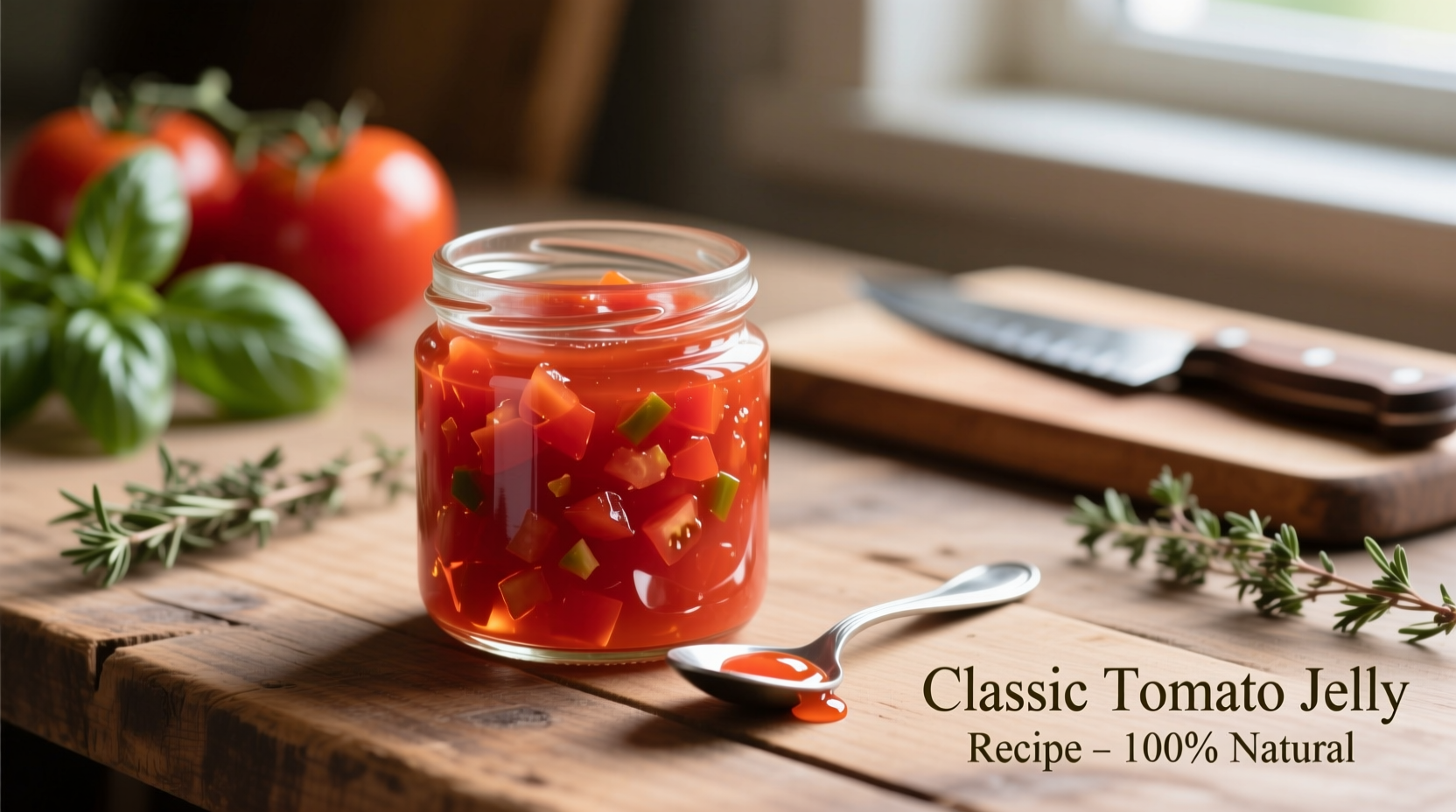
Homemade tomato jelly transforms ripe garden tomatoes into a vibrant, versatile preserve with a perfect balance of sweet and tangy flavors. These three tested recipes use proper acid levels and pectin ratios to ensure safe canning and perfect set every time—no store-bought version compares to the fresh, complex taste of homemade.
Tomato jelly often surprises people who expect it to taste like ketchup or pasta sauce. Properly made, it captures the essence of sun-ripened tomatoes in a clear, jewel-toned preserve that pairs beautifully with cheeses, meats, and even cocktails. Unlike commercial versions loaded with artificial flavors, homemade tomato jelly showcases the nuanced sweetness of ripe tomatoes enhanced by carefully balanced acidity.
The Evolution of Tomato Preserves
Tomato jelly emerged during America's canning boom of the early 20th century when home gardeners sought ways to preserve abundant harvests. According to the National Center for Home Food Preservation, early recipes relied on underripe tomatoes for natural pectin, while modern versions often incorporate lemon juice for consistent acidity levels required for safe water-bath canning.
Why Your Garden Tomatoes Deserve This Treatment
While many home canners focus on sauces and salsas, tomato jelly offers unique advantages for preserving your harvest:
- Uses tomatoes with minor blemishes that might not can well otherwise
- Creates a shelf-stable product with 18-month storage life
- Provides intense tomato flavor in a concentrated form
- Requires less processing time than whole tomato products
Food science research from University of Minnesota Extension confirms that properly acidified tomato preserves maintain both safety and superior flavor compared to low-acid alternatives. The magic happens when tomatoes' natural sugars concentrate during cooking while added acid preserves the bright red color and fresh taste.
| Tomato Variety | Best For | Acid Adjustment Needed | Yield Per Pound |
|---|---|---|---|
| Roma/Plum | Classic jelly | Standard (1 tbsp lemon juice per cup) | ¾ cup |
| Cherry | Spiced variations | Reduced (2 tsp lemon juice per cup) | ½ cup |
| Beefsteak | Smoky pepper jelly | Increased (1½ tbsp lemon juice per cup) | ⅔ cup |
Essential Equipment Checklist
Professional results require the right tools—not complicated equipment, but the proper implements:
- 8-quart stainless steel pot (reactive metals alter flavor)
- Fine mesh strainer or jelly bag (cheesecloth alone won't remove seeds)
- Acid testing strips (pH below 4.6 required for safe water-bath canning)
- 1/2-pint canning jars with new lids (8-10 per batch)
- Candy thermometer (critical for monitoring gel point at 220°F)
Three Foolproof Tomato Jelly Recipes
Classic Garden Tomato Jelly
This straightforward recipe highlights pure tomato flavor without competing ingredients. Developed using USDA guidelines for safe home canning, it delivers consistent results with common garden varieties.
Ingredients
- 4 pounds ripe Roma tomatoes, quartered
- 2 cups granulated sugar
- ¼ cup bottled lemon juice
- 1 (3oz) pouch liquid pectin
Step-by-Step Method
- Simmer tomatoes in stainless pot 30 minutes until soft
- Strain through jelly bag overnight (do not squeeze)
- Measure exactly 3 cups tomato juice into clean pot
- Bring to rolling boil, add sugar and lemon juice
- Return to full boil, stir in pectin, boil hard 1 minute
- Skim foam, pour into sterilized jars leaving ¼-inch headspace
- Process in boiling water bath 10 minutes
Spiced Tomato Cinnamon Jelly
This variation incorporates warm spices that complement tomatoes' natural sweetness. The cinnamon stick infusion method prevents spice sediment while adding complexity.
Special Ingredients
- 1 cinnamon stick (3 inches)
- ¼ tsp whole cloves
- 1 star anise pod
Method Modification
Add spices to tomato juice before measuring. Simmer 15 minutes, then strain again through coffee filter. Proceed with classic recipe instructions. Remove spices before adding pectin.
Smoky Tomato Pepper Jelly
A savory-sweet preserve perfect for charcuterie boards. The combination of roasted peppers and tomatoes creates depth while maintaining safe acidity levels.
Special Ingredients
- 1 pound mixed sweet peppers (red, yellow, orange), roasted and peeled
- 2 jalapeños, seeds removed
- 1 tbsp apple cider vinegar
Method Modification
Process peppers separately through food mill, then combine with strained tomato juice. Increase lemon juice to ⅓ cup. Add vinegar with pectin. Process 15 minutes in water bath.
Canning Safety Essentials
Following current USDA guidelines from the National Center for Home Food Preservation, all tomato preserves require acidification regardless of tomato variety. Modern tomatoes have lower natural acidity than historical varieties, making added lemon juice or citric acid non-negotiable for safe water-bath canning.
Always verify your final pH reads 4.6 or lower using testing strips. When in doubt about set, remember:
- Temperature test: Jelly reaches gel point at 220°F
- Cold plate test: Chill a plate, drop jelly—it should wrinkle when pushed
- Don't overcook: Excessive boiling breaks down pectin structure
Troubleshooting Guide
Even experienced canners encounter issues. Here's how to fix common problems:
Jelly Didn't Set
Cause: Insufficient pectin, inaccurate measurements, or undercooking
Solution: Reboil with additional pectin (½ pouch per quart), ensuring full rolling boil for 1 minute. Test set before jarring.
Cloudy Appearance
Cause: Improper straining or boiling too vigorously
Solution: Next batch, use a jelly bag without squeezing and maintain gentle boil after adding sugar.
Crystallization
Cause: Sugar not fully dissolved before boiling
Solution: Stir constantly until sugar disappears—never add sugar to already boiling liquid.
Creative Serving Ideas
Move beyond toast with these professional chef techniques:
- Glaze for roasted duck or pork loin (thin with balsamic vinegar)
- Swirl into goat cheese for crostini
- Mix with mayo for gourmet sandwich spread
- Shake with gin and lemon for signature cocktail
- Layer with ricotta in manicotti filling
Food historians note that tomato jelly's versatility made it popular during Prohibition as a cocktail ingredient—a tradition worth reviving with today's craft cocktail movement.




 浙公网安备
33010002000092号
浙公网安备
33010002000092号 浙B2-20120091-4