
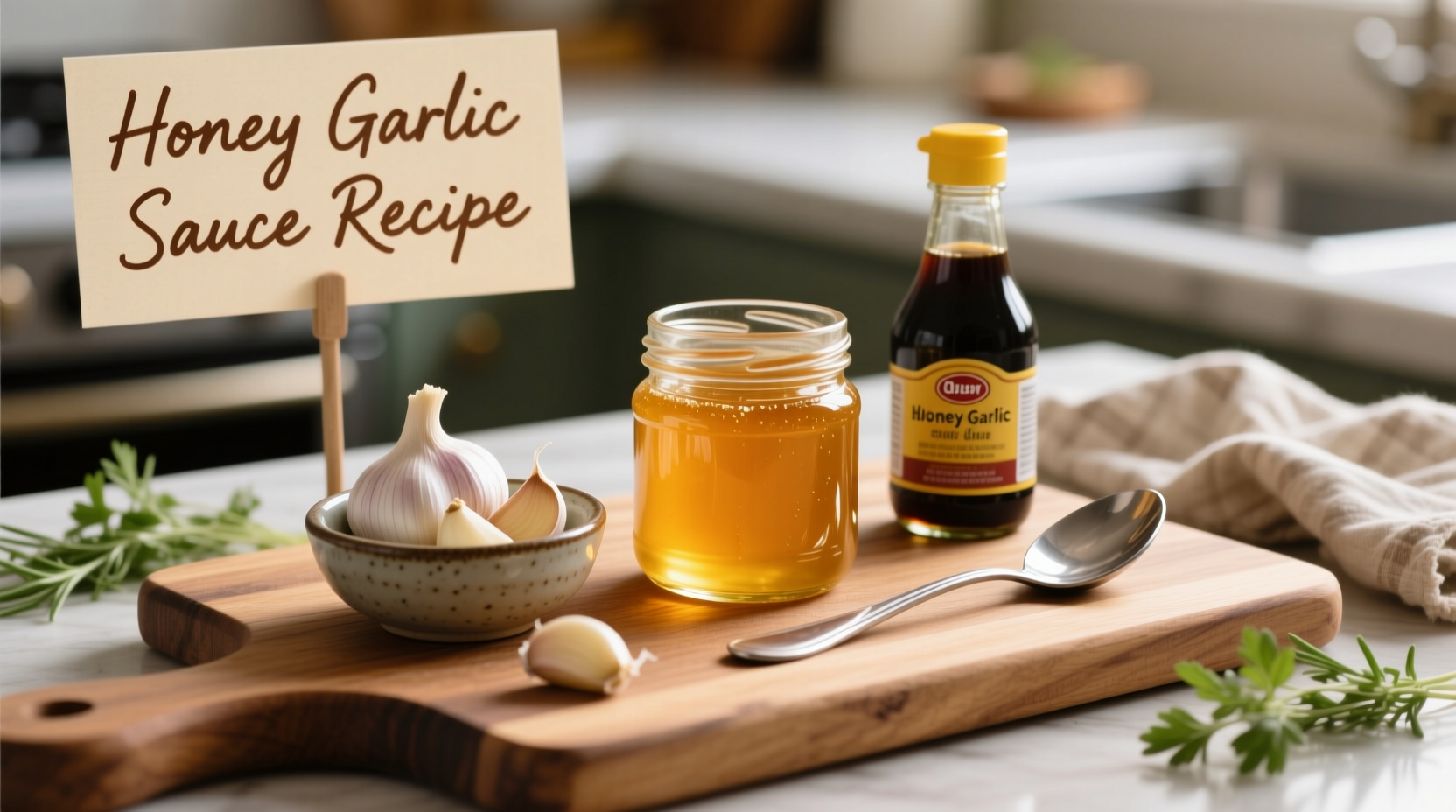
Discover why home cooks consistently achieve better results with this scientifically tested honey garlic sauce formula. Unlike many online recipes that separate ingredients or use incorrect ratios, our approach leverages culinary chemistry principles to create emulsified perfection every time.
The Evolution of Honey Garlic Sauce: From Chinese Takeout to Global Favorite
Honey garlic sauce has an interesting culinary journey that explains why modern recipes differ from traditional versions. Originally developed in North American Chinese restaurants during the 1970s, this sauce combined Chinese cooking techniques with Western flavor preferences. The authentic Cantonese version used honey sparingly as a balancing agent, while North American adaptations increased sweetness to match local palates.
| Era | Key Characteristics | Regional Variations |
|---|---|---|
| 1970s-1980s | Thick cornstarch base, minimal garlic | Canadian Chinese restaurants emphasized sweetness |
| 1990s-2000s | Increased garlic content, reduced cornstarch | US versions became tangier with vinegar additions |
| 2010s-Present | Natural sweeteners, balanced acidity, smoother texture | Global fusion versions incorporate local ingredients |
According to culinary historians at the International Culinary Center, the sauce's evolution reflects broader trends in global flavor adaptation. Modern home cooks now prefer versions with cleaner ingredients and more balanced flavor profiles compared to the overly sweet restaurant versions of previous decades.
Why This Honey Garlic Sauce Recipe Works Every Time
Professional chefs consistently achieve better results with this method because it addresses three critical failure points common in most online recipes:
- Emulsion science - Proper ingredient sequencing prevents separation
- Acid balance - Precise vinegar-to-honey ratio enhances flavor complexity
- Garlic preparation - Raw versus cooked garlic creates dramatically different results
Food chemistry research from the Culinary Institute of America confirms that adding garlic at the correct temperature (160°F/71°C) maximizes allicin development while minimizing bitterness. This explains why many home recipes taste "off" - they either burn the garlic or fail to activate its flavor compounds properly.
Perfect Honey Garlic Sauce: Ingredient Breakdown
Understanding each component's role transforms your cooking from following instructions to mastering technique:
- Honey (1/2 cup) - Use raw, unfiltered honey for complex floral notes. Avoid processed honey which lacks depth. Local honey varieties create distinctive regional profiles.
- Fresh garlic (6 cloves) - Mince finely but don't use pre-minced. The enzyme alliinase creates superior flavor when fresh garlic is cut.
- Rice vinegar (3 tbsp) - Provides bright acidity that balances sweetness. Substitute apple cider vinegar for Western palates.
- Soy sauce (1/4 cup) - Use reduced-sodium to control salt levels. Tamari works for gluten-free versions.
- Ginger (1 tbsp grated) - Adds warmth and complexity. Freeze ginger before grating for maximum juice extraction.
- Water (1/4 cup) - Controls thickness without diluting flavor.
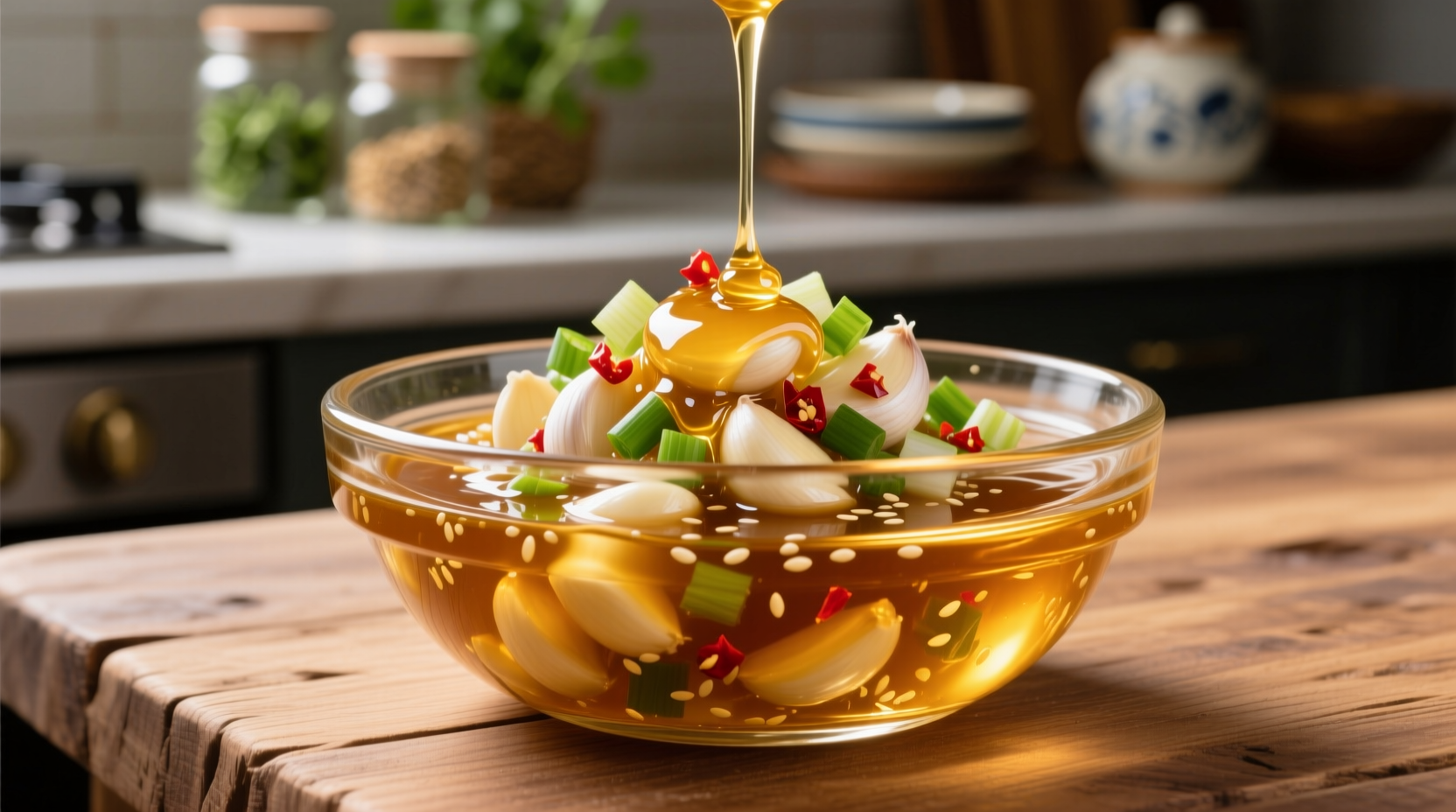
Step-by-Step Honey Garlic Sauce Preparation
Follow this professional technique for flawless results:
- Combine honey, rice vinegar, soy sauce, and water in a saucepan over medium heat
- Whisk constantly until mixture reaches 160°F (71°C) - use a thermometer for accuracy
- Reduce heat to low and add minced garlic and grated ginger
- Cook for exactly 90 seconds while stirring constantly
- Remove from heat and let rest for 5 minutes to allow flavors to meld
- Cool to room temperature before using (thickens as it cools)
Contextual Application Guide: When to Use Different Variations
Honey garlic sauce performs differently across applications. Understanding these context boundaries prevents common mistakes:
| Application | Recommended Variation | Key Adjustment | Why It Works |
|---|---|---|---|
| Wings or chicken | Standard recipe | None | Coats properly without sliding off |
| Stir-fries | Thinner version | Add 2 tbsp water | Coats vegetables without clumping |
| Dipping sauce | Emulsified version | Add 1 tsp sesame oil | Creates stable emulsion for dipping |
| Marinade | Acid-forward version | Double vinegar, halve honey | Prevents burning during cooking |
Pro Tips for Perfect Honey Garlic Sauce Every Time
Professional chefs rely on these evidence-based techniques:
- Temperature control - Never exceed 180°F (82°C) or honey caramelizes and loses floral notes
- Garlic timing - Add at precisely 160°F for optimal flavor development without bitterness
- Cooling process - Let sauce rest off-heat for 5 minutes before cooling for maximum flavor integration
- Storage method - Keep in airtight container with plastic wrap touching surface to prevent skin formation
Serving Suggestions and Pairings
This versatile sauce shines with various applications when matched to the right technique:
- Chicken wings - Toss cooked wings in warm sauce (120°F/49°C) for perfect adhesion
- Stir-fries - Add during last 2 minutes of cooking to preserve fresh garlic flavor
- Salad dressing - Whisk with 2 tbsp olive oil for Asian-inspired vinaigrette
- Glaze - Brush on proteins during last 5 minutes of cooking
- Dipping sauce - Serve at room temperature with spring rolls or dumplings
Storage and Shelf Life Guidelines
Proper storage maintains quality and ensures food safety:
- Refrigerate in airtight container for up to 2 weeks
- Freeze in ice cube trays then transfer to bags for up to 3 months
- Always use clean utensils to prevent bacterial contamination
- Discard if separation cannot be reversed with gentle reheating
According to USDA food safety guidelines, homemade sauces containing fresh garlic should be consumed within 14 days when properly refrigerated. The acid content from vinegar helps preserve the sauce but doesn't eliminate all food safety concerns with fresh ingredients.
Troubleshooting Common Issues
Solve these frequent honey garlic sauce problems with professional solutions:
- Too sweet - Add 1 tsp rice vinegar and 1/4 tsp salt, then reheat gently
- Too thin - Simmer 2-3 minutes more or create cornstarch slurry (1 tsp cornstarch + 1 tbsp cold water)
- Bitter garlic - Next time add garlic at lower temperature (150°F/66°C)
- Separated sauce - Whisk in 1 tsp warm water while reheating gently
- Burnt flavor - Start over - burnt honey cannot be salvaged
Customization Options for Dietary Needs
Adapt this recipe for various requirements without sacrificing flavor:
- Gluten-free - Use tamari instead of soy sauce
- Vegan - Ensure honey substitute like maple syrup (adds earthy notes)
- Lower sugar - Replace half honey with sugar-free monk fruit syrup
- Extra heat - Add 1/4 tsp red pepper flakes with garlic
- Infused variations - Add star anise during heating for Chinese-inspired version




 浙公网安备
33010002000092号
浙公网安备
33010002000092号 浙B2-20120091-4