
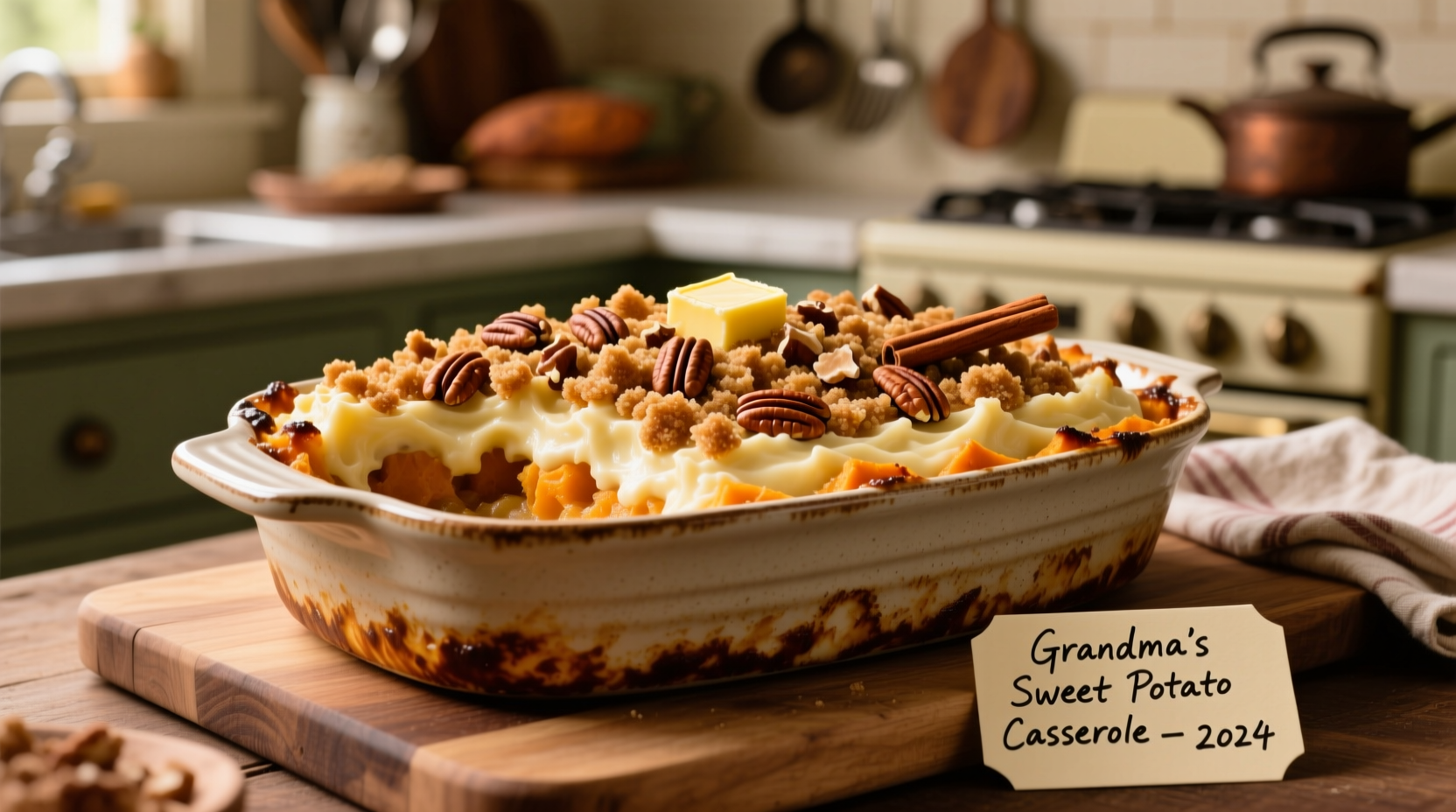
This classic sweet potato casserole with pecan topping recipe serves 8–10 people, requires 15 minutes of prep time plus 45 minutes baking, and features creamy sweet potato filling crowned with a crunchy pecan streusel topping. Perfect for holiday gatherings, this Southern-inspired dish balances natural sweetness with toasted nuttiness and requires simple pantry staples you likely already have.
The Essential Sweet Potato Selection Guide
Choosing the right sweet potatoes makes all the difference in texture and flavor. While many recipes simply say “sweet potatoes,” understanding the varieties helps you achieve perfect results:
| Sweet Potato Variety | Color | Texture | Best For Casserole? |
|---|---|---|---|
| Garnet | Deep orange | Firm, moist | Yes – ideal balance of sweetness |
| Jewel | Bright orange | Very moist | Yes – most commonly available |
| Japanese | Pale yellow | Dry, cake-like | No – lacks necessary moisture |
| White Sweet Potato | Cream-colored | Dense, starchy | No – wrong flavor profile |
According to the USDA Agricultural Research Service, Garnet and Jewel varieties contain 30% more beta-carotene than other types, contributing to their vibrant color and nutritional benefits (USDA Nutrient Data Laboratory). For our recipe, select three medium-sized Jewel sweet potatoes (about 2½ pounds total) for optimal moisture content without excess water that would make your casserole soggy.
Equipment You'll Actually Need
Don't be intimidated by complicated equipment lists. This recipe requires only basic kitchen tools:
- 9x13 inch baking dish (standard size for perfect portioning)
- Large pot for boiling sweet potatoes
- Hand mixer or potato masher (no fancy equipment needed)
- Mixing bowls (one medium, one small)
- Measuring cups and spoons
Step-by-Step Preparation: From Raw Ingredients to Perfect Casserole
Preparing the Sweet Potato Base (20 minutes)
- Peel and cube 2½ pounds of Jewel sweet potatoes into 1-inch pieces
- Place in large pot, cover with cold water by 1 inch, and bring to boil
- Simmer 15–18 minutes until fork-tender but not falling apart
- Drain thoroughly and return to pot over low heat for 2 minutes to evaporate excess moisture
- Using hand mixer on low speed, blend sweet potatoes with 1⅓ cup brown sugar, ¼ cup melted butter, 2 eggs, ¼ cup milk, 1 tsp vanilla, and ½ tsp salt until smooth (avoid overmixing)
Crafting the Perfect Pecan Topping (5 minutes)
The secret to a crunchy, flavorful topping that doesn't sink:
- Combine ¾ cup chopped pecans, ¼ cup all-purpose flour, ¼ cup brown sugar, 3 tbsp cold butter (cubed), and ¼ tsp cinnamon
- Use pastry cutter or fingers to blend until mixture resembles coarse crumbs
- Refrigerate topping while preparing base to maintain crisp texture
Assembly and Baking (45 minutes)
- Pour sweet potato mixture into greased 9x13 baking dish, smoothing top with spatula
- Evenly distribute chilled pecan topping across surface
- Bake at 350°F for 35–45 minutes until topping is golden brown and edges are bubbling
- Cool 15 minutes before serving (allows structure to set)
Pro Tips for Consistently Perfect Results
Professional chefs know these details make the difference between good and exceptional:
- Moisture control: After boiling, let sweet potatoes sit in colander for 5 minutes to drain completely
- Temperature matters: Use room temperature eggs and milk to prevent curdling when mixing
- Texture secret: For ultra-smooth filling, pass sweet potatoes through food mill before mixing
- Make-ahead option: Prepare base and topping separately, refrigerate up to 24 hours, then assemble and bake
When This Dish Shines: Context and Occasions
Sweet potato casserole with pecan topping has evolved from humble Southern roots to a holiday staple. According to food historians at the University of North Carolina, this dish gained popularity during the Great Depression when sweet potatoes provided affordable nutrition (UNC Press – Soul Food: The Surprising Story of an American Cuisine, One Plate at a Time).
Today, it's most appropriate for:
- Thanksgiving and Christmas dinners (served alongside turkey or ham)
- Potluck gatherings (travels well when cooled)
- Fall and winter meals (complements seasonal flavors)
Avoid serving this dish in contexts requiring:
- Strictly savory menus (it's inherently sweet)
- Gluten-free requirements without modification (standard recipe contains flour)
- Quick weeknight dinners (best prepared with some planning)
Simple Variations for Different Dietary Needs
Adapt this classic recipe for various dietary preferences without sacrificing flavor:
Gluten-Free Option
Replace all-purpose flour in topping with almond flour or certified gluten-free oat flour. The texture remains crunchy while maintaining nutty flavor compatibility.
Vegan Adaptation
Substitute butter with coconut oil, eggs with flax eggs (2 tbsp ground flax + 5 tbsp water), and dairy milk with unsweetened almond milk. The natural sweetness of sweet potatoes compensates for any flavor differences.
Reduced-Sugar Version
Cut brown sugar in base by half and use sugar-free maple-flavored syrup in topping. The natural sugars in sweet potatoes provide sufficient sweetness when balanced properly.
Serving and Storage Guidelines
For optimal enjoyment:
- Serving temperature: Warm (not hot) enhances flavor complexity
- Portion size: 3x2 inch pieces provide satisfying serving without overwhelming
- Perfect pairings: Turkey, ham, green bean casserole, or cranberry sauce
- Storage: Refrigerate covered for up to 4 days
- Reheating: 350°F for 15–20 minutes until center reaches 165°F (USDA Food Safety Recommendation)
- Freezing: Wrap tightly and freeze up to 3 months; thaw overnight before reheating
Frequently Asked Questions
Can I use canned sweet potatoes instead of fresh?
Yes, but with adjustments. Use two 15-ounce cans of unsweetened sweet potatoes (drained and patted dry). Reduce added liquid by 2 tablespoons since canned versions contain more moisture. Fresh sweet potatoes generally provide superior flavor and texture control.
Why does my topping sometimes sink into the filling?
This happens when the topping isn't properly chilled before baking or when the filling contains too much moisture. Ensure your sweet potatoes are thoroughly drained after boiling, and refrigerate the topping for at least 10 minutes before assembling. The temperature contrast helps maintain separation during baking.
How can I prevent my casserole from being too watery?
Watery casserole typically results from insufficiently drained sweet potatoes or overmixing. After boiling, let sweet potatoes sit in the colander for 5 minutes to drain completely. Return them to the warm pot for 2 minutes over low heat to evaporate excess moisture. Avoid adding extra liquid unless absolutely necessary.
Can I prepare this dish ahead of time?
Absolutely. Prepare the sweet potato base and pecan topping separately, then refrigerate in airtight containers for up to 24 hours. When ready to bake, assemble the casserole (base first, then topping) and add 5-10 minutes to the baking time since you're starting with cold ingredients.
What's the best way to chop pecans for the topping?
For optimal texture, use a chef's knife to roughly chop pecans into pea-sized pieces. Avoid using pre-chopped pecans as they're often too fine. If using a food processor, pulse just 2-3 times – you want distinct pieces that will toast properly during baking, not a fine meal.




 浙公网安备
33010002000092号
浙公网安备
33010002000092号 浙B2-20120091-4