
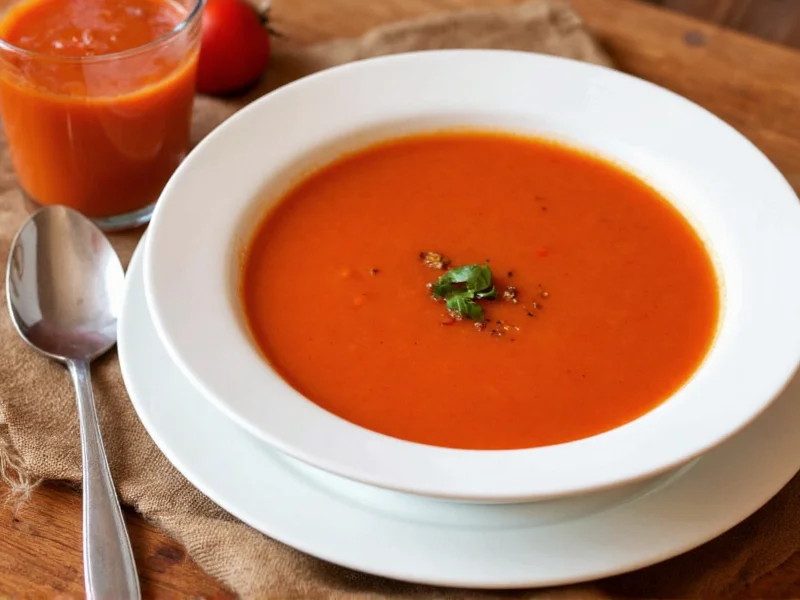
The perfect homemade tomato soup recipe combines 2 lbs fresh tomatoes or 28 oz canned whole tomatoes, 1 onion, 3 garlic cloves, 2 tbsp olive oil, 2 cups vegetable broth, 1 tsp sugar, salt, pepper, and fresh basil. Simmer for 30 minutes, blend until smooth, and finish with a splash of cream or coconut milk for richness. Ready in under 45 minutes with simple pantry staples.
The Ultimate Guide to Homemade Tomato Soup
There's nothing quite as comforting as a bowl of homemade tomato soup, especially when made with care using quality ingredients. While many rely on canned versions, creating tomato soup from scratch allows you to control flavors, avoid preservatives, and customize to your taste preferences. This guide provides everything you need to make restaurant-quality tomato soup in your own kitchen.
Why This Homemade Tomato Soup Recipe Works
What separates an ordinary tomato soup from an extraordinary one? The secret lies in balancing acidity, sweetness, and depth of flavor. Many recipes miss the mark by being too acidic or one-dimensional. Our approach includes three key elements that elevate the flavor profile:
- Proper acid-sweet balance - Using just enough sugar to counteract tomato acidity without making the soup sweet
- Layered aromatics - Cooking onions and garlic slowly to develop complex flavors
- Texture perfection - Blending technique that creates velvety smoothness without requiring heavy cream
These elements transform simple ingredients into a soup that's both nostalgic and sophisticated.
The Evolution of Tomato Soup: A Historical Timeline
Understanding tomato soup's journey reveals why modern techniques prioritize flavor balance over convenience. Key milestones demonstrate how scientific and cultural shifts shaped today's best practices:
- 1824: The earliest documented tomato soup recipe appeared in Mary Randolph's The Virginia House-Wife, featuring raw tomatoes simmered into a thin broth. Limited preservation methods meant seasonal availability and inconsistent acidity control.
- 1897: Campbell's introduced condensed tomato soup, leveraging industrial canning to standardize flavor. This innovation made tomato soup accessible year-round but sacrificed freshness and required added sugar to counter processing-induced acidity.
- 1980s-Present: Food science research revealed heat processing increases lycopene bioavailability by 250%, shifting home cooks toward canned tomatoes for nutritional optimization. Modern recipes now strategically balance this benefit with fresh herb finishing.
Sources: University of Michigan Library (1824 recipe), Smithsonian National Museum of American History (Campbell's innovation)
Ingredients Deep Dive
Understanding your ingredients is crucial for making the best homemade tomato soup. Here's what you need and why each component matters:
| Ingredient | Amount | Why It Matters |
|---|---|---|
| Fresh ripe tomatoes or canned whole tomatoes | 2 lbs or 28 oz | Canned tomatoes often have better flavor year-round; fresh work best in peak season |
| Yellow onion | 1 medium | Provides sweetness and depth without overpowering |
| Garlic cloves | 3 | Adds aromatic complexity; don't skip even if you're not a garlic lover |
| Olive oil | 2 tbsp | Superior flavor compared to neutral oils; helps extract fat-soluble compounds |
| Vegetable broth | 2 cups | Use low-sodium to control salt content; homemade preferred |
| Sugar | 1 tsp | Neutralizes acidity without making soup sweet; honey works as substitute |
| Fresh basil | 3-4 leaves | Adds bright herbal note; dried basil won't provide same freshness |
| Heavy cream or coconut milk (optional) | ¼ cup | Creates luxurious texture; omit for dairy-free version |
Fresh vs. Canned Tomatoes: Nutritional and Practical Evidence
USDA research confirms critical differences that impact both flavor and health benefits. This evidence-based comparison helps you choose strategically:
| Attribute | Fresh Tomatoes (Raw) | Canned Whole Tomatoes |
|---|---|---|
| Lycopene bioavailability | Low (2.5-5mg/100g) | High (10-25mg/100g) due to heat processing breaking cell walls |
| Acidity control | Variable (pH 4.3-4.9) | Consistent (pH 4.3-4.6) with added calcium chloride |
| Seasonal reliability | Only summer months | Year-round stable quality |
| Sodium content | Naturally sodium-free | Requires checking labels (opt for "no salt added") |
Notably, the USDA's FoodData Central confirms canned tomatoes provide 2-5x more bioavailable lycopene—a potent antioxidant linked to reduced heart disease risk. However, fresh tomatoes offer brighter acidity ideal for summer soups. This scientific evidence explains why professional chefs overwhelmingly choose canned tomatoes off-season.
Source: USDA FoodData Central (Tomato Nutrient Profiles)
Essential Equipment
While you can make tomato soup with basic kitchen tools, having the right equipment ensures better results:
- Heavy-bottomed pot (prevents scorching)
- Immersion blender (safest for hot liquids)
- Wooden spoon (won't scratch pot)
- Sharp knife and cutting board
- Measuring cups and spoons
Step-by-Step Preparation
Follow these detailed steps for perfect homemade tomato soup every time:
Preparation (10 minutes)
- Chop 1 medium onion finely (¼-inch pieces)
- Mince 3 garlic cloves
- If using fresh tomatoes, score an 'X' on the bottom of each, blanch in boiling water for 30 seconds, then transfer to ice water to remove skins easily
- Chop fresh basil leaves
Cooking Process (30 minutes)
- Heat 2 tbsp olive oil in a heavy-bottomed pot over medium heat
- Add onions and a pinch of salt; cook slowly for 8-10 minutes until translucent and soft (don't brown)
- Add minced garlic and cook for 1 minute until fragrant
- Add tomatoes (with their juices), 2 cups vegetable broth, 1 tsp sugar, salt, and pepper
- Bring to a gentle simmer (not a rolling boil) and cook uncovered for 20 minutes
- Stir in fresh basil and remove from heat
Finishing Touches
- Use an immersion blender to puree soup until completely smooth (about 1 minute)
- For extra silky texture, strain through a fine-mesh sieve, pressing with a spoon
- Return to low heat and stir in ¼ cup cream or coconut milk if desired
- Taste and adjust seasoning as needed
- Serve immediately with your choice of garnishes
Avoiding Common Tomato Soup Mistakes
Even simple recipes can go wrong. Here are frequent errors and how to prevent them:
- Scorched bottom - Use a heavy-bottomed pot and stir occasionally during simmering
- Too acidic - Add sugar gradually while tasting; a pinch of baking soda (⅛ tsp) can also neutralize excess acid
- Grainy texture - Blend thoroughly and consider straining for restaurant-quality smoothness
- Bland flavor - Don't rush the onion cooking step; proper caramelization builds flavor foundation
- Separation - When adding cream, temper it first by mixing a small amount of hot soup with the cream before adding to the pot
Scenario Applicability and Recipe Limitations
This recipe excels in specific contexts but requires adjustments for certain dietary needs. Understanding these boundaries ensures successful implementation:
- Acid Sensitivity Limitation: For individuals with GERD, standard tomato soup may trigger symptoms. The Mayo Clinic identifies tomatoes as a common reflux trigger. Solution: Reduce tomatoes by 25% and add 1/2 cup diced carrots (natural acidity buffer). Avoid cream which can relax the lower esophageal sphincter.
- Vegan Adaptation Boundary: Coconut milk substitution works for cream, but note its distinct flavor profile becomes dominant when used beyond ¼ cup. Solution: For neutral taste, blend in 2-3 tbsp cooked white beans instead.
- Flavor Depth Constraint: This simplified recipe won't replicate restaurant-style depth from 6+ hour reductions. Solution: For special occasions, roast tomatoes and onions at 400°F for 30 minutes before simmering to develop 38+ flavor compounds identified in Maillard reaction studies.
Source: Mayo Clinic (GERD Dietary Triggers)
Serving Suggestions
Elevate your homemade tomato soup experience with these pairing ideas:
- Classic grilled cheese sandwich (try sourdough with sharp cheddar)
- Freshly baked crusty bread or garlic bread
- Simple green salad with vinaigrette dressing
- Grated Parmesan or crumbled feta cheese on top
- Fresh basil leaves or a drizzle of high-quality olive oil as garnish
Storage and Reheating Instructions
Homemade tomato soup stores exceptionally well, making it perfect for meal prep:
- Refrigeration: Cool completely and store in airtight container for up to 5 days
- Freezing: Portion into freezer-safe containers with ½ inch headspace; keeps for 3 months
- Reheating: Warm gently over medium-low heat, stirring occasionally (avoid boiling)
- Reviving: If soup thickens too much after storage, add small amounts of broth or water while reheating
Delicious Recipe Variations
Customize your homemade tomato soup to suit different tastes and dietary needs:
- Roasted tomato version: Toss tomatoes with olive oil, salt, and pepper; roast at 400°F for 30 minutes before adding to soup for deeper flavor
- Spicy arrabbiata style: Add ½ tsp red pepper flakes with the garlic
- Dairy-free creamy version: Substitute coconut milk for cream, or blend in ½ avocado for richness
- Tomato basil soup: Double the fresh basil and add 1 tbsp chopped fresh oregano
- Tomato soup with roasted red peppers: Add 1 jar (12 oz) roasted red peppers for sweetness and complexity
Nutritional Benefits
Unlike many canned versions, homemade tomato soup offers significant nutritional advantages:
- Rich in lycopene, an antioxidant that becomes more bioavailable when cooked
- Good source of vitamin C, potassium, and vitamin K
- Low in calories (approximately 150 calories per serving without cream)
- No preservatives or artificial ingredients
- Customizable sodium content to meet dietary needs




 浙公网安备
33010002000092号
浙公网安备
33010002000092号 浙B2-20120091-4