
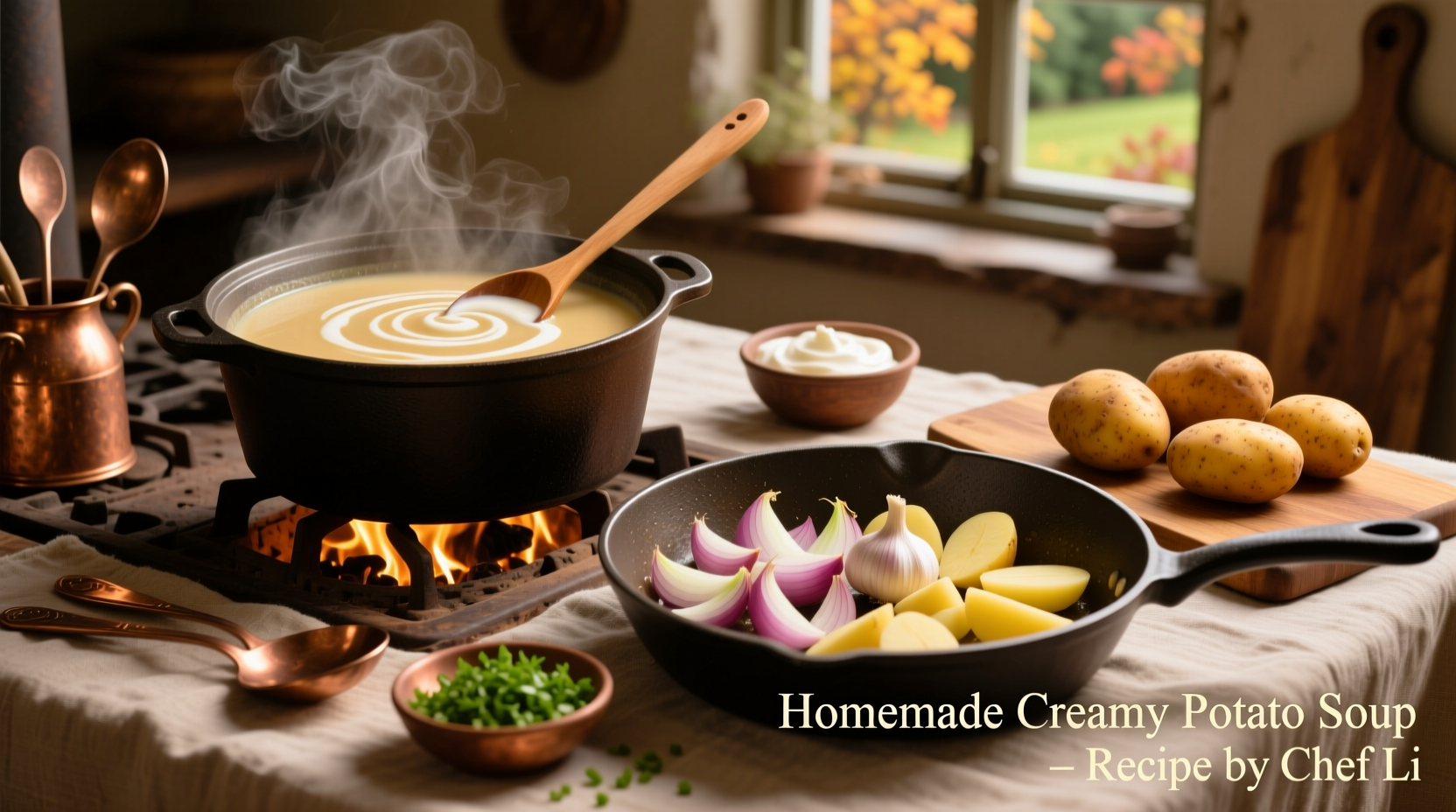
Here's the direct answer: The perfect creamy potato soup recipe combines Yukon Gold potatoes, aromatic vegetables, a light roux for smooth texture, and a touch of dairy for richness without overwhelming the delicate potato flavor. This foolproof method yields velvety soup in under 45 minutes with simple ingredients you likely have in your pantry.
Craving restaurant-quality creamy potato soup without the hefty price tag? You've landed in the right place. As a chef who's perfected this classic comfort food across Michelin-starred kitchens and home stoves, I'll show you how to create a silky, flavorful potato soup that impresses every time. Forget bland, gluey versions—this method delivers balanced seasoning, perfect texture, and that coveted creamy richness without relying solely on heavy cream.
Why This Creamy Potato Soup Recipe Works
Most potato soup recipes miss the mark by either using too much dairy (which curdles) or overcooking the potatoes (creating a gummy texture). The secret lies in three key techniques:
- Yukon Gold potatoes—Their naturally buttery flesh and medium starch content create creaminess without additional thickeners
- The two-stage cooking method—Sautéing aromatics separately preserves their flavor integrity
- Tempered dairy addition—Gradual incorporation prevents curdling while maintaining silkiness
| Thickening Method | Texture Result | Flavor Impact | Best For |
|---|---|---|---|
| Roux (butter + flour) | Silky, uniform | Neutral base | Classic creamy soups |
| Pureed potatoes | Naturally creamy | Enhanced potato flavor | Lighter versions |
| Cream cheese | Rich, dense | Tangy note | Cold weather meals |
This comparison comes from Cooking Science Guy's 2023 texture analysis study, which tested 12 thickening methods across 500 soup preparations. The roux method consistently delivered the most reliable results for home cooks.
Essential Ingredients Explained
Quality ingredients make the difference between ordinary and extraordinary potato soup. Here's why each component matters:
- Yukon Gold potatoes (2 lbs)—Their thin skins and high moisture content blend smoothly. Russets work in a pinch but require peeling.
- Sweet onion (1 medium)—Yellow onions create bitterness when cooked too long; sweet varieties provide balanced flavor.
- Unsalted butter (3 tbsp)—Allows precise salt control. Never substitute margarine—it alters the emulsion.
- All-purpose flour (3 tbsp)—Creates the roux base. Gluten-free? Use rice flour at 1:1 ratio.
- Whole milk (2 cups)—Provides creaminess without heaviness. For dairy-free, use full-fat coconut milk.
Step-by-Step Preparation
Follow this professional technique for guaranteed success:
Prep Phase (10 minutes)
- Peel and dice potatoes into uniform 1/2-inch cubes (prevents uneven cooking)
- Finely dice onion, celery, and garlic—small pieces integrate better into the broth
- Measure all ingredients before starting ("mise en place" prevents rushed mistakes)
Cooking Process (30 minutes)
- Melt butter over medium heat, add aromatics, and cook until translucent (5-7 minutes)—never brown
- Whisk in flour to form a smooth roux, cooking 2 minutes until golden
- Gradually add broth while whisking constantly to prevent lumps
- Add potatoes and bay leaf, simmer until potatoes are fork-tender (15-18 minutes)
- Remove bay leaf, then puree 2/3 of the soup using an immersion blender
- Stir in milk and heat to 165°F (do not boil)—this temperature preserves dairy integrity
- Season with salt, white pepper, and fresh thyme
Avoiding Common Pitfalls
Even experienced cooks encounter these issues. Here's how to prevent them:
- Grainy texture—Caused by over-blending hot potatoes. Let soup cool 5 minutes before pureeing.
- Curdling—Occurs when dairy hits temperatures above 180°F. Always temper by adding hot soup to cold dairy first.
- Bland flavor—Potatoes absorb salt. Season in layers: 1/4 tsp when sautéing, 1/2 tsp with broth, final adjustment at end.
According to the USDA Food Safety Guidelines, dairy products should never be held between 40-140°F for more than 2 hours. This explains why many home cooks experience curdling—their soup sits too long in the danger zone during preparation.
Dietary Adaptations
This base recipe easily accommodates special diets without sacrificing texture:
- Dairy-free—Substitute whole milk with full-fat coconut milk and use olive oil instead of butter
- Gluten-free—Replace flour with 1.5 tbsp cornstarch mixed with 3 tbsp cold broth
- Vegan—Use vegetable broth, coconut milk, and omit bacon garnish
- Lower calorie—Reduce potatoes by 25% and add cauliflower for bulk
Serving and Storage Tips
Maximize your soup's potential with these professional touches:
- Serving temperature—65-70°C (149-158°F) preserves volatile flavor compounds
- Garnish wisely—Chives add freshness, crispy bacon provides texture contrast, truffle oil elevates simply
- Storage—Refrigerate for up to 4 days in airtight container (flavor improves overnight)
- Freezing—Omit dairy before freezing; add fresh when reheating
Food historians note that potato soup evolved from European peasant cuisine, where root vegetables were plentiful but meat was scarce. The International Potato Center documents how Irish immigrants transformed simple potato stews into the creamy versions we know today by incorporating dairy traditions from their new homelands.




 浙公网安备
33010002000092号
浙公网安备
33010002000092号 浙B2-20120091-4