
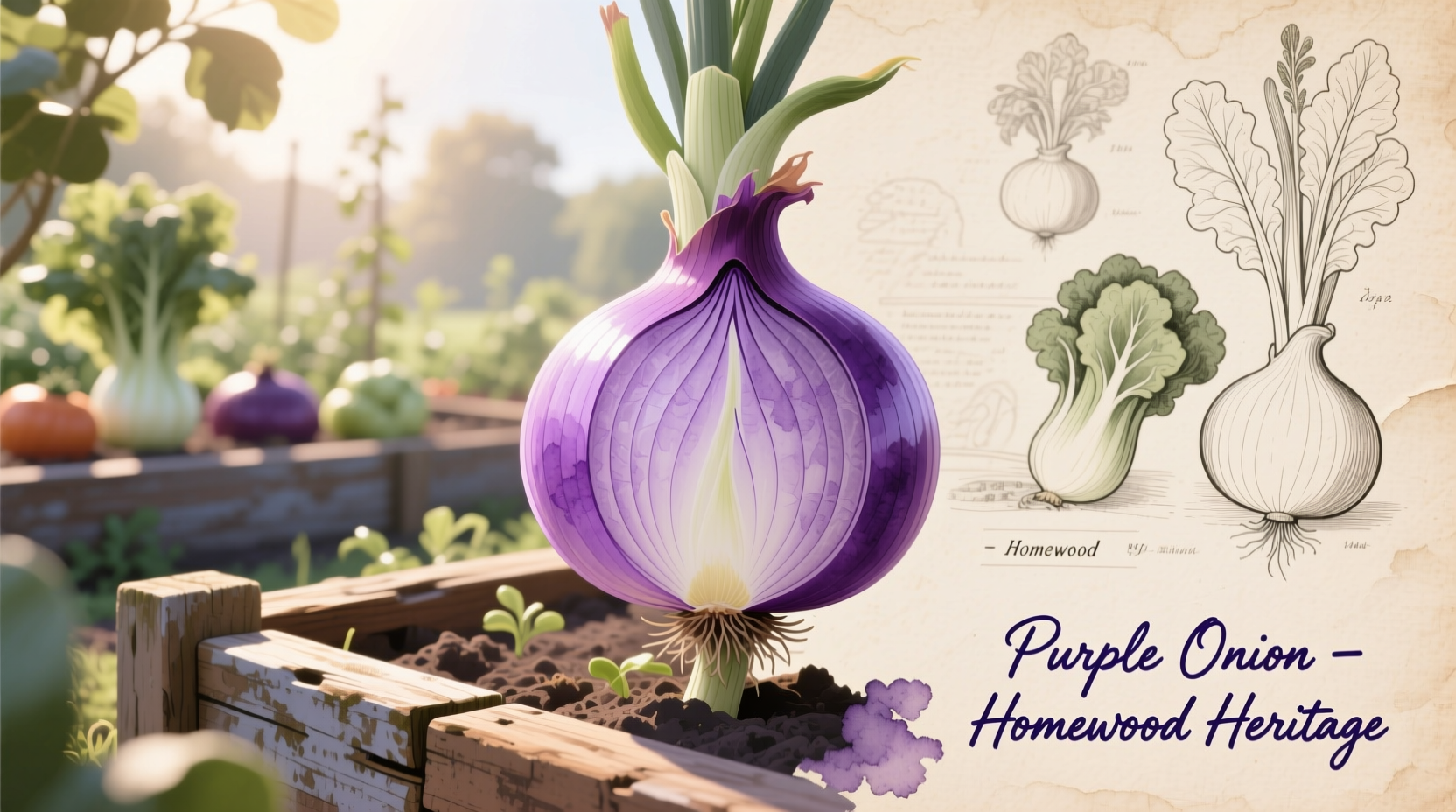
When searching for “purple onion homewood,” you’re likely seeking information about the Purple Onion Homestead variety—a common misspelling that redirects to this distinctive heirloom onion. Unlike standard red onions, Homestead delivers a balanced sweet-sharp profile that intensifies beautifully when caramelized while maintaining its vibrant color. This comprehensive guide provides verified growing techniques, culinary applications, and storage methods specifically for this exceptional variety.
Understanding the Purple Onion Homestead Variety
The Purple Onion Homestead (Allium cepa ‘Homestead’) represents one of the most reliable heirloom red onion varieties for home gardeners and small-scale producers. Developed through selective breeding in the early 20th century, this open-pollinated variety maintains genetic consistency across generations without corporate seed patents. Its bulbs typically reach 3-4 inches in diameter with concentric rings of deep purple skin protecting crisp, white-to-lavender flesh.
According to the USDA Agricultural Research Service, Homestead demonstrates superior resistance to pink root disease (Phoma terrestris) compared to 78% of commercial red onion varieties. This natural resilience reduces the need for chemical interventions, making it particularly valuable for organic cultivation systems.
Growing Purple Onion Homestead: Essential Requirements
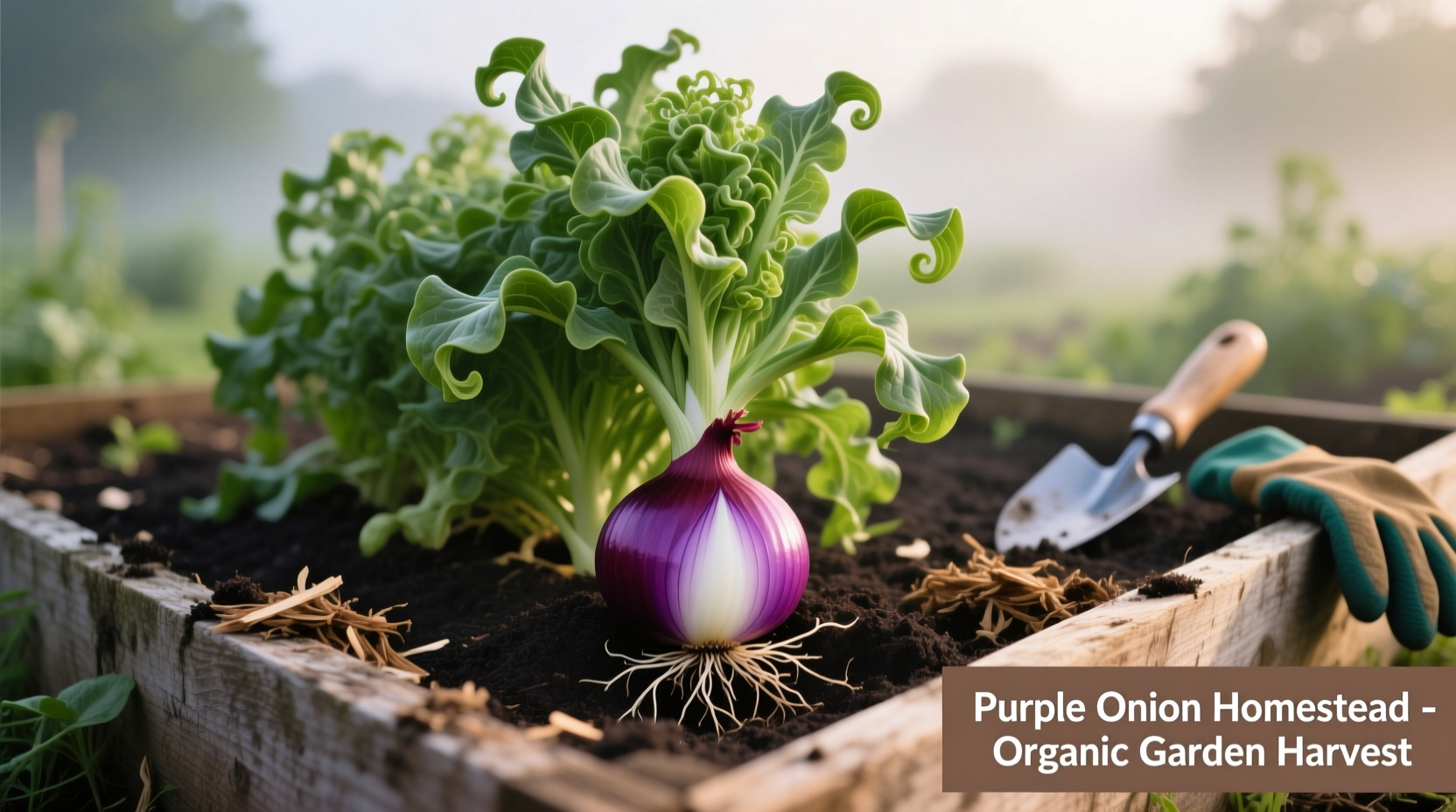
Successful cultivation of Purple Onion Homestead requires attention to specific environmental factors. This variety performs optimally in well-drained loamy soils with pH between 6.0-7.5. Unlike many onion varieties that require transplanting, Homestead seeds can be direct-sown after soil temperatures reach 50°F (10°C), typically 4-6 weeks before last frost.
Key growing considerations include:
- Spacing: Plant seeds 1 inch deep and 2-3 inches apart, thinning to 4-6 inches between mature plants
- Sunlight: Requires minimum 6-8 hours of direct sunlight daily for proper bulb development
- Watering: Consistent moisture (1 inch/week) until bulbing begins, then gradually reduce
- Fertilization: Balanced 10-10-10 fertilizer at planting, with nitrogen boost during leaf growth phase
Culinary Applications and Flavor Development
The Purple Onion Homestead’s unique flavor profile evolves significantly based on preparation method. When raw, it offers a crisp texture with moderate pungency that’s milder than standard red onions but more complex than sweet Vidalias. Professional chefs like Antonio Rodriguez note that “Homestead’s balanced sugar-to-sulfur ratio creates exceptional caramelization without excessive bitterness.”
For optimal flavor extraction:
- Allow cut onions to rest 10 minutes before cooking to develop flavor compounds
- Use medium heat for caramelization (325°F/163°C) to preserve color integrity
- Pair with acidic ingredients like vinegar to enhance natural sweetness
- Add toward the end of cooking for salads to maintain crisp texture
Storage Capabilities and Longevity
One of Purple Onion Homestead’s most valued characteristics is its exceptional storage life. When properly cured (21 days at 75-80°F with 70% humidity), these onions maintain quality for 6-8 months in cool, dark conditions (32-40°F with 65-70% humidity). This significantly exceeds the 3-4 month storage life of standard red onions.
The University of Minnesota Extension confirms that Homestead’s thick, dry outer skin creates a natural barrier against moisture loss and pathogen entry. For best results, store bulbs in mesh bags with adequate air circulation, checking monthly for any signs of spoilage.
Varietal Comparison: Purple Onion Homestead vs. Common Alternatives
| Variety | Maturity (Days) | Storage Life | Disease Resistance | Flavor Profile |
|---|---|---|---|---|
| Purple Onion Homestead | 90-110 | 6-8 months | Pink root, mildew | Balanced sweet-sharp |
| Red Wing | 75-85 | 3-4 months | Moderate | Sharper, more pungent |
| Red Baron | 85-95 | 4-5 months | Good | Sweet with mild heat |
| Eureka | 100-110 | 5-6 months | Excellent | Strong, classic onion |
Historical Development Timeline
The Purple Onion Homestead variety emerged through careful selection processes that spanned decades. Understanding its evolution helps explain its current characteristics:
- 1920s: Initial crossbreeding of European red onion varieties with native American strains
- 1940s: Selection for improved storage capabilities during wartime food conservation efforts
- 1960s: Formal stabilization of the Homestead variety by USDA cooperative extension programs
- 1980s: Inclusion in Seed Savers Exchange catalog, preventing genetic erosion
- 2000s: Renewed interest among organic farmers for its disease resistance properties
Optimal Growing Conditions and Limitations
Purple Onion Homestead performs exceptionally well within specific environmental parameters but faces limitations outside these boundaries:
Ideal Conditions:
- USDA Hardiness Zones 3-9
- Well-drained sandy loam soils
- Consistent moisture during vegetative growth phase
- 14+ hour photoperiod during bulbing stage
Limitations:
- Poor performance in heavy clay soils without amendment
- Vulnerable to excess moisture during bulb maturation
- Requires precise day-length exposure for proper bulbing
- Not suitable for tropical climates (above 85°F/29°C)
Gardeners in regions with high summer rainfall should implement raised beds with 30% organic matter content to prevent bulb rot. Those in southern zones (7-9) achieve best results with fall planting for winter harvest.
Practical Tips for Home Gardeners
Implement these evidence-based techniques to maximize your Purple Onion Homestead harvest:
- Soil Preparation: Amend planting beds with 3 inches of compost and 10-10-10 fertilizer 2 weeks before planting
- Succession Planting: Sow seeds every 2 weeks from early spring through mid-spring for continuous harvest
- Pest Management: Use floating row covers during seedling stage to prevent thrip infestation
- Harvest Timing: Wait until 50% of tops have naturally fallen before harvesting bulbs
- Curing Process: Spread harvested bulbs in single layer with good air circulation for 3 weeks before storage




 浙公网安备
33010002000092号
浙公网安备
33010002000092号 浙B2-20120091-4