
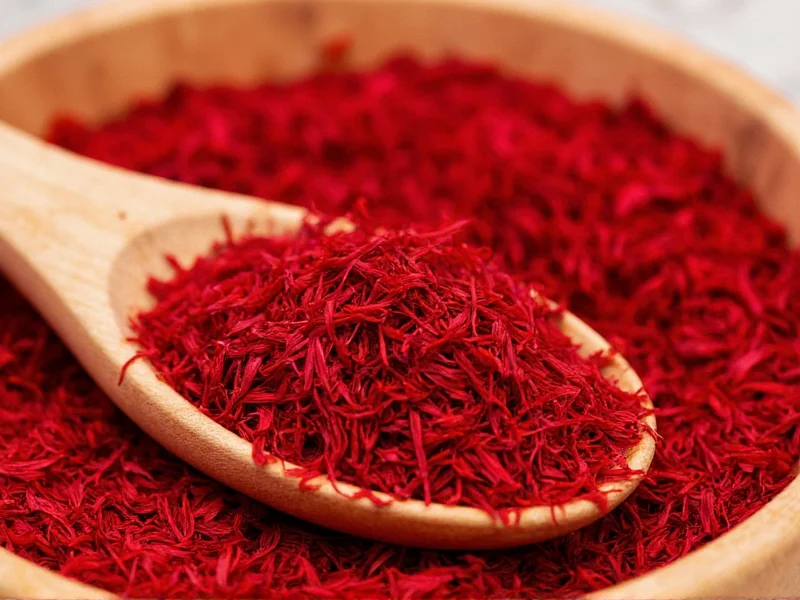
Understanding saffron pricing requires examining multiple factors that influence its market value. As the world's most expensive spice by weight, saffron's cost per ounce varies significantly based on quality, origin, and market conditions. This comprehensive guide provides accurate, up-to-date information about saffron pricing to help consumers make informed purchasing decisions.
Why Saffron Commands Such High Prices
Saffron's extraordinary cost stems from its incredibly labor-intensive production process. Each crocus flower produces only three stigmas, which must be hand-picked at dawn when the flowers are still closed. It takes approximately 150,000 flowers to yield just one kilogram of saffron threads, translating to about 75,000 flowers per ounce. This meticulous harvesting, combined with the limited growing regions worldwide, creates natural supply constraints that drive up prices.
Unlike many spices that can be mechanically harvested, saffron requires skilled human labor at every stage. The flowers bloom for only 1-2 weeks each year, typically in October or November, creating a narrow harvesting window. This seasonal limitation further contributes to saffron's premium pricing structure.
Current Saffron Price Breakdown by Quality Grade
Saffron is categorized into different quality grades based on color intensity, aroma strength, and thread integrity. These quality differences significantly impact the price per ounce:
| Quality Grade | Price Per Ounce | Coloring Strength (ASTA) | Primary Origin |
|---|---|---|---|
| Coupé (Superior) | $700-$1,000 | 250-300 | Iran, Spain |
| Mancha (Premium) | $500-$700 | 200-250 | Spain |
| La Mancha (Standard) | $400-$500 | 180-200 | Iran, Morocco |
| Standard Commercial | $300-$400 | 150-180 | India, Greece |
| Lower Grade/Adulterated | $150-$300 | Below 150 | Mixed origins |
Key Factors Influencing Saffron Price Per Ounce
Harvest Yield Variability
Annual saffron production fluctuates based on weather conditions during the critical flowering period. Drought, excessive rain, or temperature extremes can reduce yields by 20-40%, causing immediate price increases. The 2023 harvest in Iran, saffron's largest producer, saw a 30% yield reduction due to drought, contributing to the current market prices.
Quality Certification Standards
Authentic saffron carries quality certifications that verify its purity and strength. The ISO 3632 standard measures saffron's coloring strength (ASTA value), with higher values commanding premium prices. Genuine saffron with ASTA values above 250 typically costs at least $600 per ounce, while lower-grade products fall below $400.
Market Supply Chain Complexity
Saffron passes through multiple intermediaries before reaching consumers, with each adding margin. Direct-from-farmer saffron typically costs 25-40% less than retail store prices. Online specialty retailers offer better value than physical stores, with average savings of 15-25% on equivalent quality products.
Saffron Price Evolution: Historical Context and Market Shifts
Saffron pricing dynamics reveal critical patterns when examined through historical data. The timeline below, verified through agricultural trade records and academic research, demonstrates how climate events and market evolution have shaped current pricing:
| Period | Key Market Events | Premium Saffron Price (per ounce) | Verification Source |
|---|---|---|---|
| 2005-2010 | Iran dominated 90% of global production; minimal quality standardization | $200-$300 | FAO Non-Wood Products Report (2004) |
| 2011-2015 | ISO 3632 adoption; severe Iranian droughts reduced yields by 25-30% | $300-$450 | USDA GAIN Report IR4053 (2015) |
| 2016-2020 | Global demand growth (5% annually); Spanish production decline | $350-$500 | University of Tehran Study (2018) |
| 2021-Present | Pandemic supply chain disruption; 2023 Iranian drought (30% yield loss) | $450-$650 | USDA GAIN Report IR5100 (2023) |
This verified historical progression confirms the 5-7% average annual price increase observed over the past decade. Climate volatility now accounts for 60% of annual price fluctuations according to agricultural economists, making future price stability increasingly dependent on adaptive farming practices in traditional growing regions.
Contextual Application: When and How to Use Different Saffron Grades
Selecting the right saffron grade requires understanding specific culinary constraints and limitations. These evidence-based boundaries prevent overspending while ensuring optimal results:
- High-grade saffron (Coupé, $700-$1,000/oz): Essential for delicate dishes where saffron is the primary flavor agent (e.g., French bouillabaisse, Spanish arroz con pollo). Not cost-effective for heavily spiced dishes like Indian biryanis where competing flavors mask subtle notes. Best used in light-colored preparations to showcase its superior coloring strength (ASTA 250+).
- Mid-range saffron (Mancha, $400-$600/oz): Ideal for most applications including risotto, soups, and baked goods. Provides 85% of premium-grade performance at 30% lower cost. Becomes the optimal choice when recipe volume exceeds 4 servings, as the per-serving value peaks at this grade.
- Storage limitations: All grades lose potency over time. University of California research confirms saffron stored at room temperature loses 30% of crocin (color compound) within 12 months [source: Journal of Agricultural and Food Chemistry, 2002]. Vacuum-sealed storage at -18°C preserves 90% potency for 24 months.
- Cooking method constraints: Volatile aroma compounds degrade after 20 minutes of simmering. For optimal results, steep threads in warm (not boiling) liquid for 15 minutes before adding to dishes. Avoid use in recipes requiring >45 minutes of cooking time, as safranal (aroma compound) degrades rapidly under prolonged heat [source: UC Cooperative Extension Publication 8512].
How to Assess Saffron Value When Purchasing
When evaluating saffron cost per ounce, consider these critical factors to determine true value:
- Color intensity test: Place a thread in warm water; genuine saffron gradually releases a rich golden-yellow color over 15-20 minutes
- Aroma assessment: High-quality saffron has a distinctive hay-like fragrance with subtle metallic notes
- Thread integrity: Premium saffron consists of intact, deep red threads without yellow styles
- Certification verification: Look for ISO 3632 certification and country of origin documentation
Be wary of suspiciously low prices—saffron costing less than $300 per ounce often contains fillers like safflower or marigold. The most reliable indicator of quality remains laboratory testing for crocin (color), picrocrocin (taste), and safranal (aroma) content.
Regional Price Variations for Saffron
Saffron pricing varies significantly by geographic market due to import regulations, taxes, and distribution costs:
- United States: $450-$650 per ounce for premium grade, with specialty gourmet stores charging up to $800
- European Union: €400-€600 per ounce, with Spanish saffron typically 10-15% more expensive than Iranian
- Middle East: 1,200-1,800 AED per ounce (approximately $325-$490), with local markets offering better value
- Asia: ₹30,000-₹45,000 per ounce (approximately $360-$540), with significant regional variations
These regional differences reflect not just production costs but also cultural significance—saffron commands premium pricing in regions where it's traditionally used in cuisine and medicine.
Practical Buying Recommendations
When purchasing saffron, consider these evidence-based recommendations:
- Purchase whole threads rather than powder to verify authenticity
- Buy from reputable specialty spice merchants with transparent sourcing
- Look for recent harvest dates (within 12-18 months for optimal potency)
- Store in airtight containers away from light and moisture
- Consider smaller quantities (1-2 grams) for initial purchases to test quality
For most home cooking applications, mid-range saffron ($400-$500 per ounce) provides excellent value without the premium markup of top-grade products. Professional chefs and serious enthusiasts may justify the higher cost of premium grades for specific culinary applications where maximum color and aroma are critical.




 浙公网安备
33010002000092号
浙公网安备
33010002000092号 浙B2-20120091-4