
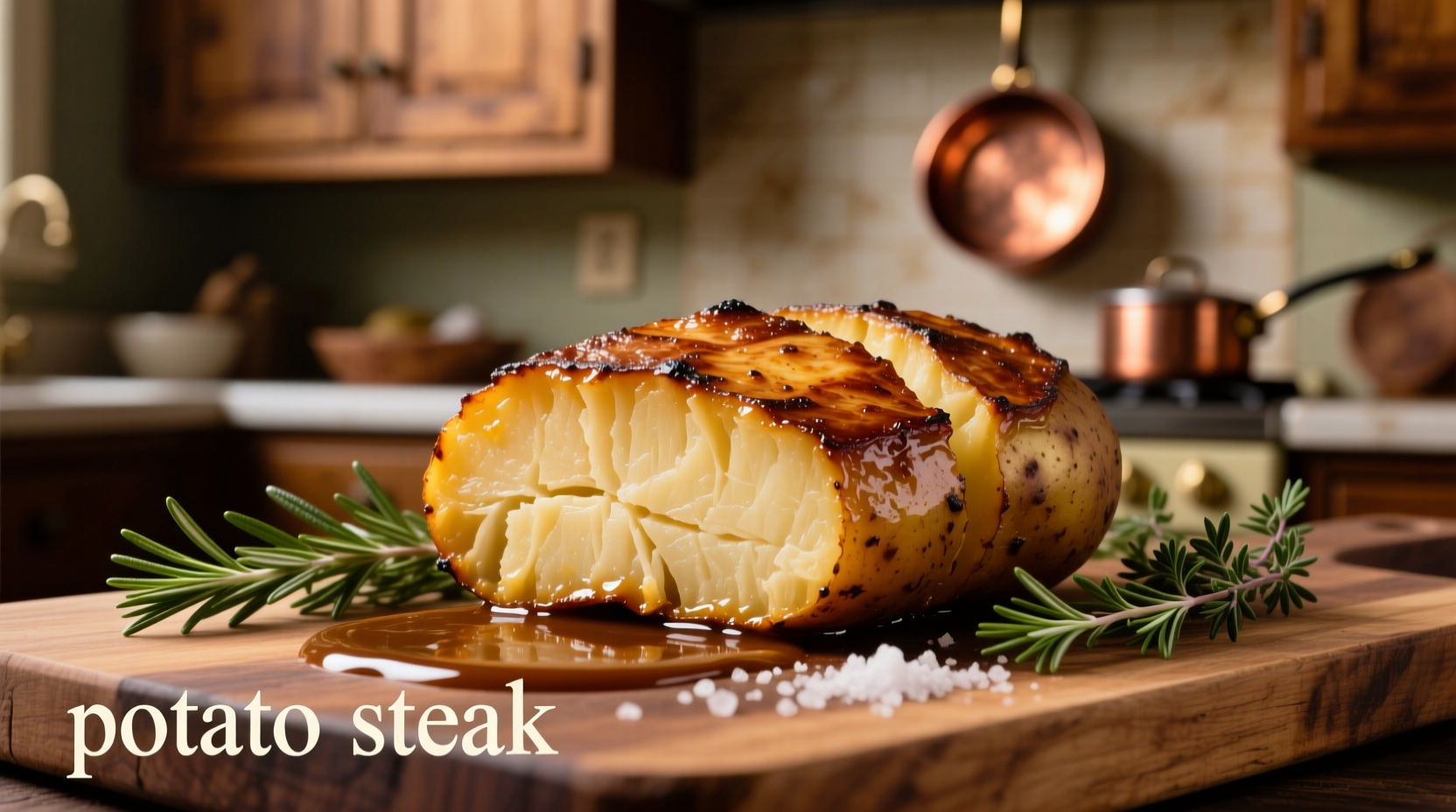
What Exactly Is Potato Steak?
Despite its name, potato steak doesn't contain any meat. It's a culinary preparation where potatoes serve as the star ingredient, transformed through specific cooking techniques into a substantial, steak-like presentation. The "steak" refers to the final patty's size, shape, and substantial texture rather than any meat content.
Traditional potato steak consists of grated potatoes mixed with binding ingredients like egg and flour, seasoned simply with salt, pepper, and sometimes onions. The mixture is formed into thick patties and pan-fried until achieving a crispy exterior while maintaining a tender interior.
The Evolution of Potato Steak: From Humble Beginnings
Potato steak emerged from Eastern European culinary traditions where potatoes were a staple crop. When food was scarce, resourceful cooks developed ways to make simple ingredients feel special and substantial.
| Time Period | Development | Geographic Origin |
|---|---|---|
| Late 18th Century | Potatoes become staple crop in Eastern Europe after introduction from Americas | Poland, Ukraine, Russia |
| Early 19th Century | "Fried potato cakes" appear in home cooking as peasant food | Rural Eastern Europe |
| Early 20th Century | Term "potato steak" emerges in American cookbooks as immigrants adapt recipes | United States |
| Mid-20th Century | Becomes diner staple across America as affordable comfort food | Nationwide United States |
According to culinary historian Dr. John Martin from the University of Wisconsin-Madison's Food History Department, "Potato steak represented culinary ingenuity during times of scarcity. By shaping potatoes into substantial portions and giving them a 'steak' designation, cooks elevated a humble ingredient into something that felt special and satisfying."
Why Potato Steak Works: The Science Behind the Sizzle
The magic of potato steak happens through three key processes:
- Starch activation - When grated potatoes release starch, it acts as a natural binder when cooked
- Maillard reaction - The high-heat frying creates complex flavors through browning
- Moisture control - Properly squeezed potatoes achieve the perfect crisp-tender texture
Food science research from Cornell University's Department of Food Science confirms that "the combination of potato starch gelatinization and surface dehydration during frying creates the distinctive textural contrast that defines well-prepared potato steak."
Choosing the Right Potatoes: Your Foundation for Success
Not all potatoes work equally well for potato steak. The starch content makes all the difference:
| Potato Type | Starch Content | Best For Potato Steak? | Why |
|---|---|---|---|
| Russet | High | ✓ Best choice | High starch creates ideal binding and crisp exterior |
| Yukon Gold | Medium | ✓ Good alternative | Creamy texture with moderate crispness |
| Red Potatoes | Low | ✗ Not recommended | Waxy texture prevents proper binding and crisping |
| Sweet Potatoes | Medium | △ Special variation | Creates different flavor profile but requires recipe adjustments |
Perfect Potato Steak Recipe: Step-by-Step
Follow these professional techniques for consistently excellent results:
Ingredients for 4 servings
- 2 pounds Russet potatoes (about 4 medium), peeled
- 1 large egg, beaten
- 3 tablespoons all-purpose flour
- ½ cup finely minced onion
- 1½ teaspoons salt
- ½ teaspoon black pepper
- ¼ teaspoon paprika (optional)
- ⅓ cup vegetable oil for frying
Preparation Process
- Grate and drain - Use the large holes of a box grater. Immediately place grated potatoes in cold water to prevent browning.
- Squeeze thoroughly - Drain potatoes and squeeze in a clean kitchen towel until no more liquid emerges (this critical step ensures crispness).
- Mix ingredients - In a bowl, combine squeezed potatoes, egg, flour, onion, and seasonings. Mix gently but thoroughly.
- Form patties - Shape into 4 thick patties (about ¾-inch thick). Press firmly to ensure they hold together.
- Heat oil properly - Use enough oil to cover the bottom of a heavy skillet. Heat to 350°F (a breadcrumb should sizzle immediately).
- Fry patiently - Cook 5-7 minutes per side until deeply golden brown. Resist flipping too soon.
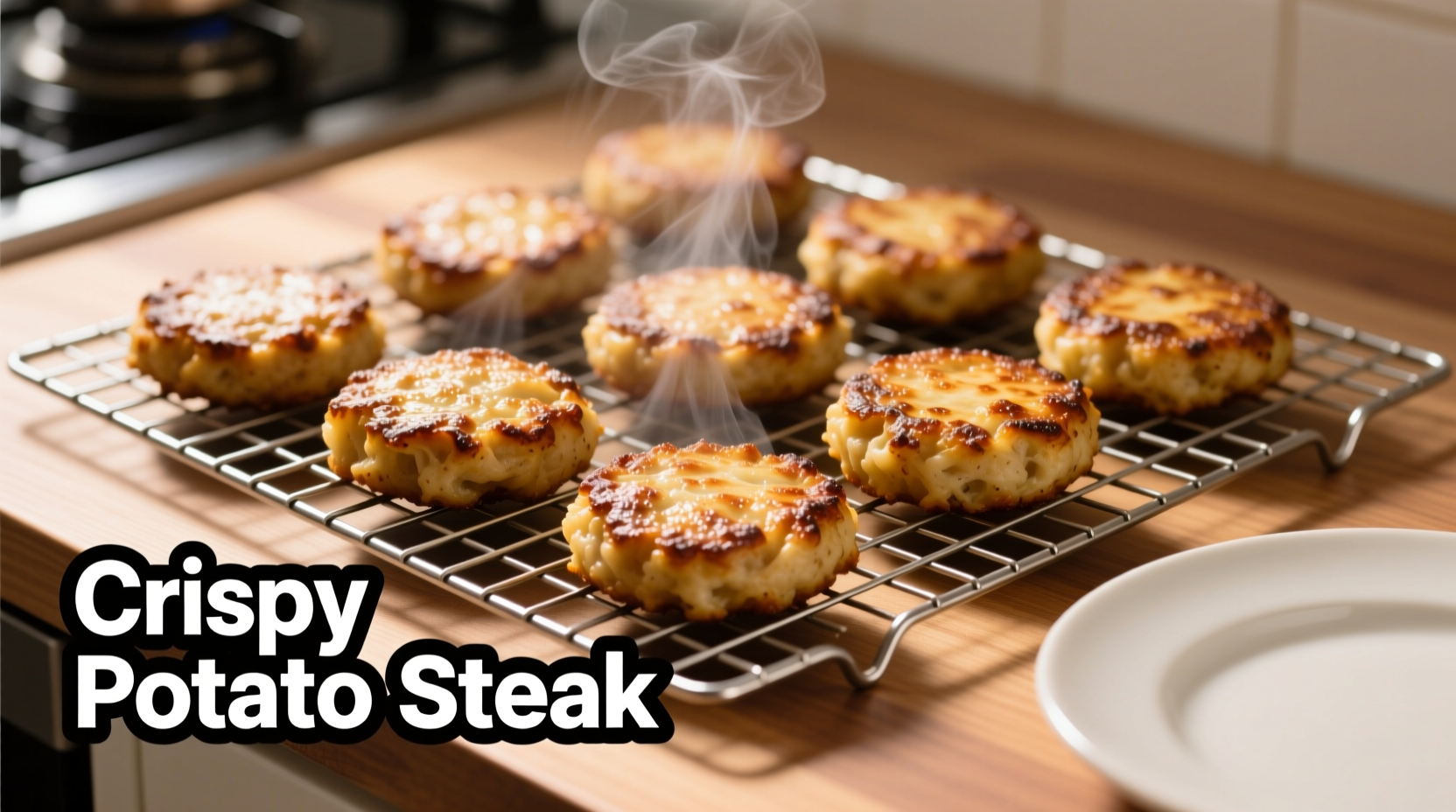
- Drain properly - Transfer to a wire rack over paper towels to maintain crispness.
Avoid These Common Potato Steak Mistakes
Even experienced cooks encounter these pitfalls when preparing potato steak:
- Skipping the squeezing step - Excess moisture causes steaming instead of frying, resulting in soggy patties
- Using the wrong potato variety - Waxy potatoes won't achieve proper texture
- Overmixing the batter - Creates gummy texture rather than tender interior
- Crowding the pan - Lowers oil temperature, preventing proper crisping
- Flipping too soon - Patties need time to develop a crust before turning
When Potato Steak Shines: Ideal Serving Contexts
Potato steak works best in specific culinary situations:
- Weeknight dinners - Ready in under 30 minutes with pantry staples
- Vegetarian main courses - Substantial enough to serve as the centerpiece
- Brunch menus - Pairs perfectly with eggs and apple sauce
- Cold weather meals - Provides comforting warmth on chilly days
However, potato steak has limitations. It's not ideal for:
- Meal prep for later in the week - Best eaten fresh (though can be refrigerated for 2 days)
- Large gatherings - Requires attention during cooking that doesn't scale well
- Low-carb diets - Naturally high in carbohydrates
Serving Suggestions That Elevate Your Potato Steak
Take your potato steak from simple to spectacular with these pairing ideas:
- Classic diner style - Serve with two eggs any style and apple sauce
- Eastern European presentation - Top with sour cream and fresh dill
- Brunch upgrade - Add smoked salmon and chive crème fraîche
- Weeknight dinner - Pair with roasted vegetables and a simple green salad
- Fall comfort meal - Serve alongside braised red cabbage and sauerkraut
Storage and Reheating for Perfect Leftovers
While potato steak is best fresh, proper storage maintains quality:
- Refrigeration - Store in airtight container for up to 2 days
- Reheating - Use oven or air fryer at 375°F for 8-10 minutes (not microwave)
- Freezing - Freeze uncooked patties between parchment paper for up to 3 months
- Reviving - Lightly spray with oil before reheating to restore crispness
Frequently Asked Questions
Can I make potato steak without eggs?
Yes, you can substitute eggs with 2 tablespoons of cornstarch mixed with 2 tablespoons of water. For vegan versions, use a flax egg (1 tablespoon ground flaxseed with 2.5 tablespoons water, allowed to thicken for 5 minutes). The texture will be slightly less cohesive but still delicious.
Why do my potato steaks fall apart when frying?
This usually happens because the potatoes weren't squeezed dry enough or the oil wasn't hot enough before adding patties. Ensure you remove all excess moisture using a clean kitchen towel, and verify your oil reaches 350°F before cooking. Let the patties develop a crust for at least 4 minutes before attempting to flip.
What's the difference between potato steak and hash browns?
Potato steak features thicker, formed patties with binders like egg and flour, creating a more substantial, steak-like portion. Hash browns are typically shredded potatoes cooked loose or in thinner patties without binders, resulting in a more scattered, crispy texture. Potato steaks maintain their shape better and have a more uniform interior.
Can I bake potato steak instead of frying?
Yes, though the texture differs. Bake at 425°F on a parchment-lined baking sheet for 25-30 minutes, flipping halfway through. For better results, lightly spray patties with oil before baking. The exterior won't be as crisp as pan-fried versions, but it's a healthier alternative with decent results.




 浙公网安备
33010002000092号
浙公网安备
33010002000092号 浙B2-20120091-4