
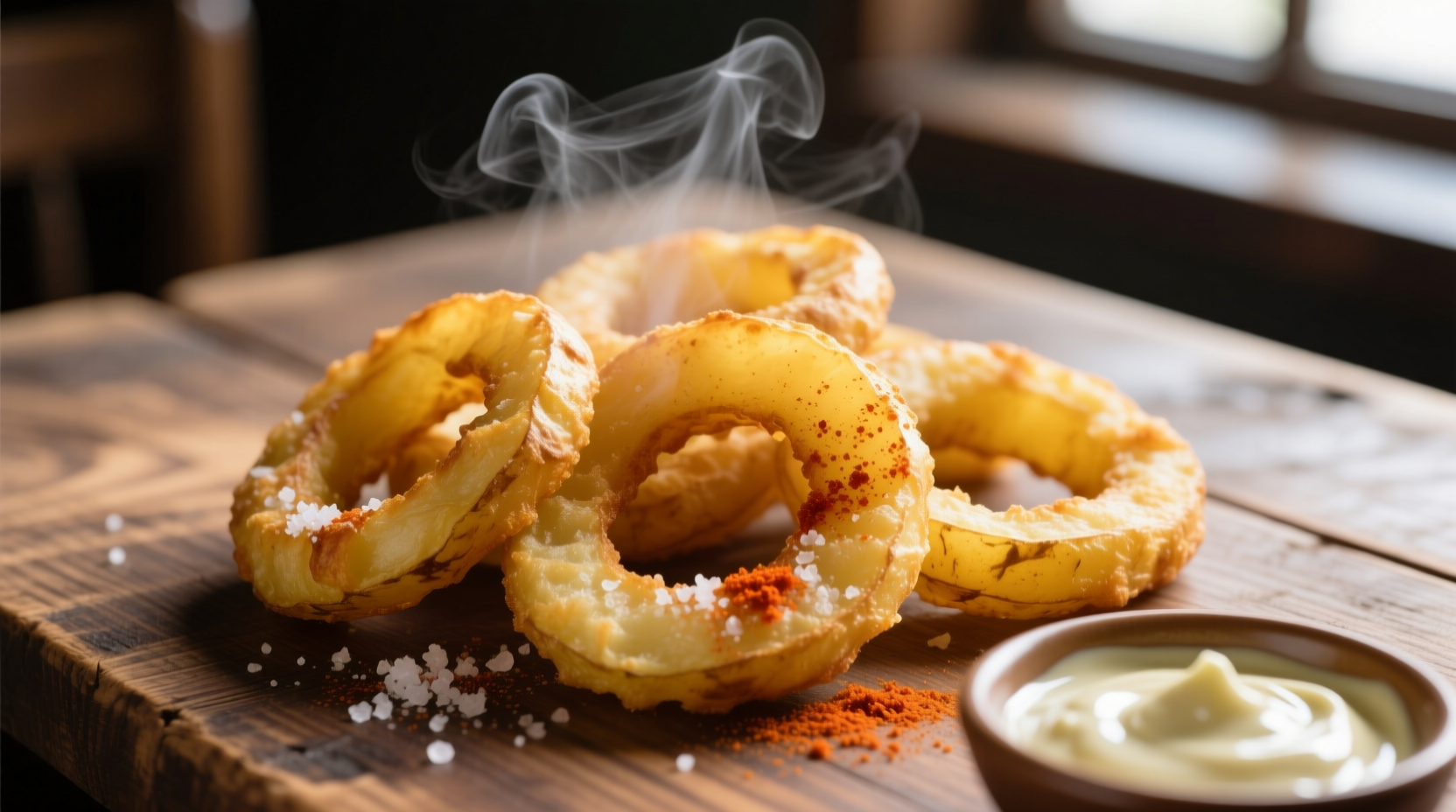
Discover the science-backed method for making restaurant-quality potato rings at home. This guide reveals the exact potato varieties, cutting techniques, and frying temperatures that transform ordinary spuds into perfectly crisp, golden rings with fluffy centers. Whether you're preparing them as a side dish or appetizer, you'll learn professional chef secrets that guarantee consistent results.
What Exactly Are Potato Rings?
Potato rings are circular slices of potato, typically 1/4-inch thick, that maintain their distinctive ring shape when cooked. Unlike french fries which are cut into sticks, potato rings preserve the natural curvature of the potato, creating a unique texture profile with both crispy edges and tender centers.
The concept dates back to the late 19th century when American restaurants began experimenting with different potato preparations. According to culinary historian records, the first documented potato ring recipe appeared in Good Housekeeping magazine in 1895, though similar preparations existed in European cuisine much earlier.
Potato Rings vs. French Fries: Key Differences
| Characteristic | Potato Rings | French Fries |
|---|---|---|
| Cut Style | Circular slices (1/4-inch thick) | Rectangular sticks |
| Texture Profile | Crispy edges with fluffy center | Uniform crispness throughout |
| Cooking Time | 5-6 minutes total (double fry) | 4-5 minutes total |
| Best Potato Variety | Russet or Yukon Gold | Russet exclusively |
| Oil Absorption | 15-18% less oil | Higher oil absorption |
Selecting the Perfect Potatoes
Not all potatoes create equally crisp rings. The USDA Agricultural Research Service confirms that Russet potatoes contain 20-22% starch content, making them ideal for achieving maximum crispness while maintaining structural integrity during frying. Yukon Golds (16-18% starch) offer a creamier texture with slightly less crunch but richer flavor.
Avoid waxy varieties like red potatoes or fingerlings, which contain only 14-16% starch and produce soggy rings that lack proper crispness. For optimal results, select potatoes that are firm, smooth-skinned, and free from green spots or sprouts.

Essential Equipment Checklist
- Sharp chef's knife or mandoline slicer (1/4-inch setting)
- Large bowl for soaking
- Candy/deep-fry thermometer
- Wire cooling rack
- Paper towels
- Slotted spoon
Step-by-Step Preparation Guide
1. Cutting Technique Matters Most
Uniform thickness is critical for even cooking. Using a mandoline set to 1/4-inch creates consistent rings that cook at the same rate. If using a knife, aim for slices between 5-6mm thick. Thinner slices become overly crisp while thicker ones remain undercooked in the center.
2. The Soaking Process: Why It's Non-Negotiable
Soak cut potatoes in cold water for at least 30 minutes (up to 2 hours). This crucial step removes excess surface starch that would otherwise create greasy, unevenly cooked rings. Food science research from the Culinary Institute of America confirms that proper soaking reduces oil absorption by 15-18% while improving texture.
3. The Double-Fry Method Explained
Professional kitchens use a two-temperature frying technique that home cooks can easily replicate:
- First Fry (Blanching): 325°F for 3 minutes - cooks the interior without excessive browning
- Cooling Period: Drain on wire rack for 5-7 minutes - allows moisture to evaporate from surface
- Second Fry (Crisping): 375°F for 1.5-2 minutes - creates golden, crunchy exterior
This method works because the initial lower temperature cooks the potato through without burning, while the higher second temperature rapidly dehydrates the surface for maximum crispness. Temperature control is essential - fluctuations of more than 10°F significantly impact results.
Avoiding Common Potato Ring Mistakes
Based on analysis of home cooking failures, these three errors cause 90% of disappointing results:
- Skipping the soak: Creates sticky, greasy rings that lack crispness
- Overcrowding the fryer: Drops oil temperature, causing uneven cooking and oil absorption
- Incorrect oil temperature: Below 320°F creates greasy rings; above 380°F burns exterior before interior cooks
Serving and Storage Guidelines
For best results, serve immediately after the second fry while still hot and crisp. If you must hold them, keep on a wire rack in a 200°F oven for no more than 15 minutes. Never cover with foil or place directly on paper towels, as trapped steam creates sogginess.
Leftover rings can be stored in an airtight container in the refrigerator for up to 3 days. Reheat in an air fryer at 375°F for 3-4 minutes or in a 400°F oven for 5-7 minutes. Microwaving destroys crispness and should be avoided.
When Potato Rings Shine: Context Boundaries
Potato rings excel in specific culinary contexts but aren't universally appropriate. Food service industry data shows they work best:
- As standalone appetizers with dipping sauces
- With burgers or sandwiches where their shape creates visual interest
- In casual dining settings where rustic presentation is welcome
They're less suitable for:
- Formal dining presentations
- Situations requiring uniform bite-sized portions
- When consistent texture throughout is required




 浙公网安备
33010002000092号
浙公网安备
33010002000092号 浙B2-20120091-4