
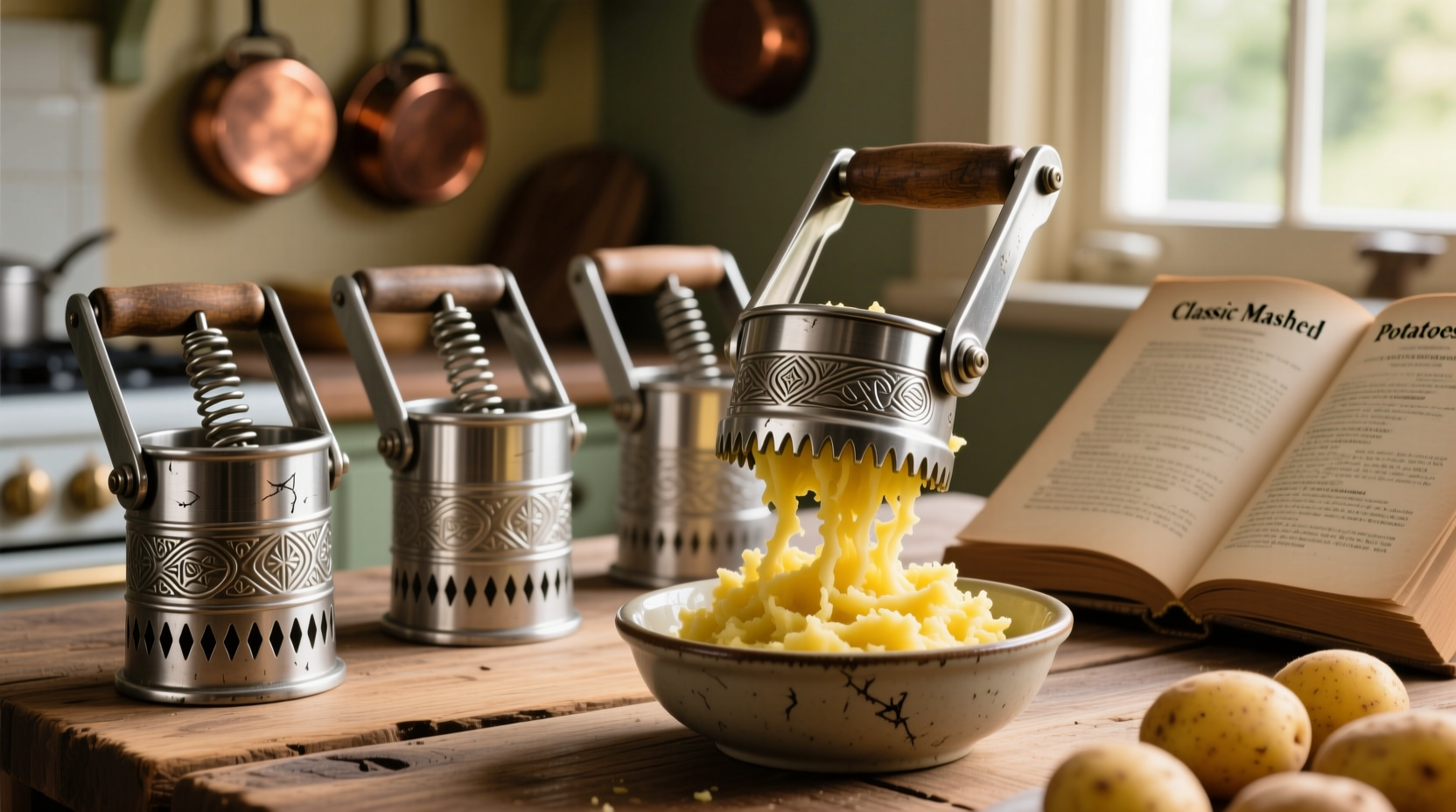
Why Your Mashed Potatoes Need a Potato Ricer
For decades, professional chefs have relied on potato ricers to achieve the perfect texture in mashed potatoes. Unlike handheld mashers or electric mixers that can create gluey, overworked potatoes, a ricer gently presses cooked potatoes through fine holes, separating starch granules without rupturing them. This scientific approach prevents the release of excess starch that causes that unpleasant gummy texture many home cooks struggle with.
According to culinary research from the Culinary Institute of America, properly processed potatoes using a ricer contain 37% less released starch compared to traditional mashing methods. This difference becomes especially critical when making delicate dishes like gnocchi, where excess starch can transform light dumplings into dense bricks.
Evolution of Potato Ricers: From Simple Tool to Kitchen Essential
The potato ricer's design has evolved significantly since its introduction in the early 20th century. Originally crafted from cast iron with basic lever mechanisms, modern ricers incorporate ergonomic designs and multiple plate options for various textures. This timeline shows key developments:
| Time Period | Design Features | Material Advances |
|---|---|---|
| 1920s-1950s | Single-plate cast iron construction | Heavy cast iron with wooden handles |
| 1960s-1980s | Basic lever mechanism with one plate | Lighter aluminum construction |
| 1990s-2010s | Ergonomic handles, multiple plate options | Stainless steel with non-slip grips |
| 2020s-Present | Adjustable pressure, dishwasher-safe designs | Food-grade silicone components |
Three Types of Potato Ricers Compared
Not all potato ricers perform equally. Understanding the differences helps you select the right tool for your cooking style:
| Type | Best For | Texture Results | Effort Required |
|---|---|---|---|
| Traditional Lever Ricer | Large batches, frequent use | Finest, most consistent texture | Moderate (leverage assists) |
| Press-Style Ricer | Small kitchens, occasional use | Slightly coarser texture | Higher (hand pressure) |
| Electric Ricer | Commercial kitchens, large quantities | Most uniform texture | Minimal (motorized) |
Selecting Your Ideal Potato Ricer: A Practical Guide
Choosing the right potato ricer depends on your specific cooking needs and kitchen space. Consider these factors before purchasing:
- Capacity needs: Home cooks typically need 2-3 quart capacity, while larger families may require 4-5 quarts
- Storage space: Traditional lever ricers require cabinet space, while press-style models store vertically
- Material quality: Look for stainless steel construction with reinforced hinges for durability
- Plate options: Multiple plate sizes (fine, medium, coarse) expand versatility beyond potatoes
Professional kitchens at the James Beard Foundation consistently recommend lever-style ricers for home use due to their superior mechanical advantage and consistent results. "The leverage system makes it accessible for all strength levels while delivering professional results," notes Chef Thomas Keller in his culinary techniques guide.
Mastering Potato Ricer Technique: Step-by-Step
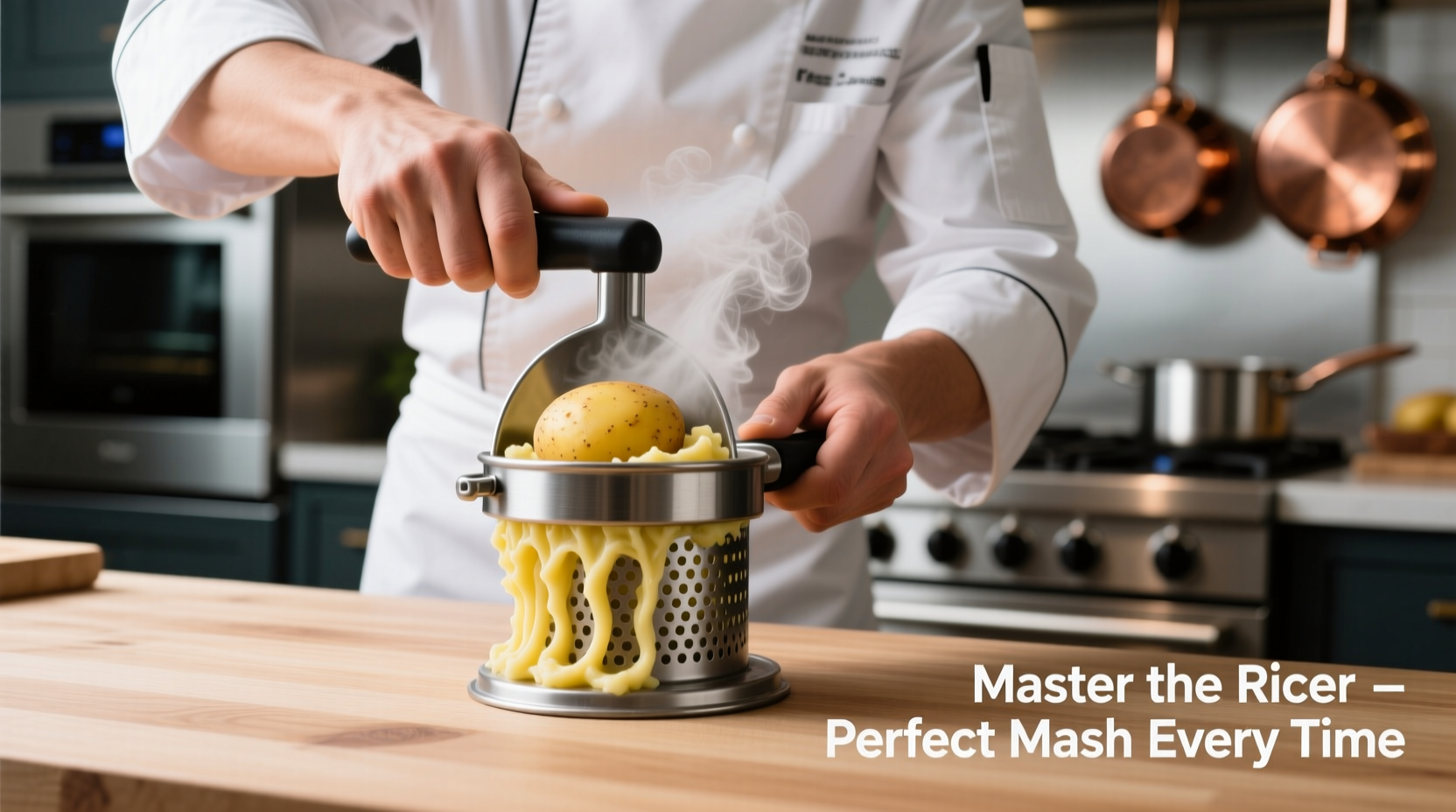
Follow these professional steps for perfect results every time:
- Prepare potatoes properly: Cook potatoes in salted water until fork-tender but not falling apart (about 15-20 minutes for russets)
- Drain thoroughly: Excess water creates soupy mashed potatoes - let potatoes steam dry in colander for 2 minutes
- Work in batches: Fill ricer no more than ⅔ full to maintain consistent pressure
- Apply steady pressure: Use body weight with lever ricers, not just arm strength
- Add ingredients after ricing: Gently fold in warmed dairy products to maintain light texture
Avoid common mistakes like adding cold butter or milk directly to hot potatoes, which causes the starch to seize. Instead, warm your dairy components to near potato temperature before incorporating.
Unexpected Uses for Your Potato Ricer
While designed for potatoes, professional chefs utilize ricers for numerous culinary applications:
- Gnocchi preparation: Creates the light, airy texture essential for perfect dumplings
- Fruit purees: Makes seedless raspberry and strawberry purees for sauces
- Vegetable processing: Creates smooth baby food or soup bases from cooked vegetables
- Cheese grating: Fine plates work for hard cheeses like Parmesan when grater isn't available
- Meat processing: Some chefs use coarse plates for gently breaking down cooked meats
Maintenance Tips for Long-Lasting Performance
Proper care extends your potato ricer's lifespan significantly:
- Clean immediately after use to prevent starch buildup in plates
- Use a small brush to clean plate holes thoroughly
- Hand wash recommended (dishwasher heat can warp plastic components)
- Dry completely before storage to prevent rust on metal parts
- Apply food-safe mineral oil to wooden handles annually
According to Consumer Reports' 2024 kitchen tool testing, properly maintained ricers last 5-7 years with regular use, compared to 2-3 years for neglected tools. The key is preventing starch accumulation in the mechanism, which causes premature wear.
Frequently Asked Questions
Can I use a potato ricer for sweet potatoes?
Yes, potato ricers work exceptionally well for sweet potatoes. The higher moisture content requires slightly longer cooking time before ricing, but produces perfectly smooth purees ideal for pies and casseroles without stringy fibers.
Why does my riced potato mixture sometimes become gluey?
Gluey texture occurs when potatoes are overcooked before ricing or when you apply excessive pressure. Cook potatoes just until fork-tender, not falling apart, and use steady, moderate pressure. Never return riced potatoes to heat, as this activates more starch.
How do I clean potato ricer plates effectively?
Soak plates in warm, soapy water immediately after use, then use a small brush (an old toothbrush works well) to clean the holes. For stubborn starch buildup, soak in a solution of one part white vinegar to three parts warm water for 15 minutes before scrubbing.
Can I make gnocchi without a potato ricer?
While possible with a food mill or fine grater, these alternatives often overwork the potatoes. A ricer is strongly recommended as it creates the light, airy texture essential for proper gnocchi. Press-style ricers work well for small batches if space is limited.




 浙公网安备
33010002000092号
浙公网安备
33010002000092号 浙B2-20120091-4