
Ever wondered why we call potatoes by so many different names? Understanding potato nicknames isn't just trivia—it reveals fascinating cultural connections and historical journeys of one of the world's most important food crops. Whether you're a home cook, gardener, or food history enthusiast, knowing these terms helps you appreciate how potatoes became woven into the fabric of global cuisine.
The Historical Journey of Potato Nicknames
The potato's nickname evolution mirrors its global spread. Originating in the Andes mountains of South America, where indigenous peoples cultivated over 1,000 varieties, the potato was unknown outside the Americas until Spanish explorers brought it to Europe in the 16th century. According to research from the International Potato Center (CIP), the Quechua word "papa" formed the basis for many early European terms.
Timeline of Potato Nickname Evolution
- Pre-1500s: Andean civilizations use "papa" for the tuber
- 1530s: Spanish adopt "patata" from Taino language
- 1565: First recorded use of "potato" in English
- 1700s: "Spud" emerges from Irish potato digging tool
- 1800s: "Tater" becomes common American slang
- 1900s: Regional variations solidify globally
Why 'Spud' Became the Most Common Nickname
The term "spud" has particularly interesting origins. Contrary to popular belief, it didn't come from the tuber itself but from the tool used to dig them up. The Oxford English Dictionary traces "spud" to a narrow-bladed digging tool called a "spade" that was used for planting potatoes in Ireland. By the mid-19th century, "spud" had become synonymous with the potato itself.
This linguistic shift demonstrates how agricultural practices directly influenced food terminology. The term gained widespread popularity through British and Irish immigration patterns, eventually becoming the most recognized potato nickname worldwide.
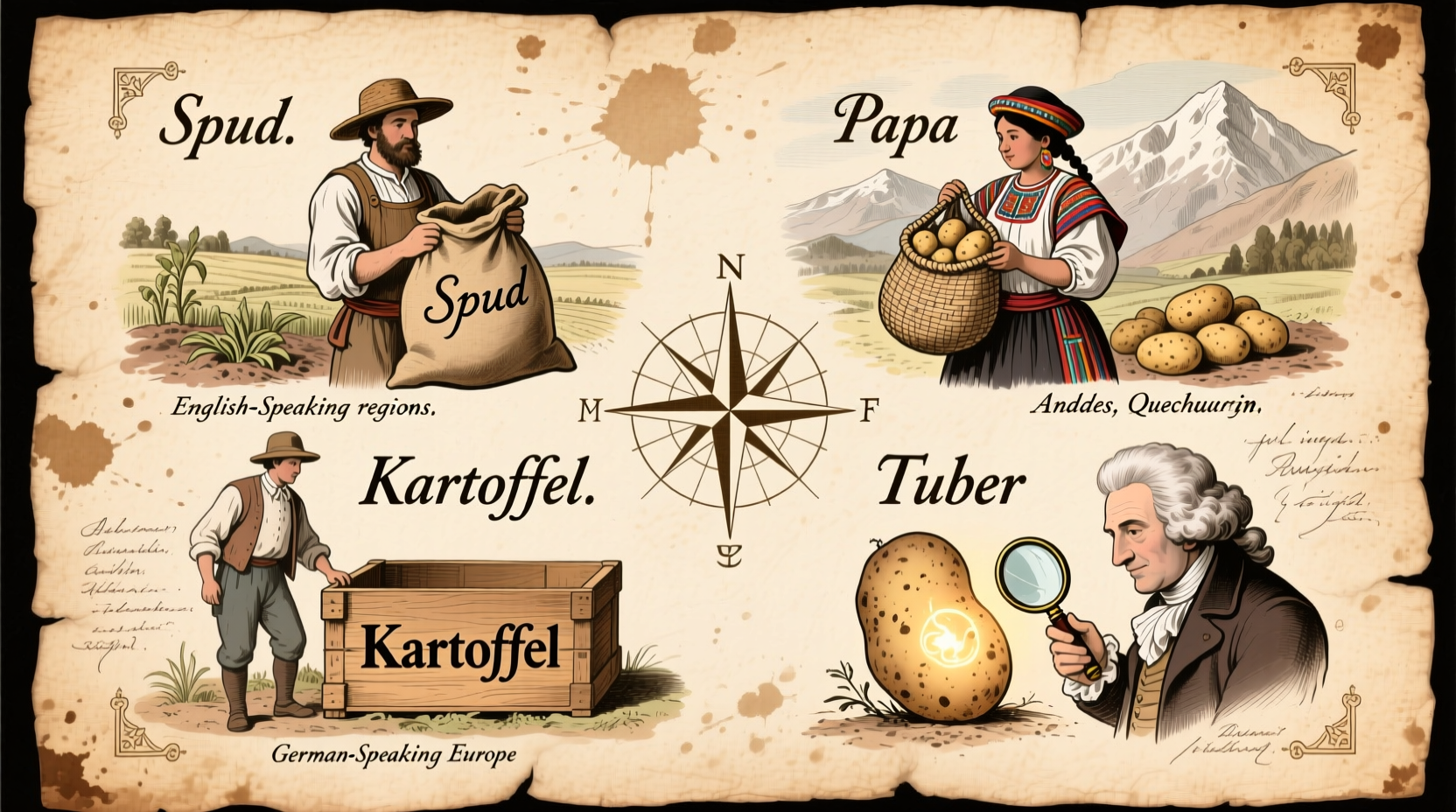
Regional Potato Nicknames Around the World
Different cultures developed unique terms for potatoes based on local language, historical context, and culinary traditions. Understanding these variations provides insight into how the potato was integrated into regional cuisines.
| Region | Common Nickname | Origin/Etymology | Current Usage Context |
|---|---|---|---|
| United Kingdom | Spud | From "spading tool" used for digging | Casual conversation, cooking shows |
| United States | Tater | Shortened from "potater" (colloquial) | Informal settings, fast food menus |
| France | Pomme de terre | "Earth apple" (literal translation) | Formal and informal contexts |
| Germany | Erdapfel | "Earth apple" (similar to French) | Traditional cooking contexts |
| Peru | Papa | Quechua indigenous language | All contexts, reflects cultural heritage |
Contextual Boundaries: When to Use Which Nickname
Not all potato nicknames work in every situation. Understanding the appropriate context prevents confusion and shows cultural awareness:
- "Spud" works well in casual British, Irish, Australian, and New Zealand contexts but sounds unusual in formal American settings
- "Tater" is perfectly acceptable in American casual speech but might confuse non-native English speakers
- "Pomme" (short for pomme de terre) is common in French culinary contexts but never used in everyday French conversation
- "Earth apple" terms (like Erdapfel) are mostly historical in European contexts but remain culturally significant
According to linguistic research from the University of Edinburgh's School of Literatures, Languages and Cultures, using the wrong potato nickname in certain contexts can unintentionally signal cultural ignorance, especially in regions with strong potato culinary traditions.
Practical Applications for Food Enthusiasts
Knowing these nicknames isn't just academic—it has real-world applications:
- Menu navigation: Recognizing "pommes frites" means French fries helps when dining internationally
- Cooking communities: Using appropriate terms builds credibility in food forums and cooking classes
- Gardening discussions: Understanding regional terms helps when researching potato varieties
- Cultural appreciation: Using "papa" when discussing Andean cuisine shows respect for indigenous origins
Food historians note that the potato's nickname diversity reflects its remarkable adaptability. Unlike many crops that kept their original names when spreading globally, potatoes acquired new identities in each culture—a testament to how thoroughly they became integrated into local foodways.
Preserving Potato Nickname Traditions
As global cuisine becomes more homogenized, many regional potato nicknames are fading. Organizations like Slow Food International are working to preserve these linguistic traditions as part of culinary heritage. Their Ark of Taste project documents endangered food terms, including regional potato nicknames that risk disappearing as industrial agriculture standardizes terminology.
By consciously using and sharing these terms, home cooks and food enthusiasts help maintain the rich tapestry of potato-related language that connects us to centuries of agricultural history and cultural exchange.
Frequently Asked Questions
Why are potatoes called spuds?
Potatoes are called spuds because the term originated from the "spade"-like tool used for digging them up in Ireland. The word evolved from "spading tool" to refer to the potato itself by the mid-19th century.
What does 'tater' mean in potato nicknames?
'Tater' is an American slang term derived from "potater," which was a colloquial shortening of "potato." It became popular in the 19th century and remains common in informal American English today.
Why do French call potatoes 'pommes de terre'?
The French term 'pomme de terre' literally means 'earth apple.' Early European explorers thought potatoes resembled apples in their nutritional value and called them 'apples of the earth' since they grew underground.
Are there any potato nicknames that are considered offensive?
Most potato nicknames are neutral, but context matters. Using 'spud' in formal agricultural contexts might seem unprofessional, and using 'tater' in regions where potatoes have cultural significance (like the Andes) could appear disrespectful of local traditions.
How many different potato nicknames exist worldwide?
There are over 50 documented potato nicknames across different languages and cultures. The International Potato Center has cataloged regional variations reflecting the crop's 500-year global journey since its introduction from South America.




 浙公网安备
33010002000092号
浙公网安备
33010002000092号 浙B2-20120091-4