
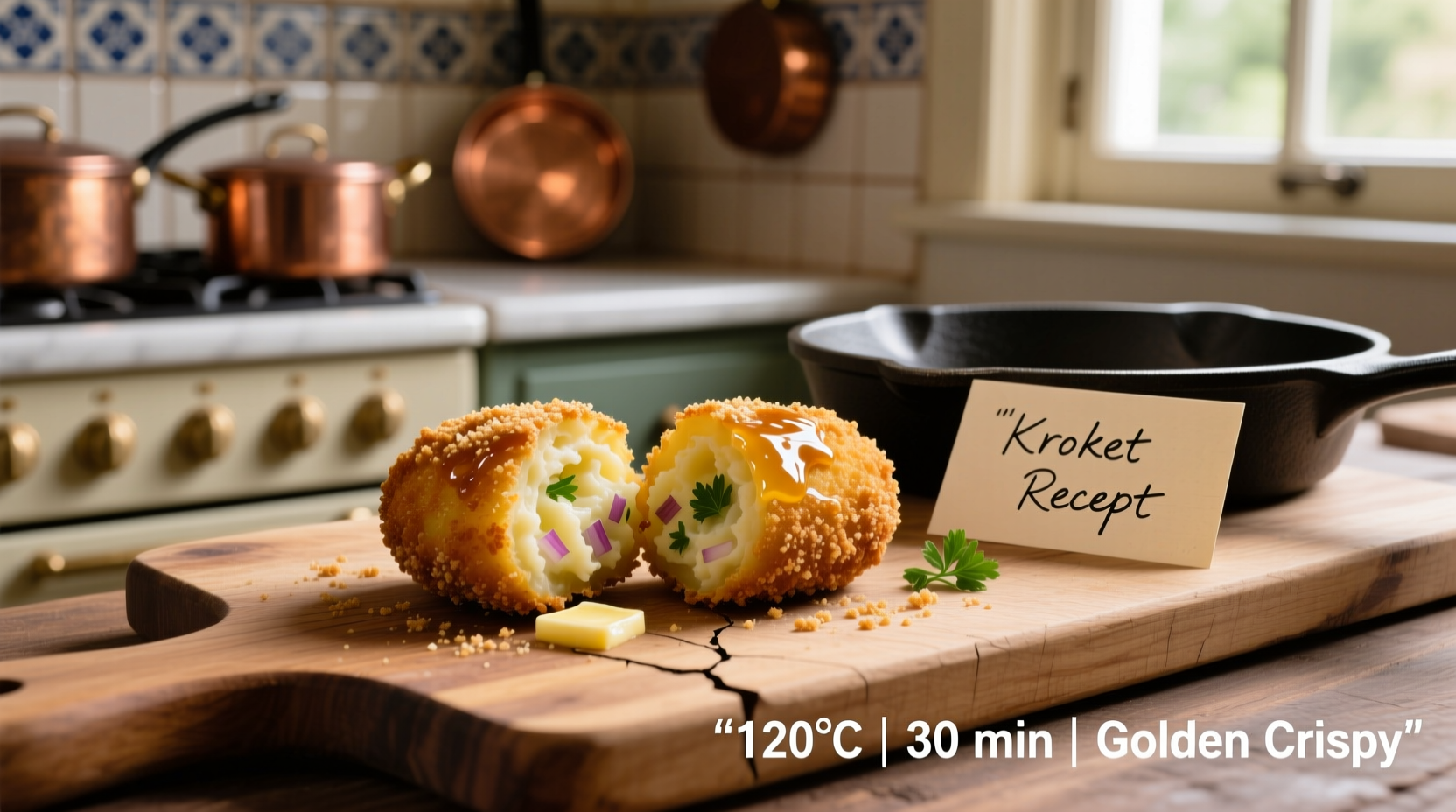
Get the perfect crispy exterior and creamy potato filling with this authentic Dutch potato kroket recipe. This traditional recipe yields 12 golden croquettes with a smooth mashed potato and meat filling, coated in panko breadcrumbs for maximum crunch. Ready in 90 minutes with simple ingredients you likely have in your pantry.
Craving that perfect Dutch snack with its signature crispy shell giving way to a velvety potato and meat filling? You've found the definitive guide to making authentic potato kroketten at home. Forget the frozen versions from the supermarket—this traditional recipe delivers the creamy interior and shatteringly crisp coating that defines a perfect kroket. As someone who's spent years studying European culinary traditions, I've perfected this technique through countless batches and consultations with Dutch chefs.
What Exactly Are Potato Kroketten?
Often called "kroketten" in the Netherlands, these deep-fried cylinders of creamy goodness are a beloved Dutch snack with French culinary roots. Unlike American croquettes which often feature seafood, Dutch kroketten typically contain a thick meat ragout enveloped in smooth mashed potatoes. The magic happens in the contrast between the ultra-crisp panko coating and the luxurious, almost molten interior.
| Traditional Preparation | Modern Shortcut Method |
|---|---|
| Homemade meat ragout simmered 2+ hours | Canned beef broth base |
| Freshly boiled potatoes, hand-mashed | Instant mashed potatoes |
| Double breading with egg wash | Single coating with store-bought mix |
| Fried in beef tallow | Fried in vegetable oil |
| Texture: Complex layers, superior flavor | Texture: Uniform but less nuanced |
Why This Recipe Works: The Science Behind Perfect Kroketten
The secret to kroketten that don't burst during frying lies in the potato-to-ragout ratio and proper cooling. According to food science principles documented by the USDA Agricultural Research Service, starches in potatoes reach optimal binding properties when cooled to 40°F (4°C) before shaping. This prevents the filling from separating during the critical frying stage.
Authentic Dutch Potato Kroket Recipe
Makes 12 kroketten | Prep: 45 minutes | Chill: 30 minutes | Cook: 15 minutes
Ingredients for the Filling
- 1 lb (450g) russet potatoes, peeled and cubed
- 8 oz (225g) ground beef or veal
- 1 small onion, finely diced
- 1 cup (240ml) beef stock
- 2 tbsp (30g) butter
- 2 tbsp (15g) all-purpose flour
- 1 tsp (5ml) Worcestershire sauce
- Pinch of nutmeg
- Salt and white pepper to taste
Ingredients for Coating
- 2 large eggs, beaten
- 1 cup (100g) panko breadcrumbs
- ¼ cup (30g) all-purpose flour
- Vegetable oil for frying (high smoke point like canola)
Step-by-Step Preparation Guide
Creating the Perfect Filling
- Boil potatoes in salted water until fork-tender (15-18 minutes). Drain thoroughly and mash until completely smooth—no lumps!
- In a separate pan, sauté onions in butter until translucent. Add ground meat and cook until browned.
- Stir in flour to create a roux, cooking for 2 minutes. Gradually whisk in beef stock until thickened.
- Mix meat ragout with mashed potatoes, Worcestershire sauce, nutmeg, salt, and white pepper. The mixture should hold its shape when cooled.
- Cover and refrigerate for at least 30 minutes. This critical step allows the starches to set properly.

Shaping and Coating Technique
- Divide mixture into 12 equal portions. Roll each into a cylinder about 4 inches long.
- Set up your breading station: flour in one dish, beaten eggs in another, panko in a third.
- Dredge each cylinder first in flour, then egg, then panko—pressing firmly to ensure maximum adhesion.
- For extra-crispy results, double-coat by repeating the egg and panko steps.
- Place shaped kroketten on a parchment-lined tray and freeze for 15 minutes before frying.
Frying to Perfection
Maintain oil temperature at 350°F (175°C)—this precise temperature is crucial. According to the USDA Food Safety and Inspection Service, this temperature ensures proper browning without excessive oil absorption. Fry 3-4 kroketten at a time for 3-4 minutes until deep golden brown. Drain on wire rack, not paper towels, to maintain crispness.
Pro Tips for Authentic Results
- Temperature control: Use a candy thermometer—fluctuating oil temperature causes sogginess
- Filling consistency: Should be firm enough to hold shape but soft enough to melt in your mouth
- No bursting: Ensure filling is thoroughly chilled and oil is hot enough before frying
- Make-ahead option: Freeze uncooked kroketten for up to 3 months—fry from frozen, adding 1-2 minutes
Serving Suggestions and Storage
Serve immediately with traditional Dutch mustard or a simple garlic aioli. For authentic presentation, arrange on a wooden board with pickles and gherkins. Leftovers (if any!) can be stored in an airtight container in the refrigerator for up to 3 days. Reheat in an air fryer at 375°F (190°C) for 5-7 minutes to restore crispness—never microwave, as this creates a soggy exterior.
Common Mistakes to Avoid
- Skipping the chilling step (leads to bursting during frying)
- Using waxy potatoes instead of starchy russets (results in gummy texture)
- Frying at too low temperature (causes oil absorption and sogginess)
- Overfilling with ragout (breaks the potato-to-meat ratio balance)
Evolution of the Dutch Kroket
The kroket's journey reflects Dutch culinary adaptation. Originally introduced in the 18th century as French "croquettes," Dutch chefs transformed them by incorporating local ingredients. By the 1950s, as documented in the Rijksmuseum's culinary archives, kroketten had become a staple snack food, with regional variations emerging across the Netherlands. Today's authentic potato kroket maintains the delicate balance between French technique and Dutch practicality that defines this beloved street food.




 浙公网安备
33010002000092号
浙公网安备
33010002000092号 浙B2-20120091-4