
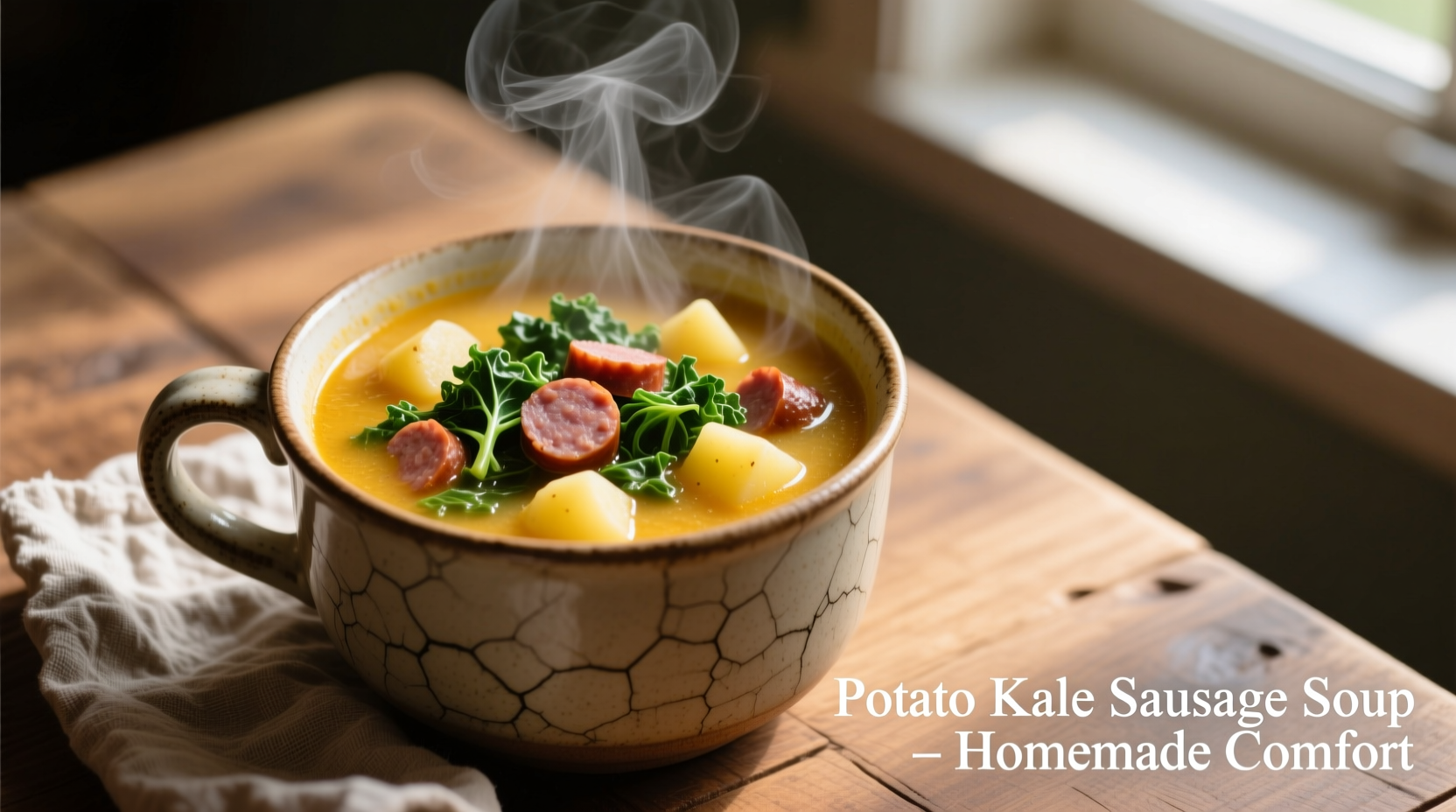
Why This Soup Works: The Flavor Science Behind Every Spoonful
Creating exceptional potato kale sausage soup isn't just about following steps—it's understanding how ingredients interact. When smoked sausage renders its fat, it creates a flavor foundation that carries through the entire dish. The potatoes release starch as they cook, naturally thickening the broth while absorbing the sausage's smokiness. Kale adds both nutritional density and a slight bitterness that balances the richness. According to USDA FoodData Central, this combination delivers 18g protein and 7g fiber per serving while providing significant vitamin K, vitamin A, and potassium.
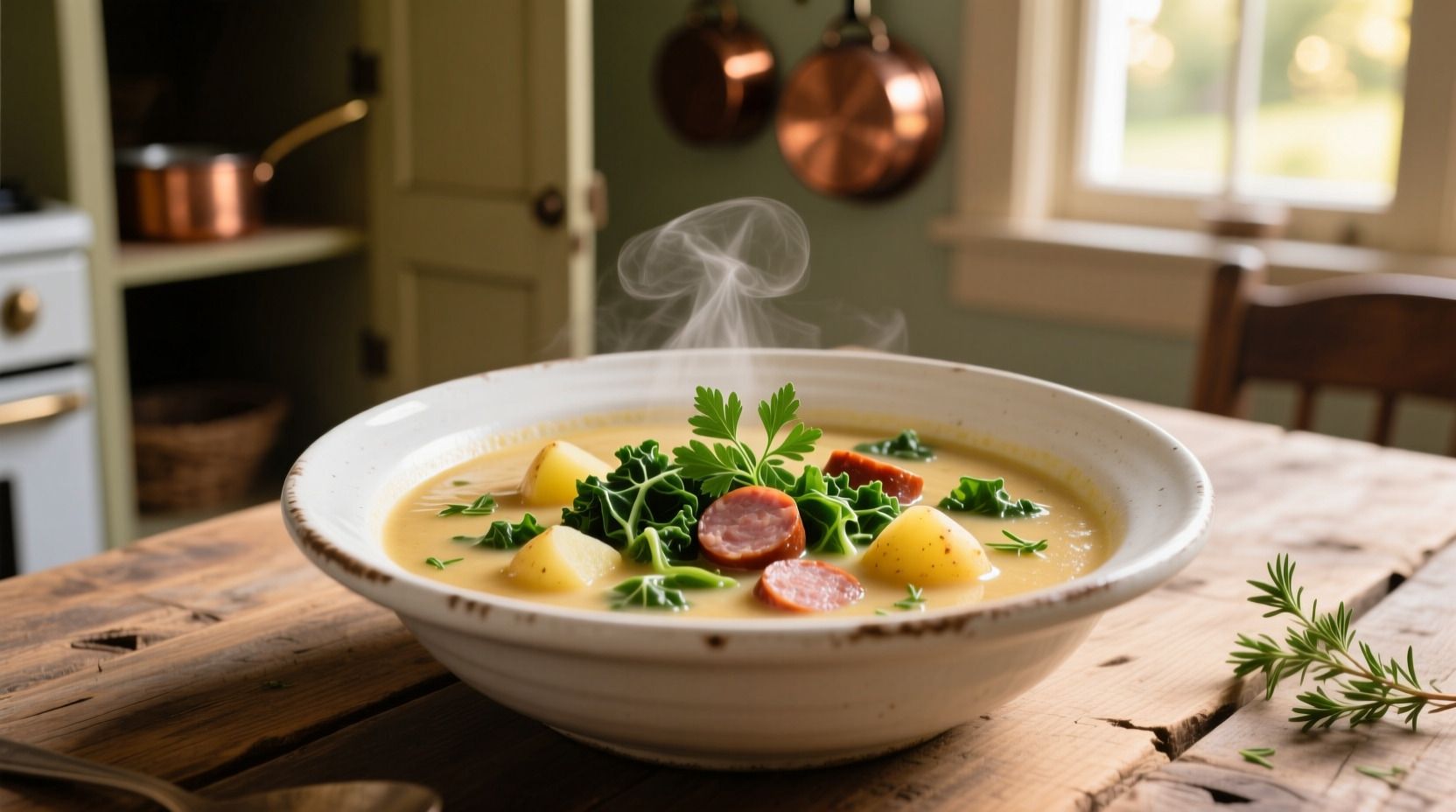
Ingredient Selection: Making Smart Choices for Maximum Flavor
Not all ingredients perform equally in this classic soup. Your selection directly impacts texture, flavor depth, and cooking time. Understanding these differences prevents common pitfalls that turn a promising soup into a disappointing meal.
| Potato Variety | Best For | Cooking Time | Flavor Profile |
|---|---|---|---|
| Yukon Gold | Creamy texture without dairy | 15-20 minutes | Buttery, rich |
| Russet | Thickening broth naturally | 20-25 minutes | Earthy, neutral |
| Red Potatoes | Holding shape in chunky soups | 18-22 minutes | Mild, slightly sweet |
Based on culinary research from the Culinary Institute of America, Yukon Gold potatoes provide the ideal balance for this soup—they break down slightly to thicken the broth while maintaining enough structure for satisfying bites. When selecting sausage, choose varieties with at least 70% meat content; lower percentages often contain fillers that create an unpleasant texture when cooked.
The Cooking Timeline: Precision Timing for Perfect Results
Timing matters more than most home cooks realize. This visual timeline shows the critical stages where attention makes the difference between good and exceptional soup:
- 0-5 minutes: Sear sausage properly—don't rush this step. Proper browning creates fond (those browned bits) that forms the flavor foundation
- 5-10 minutes: Sweat aromatics slowly—onions should become translucent without browning
- 10-25 minutes: Simmer potatoes until just tender—overcooking leads to mushy texture
- 25-35 minutes: Add kale at the right moment—too early and it becomes tough, too late and it doesn't absorb flavors
- 35-40 minutes: Final seasoning adjustment—taste and balance after all ingredients have melded
Following this precise cooking sequence ensures each ingredient contributes optimally to the final dish. The FDA recommends cooking sausage to an internal temperature of 160°F (71°C) for safety, which typically occurs during the initial searing phase.
Step-by-Step Cooking Process: From Ingredients to Bowl
Follow this professional-tested method for consistently excellent results. This approach maximizes flavor development while minimizing cleanup.
Preparation Phase (10 minutes)
Begin by slicing 1 pound of smoked sausage into 1/2-inch coins. Chop 1 large yellow onion, 2 celery stalks, and 3 garlic cloves. Peel and dice 1.5 pounds Yukon Gold potatoes into 3/4-inch cubes. Remove tough stems from 1 bunch of kale and tear leaves into bite-sized pieces. This mise en place ensures smooth cooking without last-minute scrambling.
Cooking Sequence (30 minutes)
- Heat 1 tablespoon olive oil in a 5-6 quart Dutch oven over medium-high heat
- Add sausage in a single layer and sear until browned on both sides (5-7 minutes)
- Remove sausage, leaving 2 tablespoons of rendered fat in the pot
- Add onions and celery, cooking until softened (5-7 minutes)
- Add garlic and cook until fragrant (about 1 minute)
- Return sausage to pot with potatoes and 4 cups low-sodium chicken broth
- Bring to a gentle boil, then reduce heat and simmer until potatoes are tender (15-20 minutes)
- Add kale and cook until wilted (3-5 minutes)
- Season with salt, pepper, and optional pinch of red pepper flakes
Pro Techniques for Restaurant-Quality Results at Home
Transform your potato kale sausage soup from good to extraordinary with these professional techniques:
- Layered seasoning: Add salt in stages—1/4 teaspoon when sautéing aromatics, another 1/4 teaspoon with potatoes, and final adjustment at the end. This builds complex flavor rather than one-dimensional saltiness
- Acid balance: Finish with 1 tablespoon apple cider vinegar or lemon juice to brighten flavors—this professional trick counters richness without making the soup taste sour
- Creaminess without dairy: Blend 1 cup of cooked soup (mostly potatoes) and stir back in for natural creaminess that's still dairy-free
- Texture control: Add half the kale 5 minutes before serving and the rest 2 minutes before serving for varied texture that doesn't become stringy
Customization Options for Every Dietary Need
This versatile soup adapts beautifully to various dietary requirements without sacrificing flavor:
- Gluten-free: Naturally gluten-free when using certified GF sausage and broth—always verify labels as some sausages contain breadcrumbs
- Vegan adaptation: Substitute smoked sausage with smoked tempeh or mushrooms, use vegetable broth, and add 1 teaspoon liquid smoke for authentic flavor
- Lower-carb version: Replace half the potatoes with cauliflower florets for reduced carbohydrates while maintaining creamy texture
- Extra protein boost: Stir in 1 cup white beans during the last 5 minutes of cooking for additional fiber and protein
Storage and Reheating: Maintaining Quality Through Leftovers
Proper storage ensures your potato kale sausage soup tastes even better the next day while maintaining optimal texture:
- Cool soup completely before storing—never put hot soup directly in the refrigerator
- Store in airtight containers for up to 4 days in the refrigerator
- Freeze without dairy additions for up to 3 months—thaw overnight in refrigerator
- Reheat gently over medium-low heat, adding small amounts of broth if needed
- Revive flavors with a splash of vinegar or squeeze of lemon juice after reheating
According to food safety guidelines from the USDA, cooked soup should not remain in the temperature danger zone (40°F-140°F) for more than 2 hours. When reheating, ensure the soup reaches 165°F throughout.
Common Mistakes That Ruin Potato Kale Sausage Soup
Avoid these frequent errors that turn a promising soup into a disappointing meal:
- Overcooking kale: Adding kale too early makes it tough and stringy—wait until potatoes are nearly tender
- Using water instead of broth: Water lacks the depth needed to carry sausage flavors—always use quality broth
- Skipping the sear: Not properly browning the sausage misses the opportunity to build foundational flavors
- Adding salt only at the end: Layering salt throughout cooking creates more balanced seasoning
- Using pre-cut potatoes: Freshly cut potatoes release more starch for better texture than pre-cut versions treated to prevent browning
Frequently Asked Questions
Can I use frozen kale instead of fresh? Yes, but add it directly from frozen without thawing and extend cooking time by 2-3 minutes. Frozen kale often has more concentrated flavor but can make the broth slightly darker.
What's the best substitute for smoked sausage? Chorizo provides similar smokiness with more spice, while turkey sausage offers a lighter option. For vegetarian versions, smoked paprika with mushrooms creates comparable depth.
How do I prevent potatoes from becoming mushy? Cut potatoes uniformly, add them to cold broth rather than boiling liquid, and avoid over-stirring once they're cooking. Yukon Golds maintain better texture than Russets.
Can I make this soup in a slow cooker? Yes—sear sausage and sauté aromatics first, then transfer to slow cooker with other ingredients except kale. Cook on low for 6-7 hours, adding kale during the last 30 minutes.




 浙公网安备
33010002000092号
浙公网安备
33010002000092号 浙B2-20120091-4