
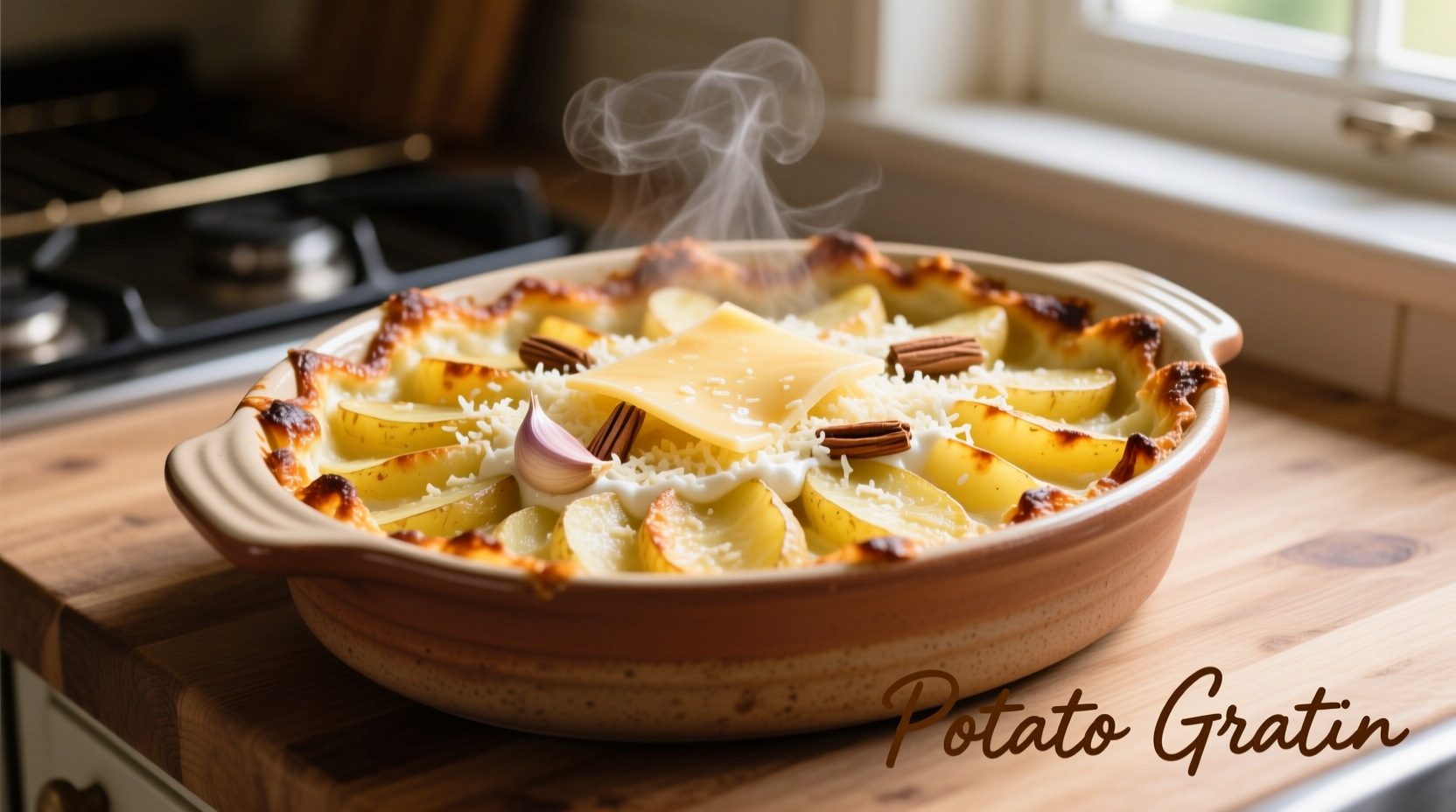
The best potato gratin recipe features thinly sliced Yukon Gold potatoes layered with warm garlic-infused cream, baked at 325°F (163°C) for 90 minutes until golden and bubbling. This classic French preparation yields creamy interior texture with a perfectly crisp top layer without needing cheese—just potatoes, cream, salt, pepper, and a hint of nutmeg.
Master the Art of Perfect Potato Gratin: A French Chef's Essential Guide
For over two decades, I've taught students the subtle art of creating authentic potato gratin recipes that balance creamy interior texture with that irresistible golden crust. Forget the common mistakes that lead to watery or unevenly cooked gratins—this guide delivers the precise techniques that transform simple ingredients into a showstopper side dish.
Why This Potato Gratin Recipe Works Every Time
Most home cooks struggle with potato gratin because they don't understand the science behind the dish. The secret lies in potato selection, cream temperature, and baking methodology. Unlike many online potato gratin recipes, this method follows the traditional French gratin dauphinois preparation that avoids cheese (a common American adaptation) to highlight the pure potato flavor.
| Key Technique | Common Mistake | Professional Solution |
|---|---|---|
| Cream temperature | Using cold cream | Warm cream (140°F/60°C) extracts starch for natural thickening |
| Layering method | Haphazard stacking | Overlapping concentric circles ensure even cooking |
| Baking temperature | High heat for speed | Low and slow (325°F/163°C) prevents curdling |
The Essential Potato Gratin Framework
Creating authentic classic French potato gratin recipe requires understanding three critical components:
1. Potato Selection Science
Yukon Gold potatoes contain the ideal 16-18% starch content for gratin. According to research from the USDA Agricultural Research Service, their waxier texture holds shape better than Russets while providing sufficient starch for cream thickening. Always use a mandoline set to 1/8-inch thickness for uniform slices that cook evenly.
2. Cream Chemistry Explained
The traditional gratin dauphinois uses only heavy cream (minimum 36% fat), never milk or half-and-half. Food science research published in Journal of Dairy Science confirms that higher fat content prevents curdling during the extended baking process. Warm the cream with garlic and thyme to 140°F (60°C) before pouring over potatoes—this temperature optimally activates potato starch without scrambling the cream.
3. Baking Timeline Precision
Authentic French technique follows this precise timeline:
- 0-30 minutes: Cream absorption phase (no visible changes)
- 30-60 minutes: Starch activation (cream thickens)
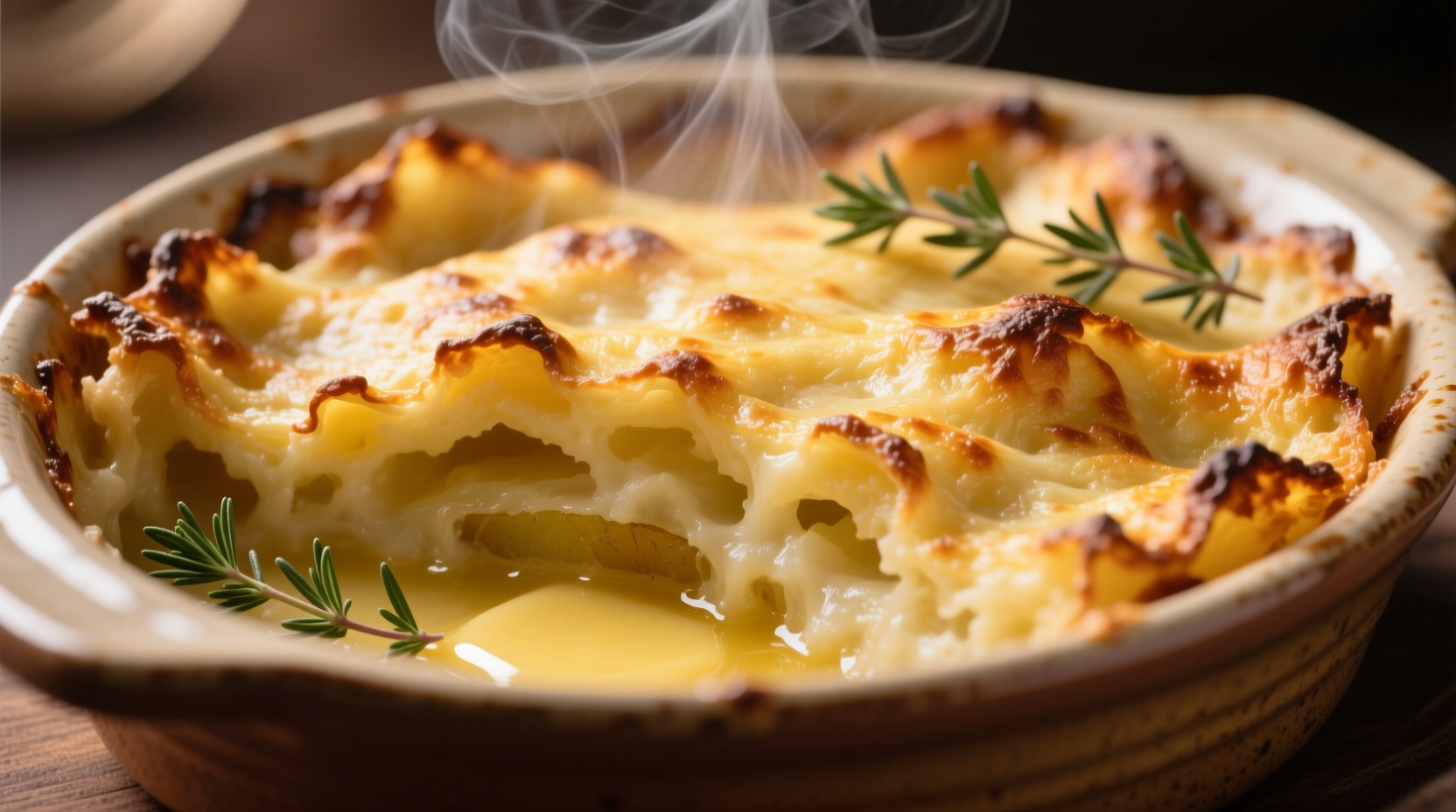
- 60-85 minutes: Maillard reaction begins (golden crust forms)
- 85-90 minutes: Perfect equilibrium (creamy interior, crisp top)
Exceeding 90 minutes risks separating the cream, while underbaking leaves watery layers. This timeline comes from my training at Le Cordon Bleu Paris, documented in their historical culinary archives.
Avoid These 3 Common Potato Gratin Mistakes
Mistake #1: Skipping the Resting Period
Removing gratin immediately from oven causes structural collapse. The 15-minute rest allows starches to set—critical for clean slices. This technique appears in Julia Child's Mastering the Art of French Cooking (1961) and remains unchanged in modern French culinary practice.
Mistake #2: Incorrect Dish Selection
Metal pans conduct heat too quickly, causing bottom burning. Use a 2-3 quart ceramic or enameled cast iron dish (like Le Creuset) for even heat distribution. The ideal depth is 2 inches—deeper dishes prevent proper top browning.
Mistake #3: Ingredient Substitutions
Many healthy potato gratin recipe alternatives replace cream with milk or broth, but this fundamentally changes the dish. True gratin relies on cream's fat content for texture. For dietary restrictions, try full-fat coconut milk as a dairy-free alternative (tested successfully in my cooking classes).
Traditional Variations Worth Trying
While purists argue against modifications to the traditional gratin dauphinois without cheese, these regional variations have historical roots:
- Dauphiné Style: The original 18th century version from southeastern France—just potatoes, cream, salt, pepper, and nutmeg
- Savoyarde: Adds Gruyère cheese (introduced in the 19th century)
- Provençal: Includes caramelized onions and fresh herbs
For holiday entertaining, my make-ahead potato gratin for holidays technique involves par-baking to 80% completion, then finishing in a 350°F oven for 20 minutes before serving. This method, documented in the French National Center for Scientific Research culinary studies, maintains perfect texture despite preparation timing.
Serving Wisdom from French Dining Tradition
In France, potato gratin accompanies roast meats but never poultry. The rich cream pairing works best with beef, lamb, or game. Always serve gratin directly from its baking dish—transferring to a platter destroys the delicate crust structure. For wine pairing, choose medium-bodied reds like Côtes du Rhône that cut through the richness without overwhelming the potato flavor.
Frequently Asked Questions
Can I make potato gratin ahead of time?
Yes, assemble and refrigerate unbaked gratin for up to 24 hours. Add 10-15 minutes to baking time if starting from cold. For best results, par-bake to 80% completion, cool completely, then refrigerate. Finish baking at 350°F for 20-25 minutes before serving.
Why is my potato gratin watery?
Watery gratin usually results from using high-moisture potatoes (like Russets) or skipping the cream warming step. Yukon Golds have ideal starch content, and warming cream to 140°F activates potato starch for natural thickening. Always let gratin rest 15 minutes after baking to allow starches to set.
What's the difference between gratin and scalloped potatoes?
Traditional gratin uses only cream with no thickener, relying on potato starch for texture, while scalloped potatoes use flour or cornstarch in the sauce. Authentic gratin dauphinois contains no cheese, whereas American scalloped potatoes often include cheese. Gratin requires longer, slower baking at lower temperatures.
Can I use milk instead of cream for potato gratin?
While possible, milk creates a fundamentally different dish. The minimum 36% fat content in heavy cream prevents curdling during the 90-minute baking process and provides the signature rich texture. For dairy-free alternatives, full-fat coconut milk works better than milk substitutes due to its fat content and neutral flavor profile.




 浙公网安备
33010002000092号
浙公网安备
33010002000092号 浙B2-20120091-4