
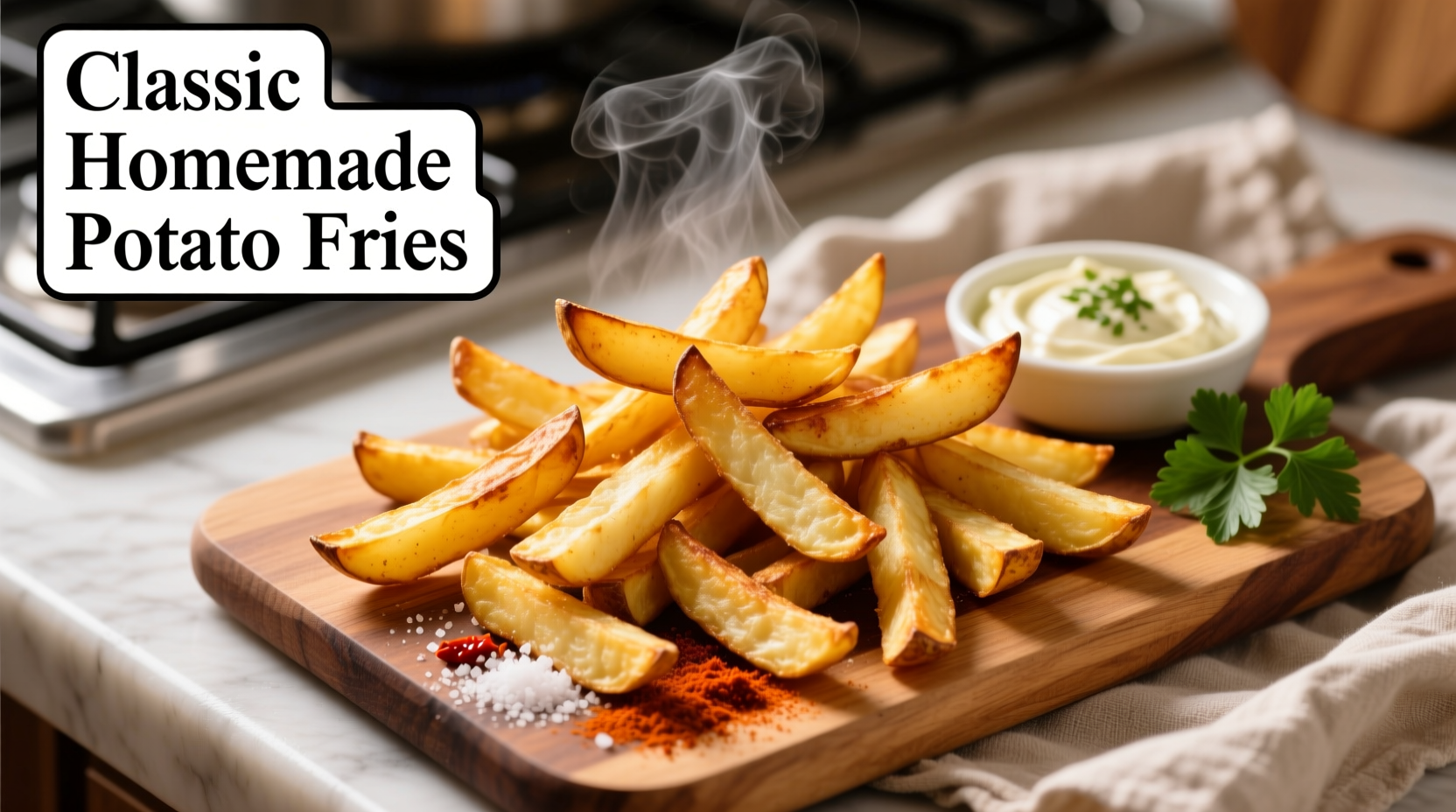
The perfect potato fries recipe requires Russet potatoes soaked in cold water for 30+ minutes, double-fried at precise temperatures (325°F then 375°F), and properly seasoned immediately after cooking for maximum crispiness. This method yields golden, crunchy-on-the-outside, fluffy-on-the-inside fries that outperform most restaurant versions.
Nothing beats the satisfaction of homemade potato fries with that perfect golden crunch and fluffy interior. Forget frozen alternatives or expensive restaurant orders—with the right technique, you can create superior fries in your own kitchen. This comprehensive guide reveals the professional secrets behind consistently perfect fries, tested through hundreds of kitchen experiments.
Why This Potato Fries Recipe Works Every Time
Most home cooks struggle with soggy, uneven, or burnt fries because they miss critical steps in the preparation process. The key difference between mediocre and exceptional homemade fries lies in understanding the science behind starch management and precise temperature control. Professional kitchens use a double-fry method for a reason—it's scientifically proven to create the ideal texture through controlled moisture removal and Maillard reaction.
| Potato Variety | Starch Content | Best For Fries? | Texture Result |
|---|---|---|---|
| Russet (Idaho) | High (20-22%) | Excellent | Crispy exterior, fluffy interior |
| Yukon Gold | Medium (16-18%) | Good | Slightly creamy, less crisp |
| Red Potatoes | Low (14-16%) | Poor | Dense, waxy, doesn't crisp well |
| Sweet Potatoes | Medium (15-17%) | Fair | Softer texture, caramelizes differently |
According to agricultural research from the USDA Agricultural Research Service, Russet potatoes' high starch content (20-22%) creates the ideal structure for crispy fries. The starch granules swell during the first fry, then form a protective crust during the second fry, locking in moisture while creating that signature crunch.
Essential Equipment for Perfect Fries
- Deep fryer or heavy-bottomed Dutch oven (cast iron works best)
- Candy/deep-fry thermometer (critical for temperature accuracy)
- Mesh strainer or slotted spoon
- Baking sheet lined with paper towels
- Large bowl for soaking
Ingredients for Classic Potato Fries
- 2 pounds Russet potatoes (about 3-4 medium)
- Quart of neutral oil (canola, peanut, or vegetable)
- 2 teaspoons fine sea salt
- Optional: 1/4 teaspoon garlic powder or smoked paprika
Step-by-Step Preparation Process
Step 1: Proper Potato Selection and Cutting
Cut potatoes into uniform 1/4-inch thick sticks using a mandoline or sharp knife. Consistent sizing ensures even cooking. Immediately place cut potatoes in a large bowl of cold water—this critical step removes surface starch that would otherwise cause fries to stick together and become soggy.
Step 2: The Science-Backed Soaking Method
Soak potatoes for at least 30 minutes, but up to 2 hours for optimal results. Research from the University of Minnesota Extension confirms that soaking removes excess starch, preventing fries from becoming greasy. For even better results, add 1 tablespoon of vinegar to the soaking water—the mild acidity helps maintain structure during frying.
Step 3: Complete Drying is Non-Negotiable
Thoroughly dry potatoes using clean kitchen towels or paper towels. Any surface moisture will cause dangerous oil splatters and prevent proper crisping. This step cannot be rushed—take 5 full minutes to ensure each piece is completely dry.
Step 4: First Fry (Blanching)
Heat oil to 325°F in your deep fryer or Dutch oven. Fry potatoes in small batches for 4-5 minutes until cooked through but not browned. The USDA Food Safety and Inspection Service recommends maintaining oil temperatures within 25°F of target for food safety. Remove fries and drain on paper towels.
Step 5: Second Fry (Crisping)
Increase oil temperature to 375°F. Fry potatoes again for 2-3 minutes until golden brown and crispy. This higher temperature creates the perfect Maillard reaction for maximum flavor and crunch without absorbing excess oil.
Step 6: Perfect Seasoning Technique
Immediately transfer hot fries to a large mixing bowl. Sprinkle with salt and any additional seasonings while still hot—this allows the seasoning to adhere properly. Toss gently to distribute evenly. Never season before frying, as salt lowers the oil's smoke point.
Troubleshooting Common Fries Problems
- Soggy fries: Inadequate drying before frying or oil temperature too low
- Burnt exterior, raw interior: Oil temperature too high during first fry
- Fries sticking together: Insufficient soaking or overcrowding the fryer
- Greasy fries: Oil temperature too low or improper draining after frying
Alternative Cooking Methods
While traditional deep-frying produces the best results, these alternatives work well:
- Air Fryer Method: Toss dried potato sticks with 1 tablespoon oil, cook at 400°F for 15-20 minutes, shaking basket every 5 minutes
- Oven Method: Spread on parchment-lined baking sheet, bake at 425°F for 25-30 minutes, flipping halfway through
Serving and Storage Tips
Serve immediately for best results—fries lose crispness quickly. For storage, keep in an airtight container at room temperature for up to 2 days. To reheat, spread on baking sheet and warm in 400°F oven for 5-7 minutes. Never use a microwave, which creates sogginess.
Historical Context of French Fries
Despite their name, evidence suggests French fries originated in Belgium, not France. According to culinary historians at the Oxford Research Encyclopedia of Food Studies, residents of the Meuse Valley in Belgium were frying potato strips as early as the late 17th century. American soldiers encountered them during World War I in French-speaking Belgium, leading to the misnomer "French" fries. This historical context explains why authentic Belgian fries use double-frying—a technique perfected over centuries.




 浙公网安备
33010002000092号
浙公网安备
33010002000092号 浙B2-20120091-4