
Discover exactly when potatoes with sprouts are safe to consume, how to properly prepare them, and science-backed storage methods to extend freshness. This guide provides actionable food safety information you can trust, helping you reduce food waste while protecting your health.
Understanding Potato Eyes: More Than Just Sprouts
Potato eyes are the small indentations on a potato's surface where sprouts emerge during dormancy break. These aren't actual "eyes" but meristematic tissue capable of developing into new potato plants. When stored improperly, potatoes enter a growth phase triggered by:
- Exposure to light (particularly fluorescent or sunlight)
- Warm temperatures above 45°F (7°C)
- High humidity levels
- Extended storage time beyond recommended periods
This natural biological process indicates the potato is attempting to reproduce. While concerning to consumers, small sprouts alone don't automatically make potatoes unsafe.
When Potato Eyes Become a Food Safety Concern
The real danger comes from solanine, a naturally occurring glycoalkaloid that increases as potatoes sprout and develop green patches. According to the U.S. Food and Drug Administration, solanine concentrations above 20 mg per 100 g can cause nausea, headaches, and neurological issues.
| Potato Condition | Solanine Risk Level | Recommended Action |
|---|---|---|
| Small sprouts, no green discoloration, firm texture | Low | Remove eyes and 1/4 inch around them; cook thoroughly |
| Multiple sprouts, slight greening, still firm | Moderate | Peel deeply, remove all green areas; use immediately |
| Extensive sprouting, significant greening, soft spots | High | Discard entire potato |
Practical Potato Eye Management: A Step-by-Step Guide
Follow this professional kitchen-tested method when dealing with potatoes showing early sprouting:
- Assess the potato: Check for sprout size, green discoloration, and firmness
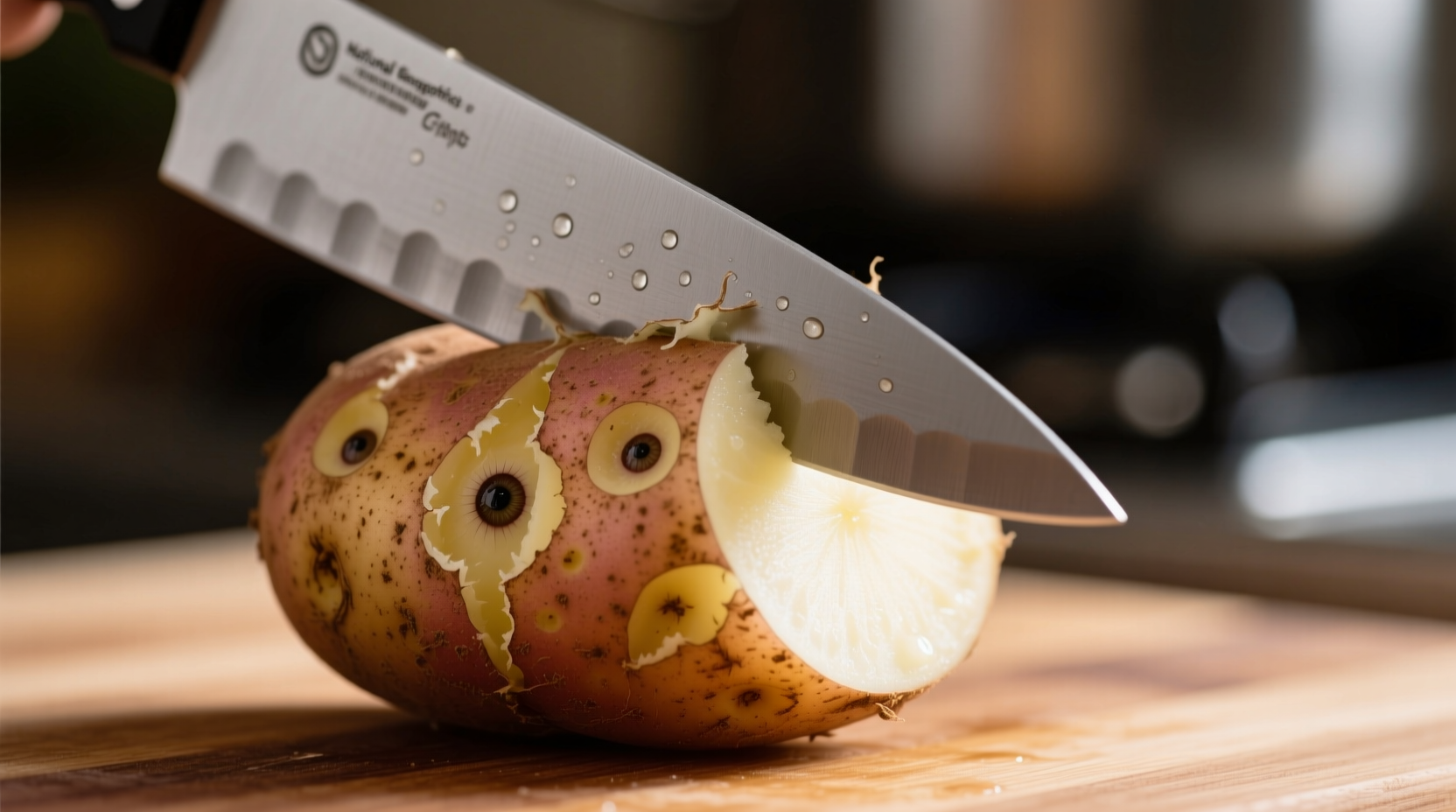
- Prepare your tools: Use a clean paring knife with a sharp point
- Remove eyes properly: Cut a V-shaped wedge around each sprout, removing 1/4 inch of surrounding tissue
- Check for greening: Peel additional layers if green discoloration extends beyond surface
- Cook thoroughly: Boiling or baking reduces remaining solanine levels
- Discard unsafe potatoes: When more than 1/3 shows sprouting or greening
When to Definitely Discard Sprouted Potatoes
Not all sprouted potatoes can be salvaged. Discard potatoes immediately when you notice:
- Significant greening: More than 10% surface area affected (green indicates chlorophyll which correlates with solanine)
- Soft, wrinkled texture: Indicates moisture loss and potential bacterial growth
- Strong bitter odor: A clear sign of elevated glycoalkaloids
- Excessive sprouting: Sprouts longer than 1 inch with developed leaves
The University of Minnesota Extension confirms that potatoes with these characteristics pose genuine health risks and should not be consumed, even after extensive preparation.
Optimal Potato Storage: Preventing Eyes Before They Form
Prevention beats remediation. Implement these storage techniques to significantly extend potato freshness:
- Temperature control: Store between 45-50°F (7-10°C) - never refrigerate
- Dark environment: Use opaque containers or pantry shelves away from light
- Air circulation: Store in mesh bags or ventilated containers, not plastic
- Separation: Keep away from onions which accelerate sprouting
- Regular inspection: Check weekly and remove any developing sprouts immediately
Properly stored potatoes typically remain sprout-free for 2-3 months. The USDA Agricultural Research Service confirms that maintaining proper storage conditions reduces sprouting by up to 80% compared to room temperature storage.
Common Potato Eye Misconceptions Debunked
Several persistent myths surround potato sprouts. Let's clarify with science:
- Myth: All sprouted potatoes are poisonous
Fact: Small sprouts on firm potatoes pose minimal risk when properly prepared - Myth: Cooking destroys all solanine
Fact: While boiling reduces solanine by 30-40%, it's not eliminated - proper preparation is essential - Myth: Organic potatoes don't develop eyes
Fact: Sprouting occurs in all potato varieties regardless of farming method
Special Considerations for Vulnerable Populations
Certain groups should exercise extra caution with sprouted potatoes:
- Pregnant women: Higher sensitivity to glycoalkaloids
- Young children: Lower body weight means lower toxin tolerance
- Immunocompromised individuals: Reduced ability to process toxins
For these groups, the Centers for Disease Control recommends discarding potatoes at the first sign of sprouting rather than attempting preparation.




 浙公网安备
33010002000092号
浙公网安备
33010002000092号 浙B2-20120091-4