
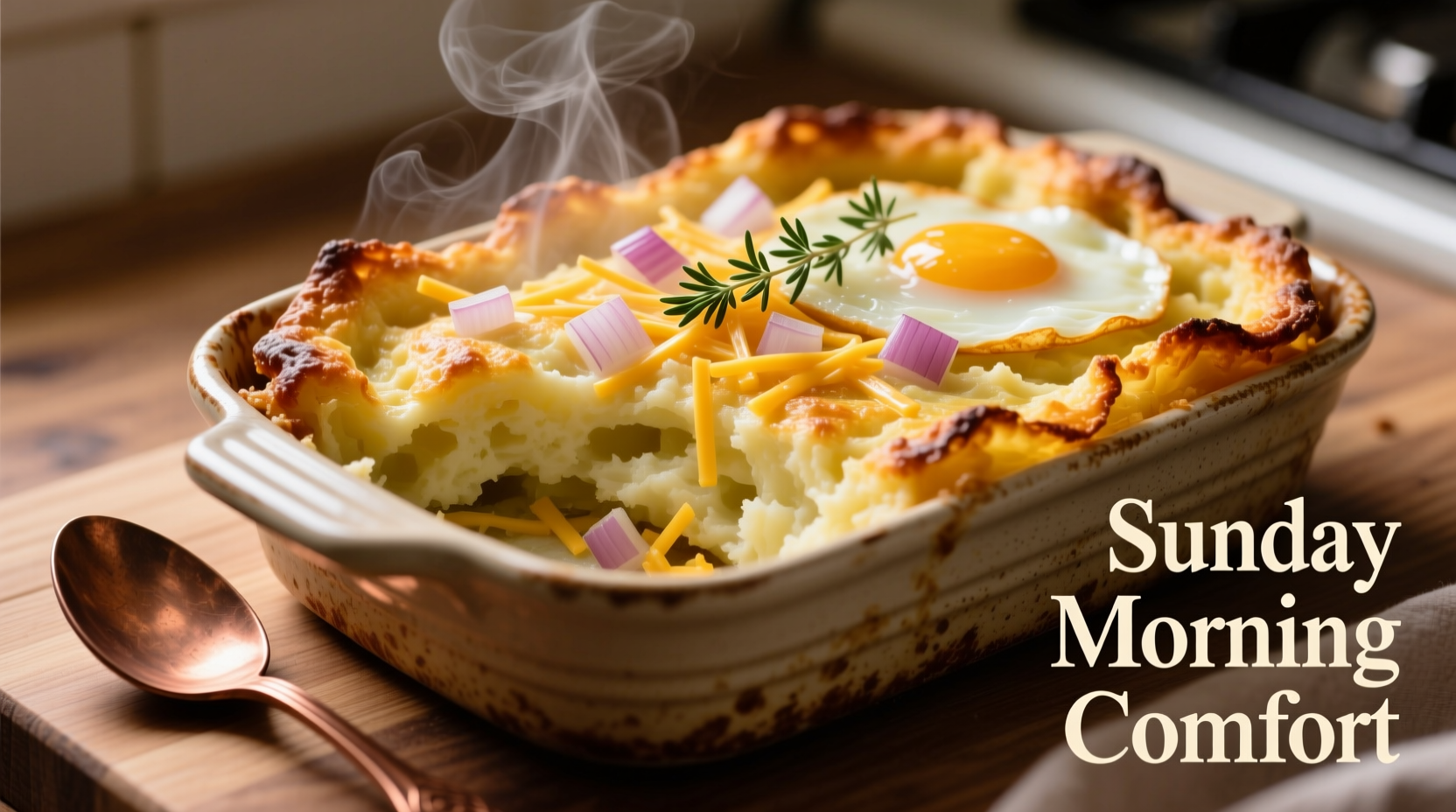
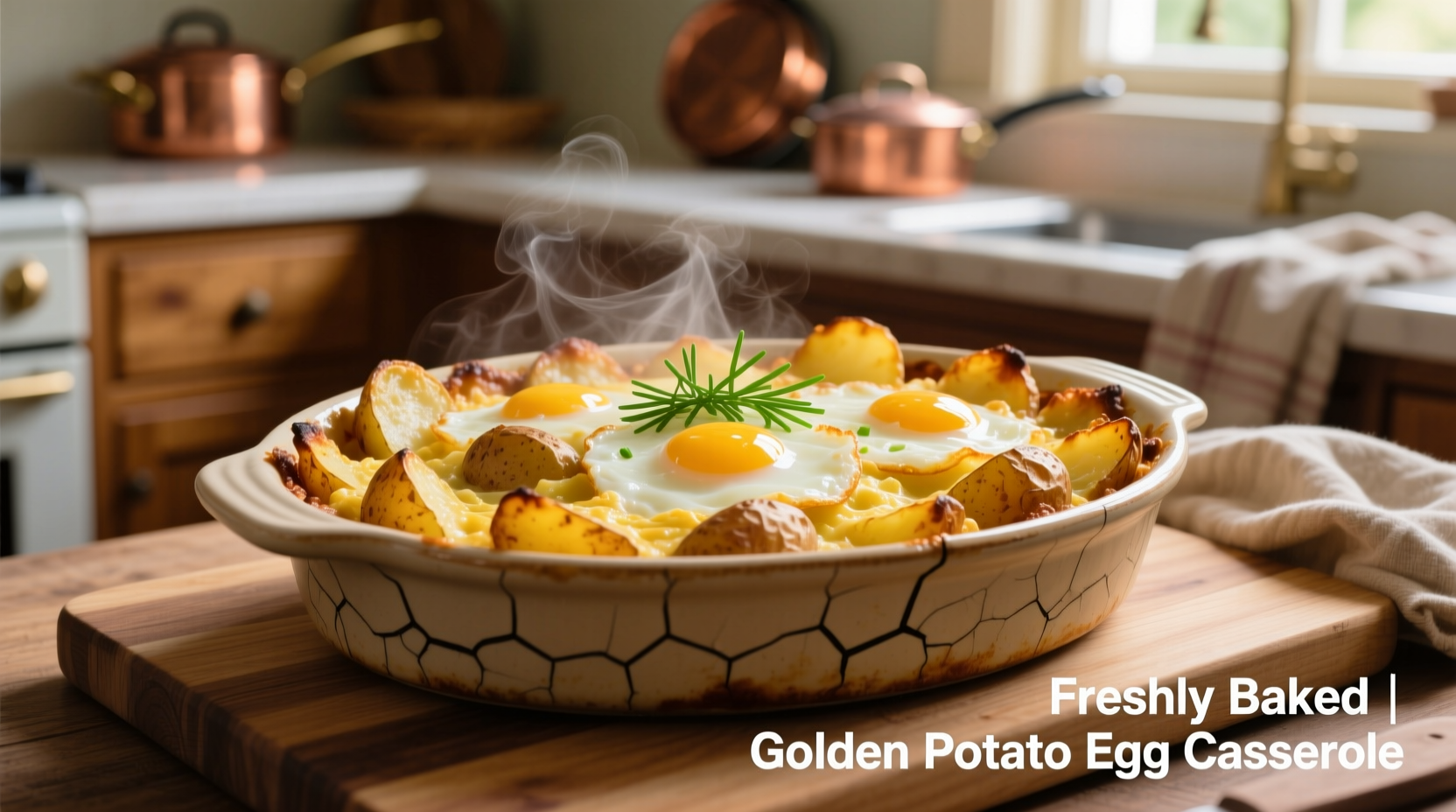
Nothing beats a hearty potato egg casserole for feeding a crowd with minimal effort. This versatile dish shines as a make-ahead breakfast for holiday mornings, a satisfying brunch centerpiece, or a comforting weeknight dinner. The magic happens when humble ingredients—potatoes, eggs, and dairy—transform into a golden, fluffy masterpiece through precise layering and temperature control.
Your Complete Potato Egg Casserole Roadmap
What You'll Actually Make (No Fluff)
This isn't another vague 'potatoes and eggs' recipe. You'll create a perfectly balanced casserole with:
- 2 lbs Yukon Gold potatoes (thinly sliced for even cooking)
- 8 large eggs (whisked with 1 cup milk)
- 1½ cups sharp cheddar (for optimal melt)
- 1 small onion (finely diced)
- 2 tbsp butter (for layering)
- Salt, pepper, and paprika to taste
| Prep Time | Cook Time | Total Time | Servings |
|---|---|---|---|
| 25 minutes | 50 minutes | 1 hour 15 minutes | 6-8 people |
Why This Method Works: The Food Science Behind Success
Most potato egg casseroles fail because of two critical mistakes: waterlogged potatoes and overcooked eggs. Here's what culinary science reveals:
The USDA Food Safety and Inspection Service confirms eggs must reach 160°F internal temperature for safe consumption (fsis.usda.gov). But hitting this temperature without rubbery texture requires precise dairy ratios and baking control.
According to Cornell University's Food Science Department, Yukon Gold potatoes contain the ideal 15-18% starch content for casseroles—enough to absorb flavors without becoming waterlogged like Russets (foodscience.cals.cornell.edu). This explains why your previous attempts with other varieties might have failed.
Step-by-Step Success Pathway
Prep Phase: Setting Up for Success
- Par-cook potatoes (5 minutes in salted boiling water) to eliminate raw centers
- Dry thoroughly with clean kitchen towels—this critical step prevents sogginess
- Whisk eggs slowly with cold milk (not cream) for optimal texture
Baking Process: Temperature Control Secrets
Follow this exact temperature sequence:
- Start at 400°F for 15 minutes (creates initial crust)
- Reduce to 325°F for remaining time (gentle egg setting)
- Check internal temperature at 45 minutes (160°F = perfect)
Troubleshooting Guide: Fix Common Problems
Soggy Bottom? Here's Why
Water content in potatoes averages 80%. When not properly managed, this moisture pools at the bottom. Solution: Always par-cook and dry potatoes thoroughly. For make-ahead versions, add 1 tbsp cornstarch to egg mixture to absorb excess moisture.
Rubbery Eggs? Temperature Mistake
Egg proteins coagulate between 144-158°F. Exceeding 165°F causes toughening. Use an instant-read thermometer—don't guess. If overcooked, salvage by adding a cream sauce before serving.
Variation Menu: Customize for Any Occasion
| Dietary Need | Smart Swap | Flavor Impact |
|---|---|---|
| Lactose intolerance | Unsweetened almond milk + 1 tbsp nutritional yeast | Mild nuttiness, maintains creaminess |
| Vegetarian | Add 1 cup sautéed mushrooms + spinach | Umami boost, no egg ratio change needed |
| Gluten-free | Naturally compliant (no modifications) | Zero impact—potatoes are GF |
Make-Ahead Mastery: The Timeline
Follow this professional kitchen timeline for stress-free preparation:
- 3 days ahead: Slice and par-cook potatoes, store submerged in water
- 1 day ahead: Assemble casserole (without baking), refrigerate covered
- Morning of: Bake from cold (add 10-15 minutes to cooking time)
The FDA recommends refrigerated storage of egg dishes for no more than 24 hours before baking (fda.gov). For longer storage, freeze unbaked casserole for up to 2 months—thaw overnight before baking.
Serving Wisdom: Timing is Everything
Let the casserole rest 10 minutes after baking. This allows:
- Egg proteins to fully set
- Temperature to stabilize for clean slicing
- Flavors to meld (critical for make-ahead versions)
Store leftovers in airtight containers for up to 3 days. Reheat individual portions in the microwave at 50% power for best texture retention. For larger portions, cover with foil and warm at 325°F until internal temperature reaches 165°F.




 浙公网安备
33010002000092号
浙公网安备
33010002000092号 浙B2-20120091-4