
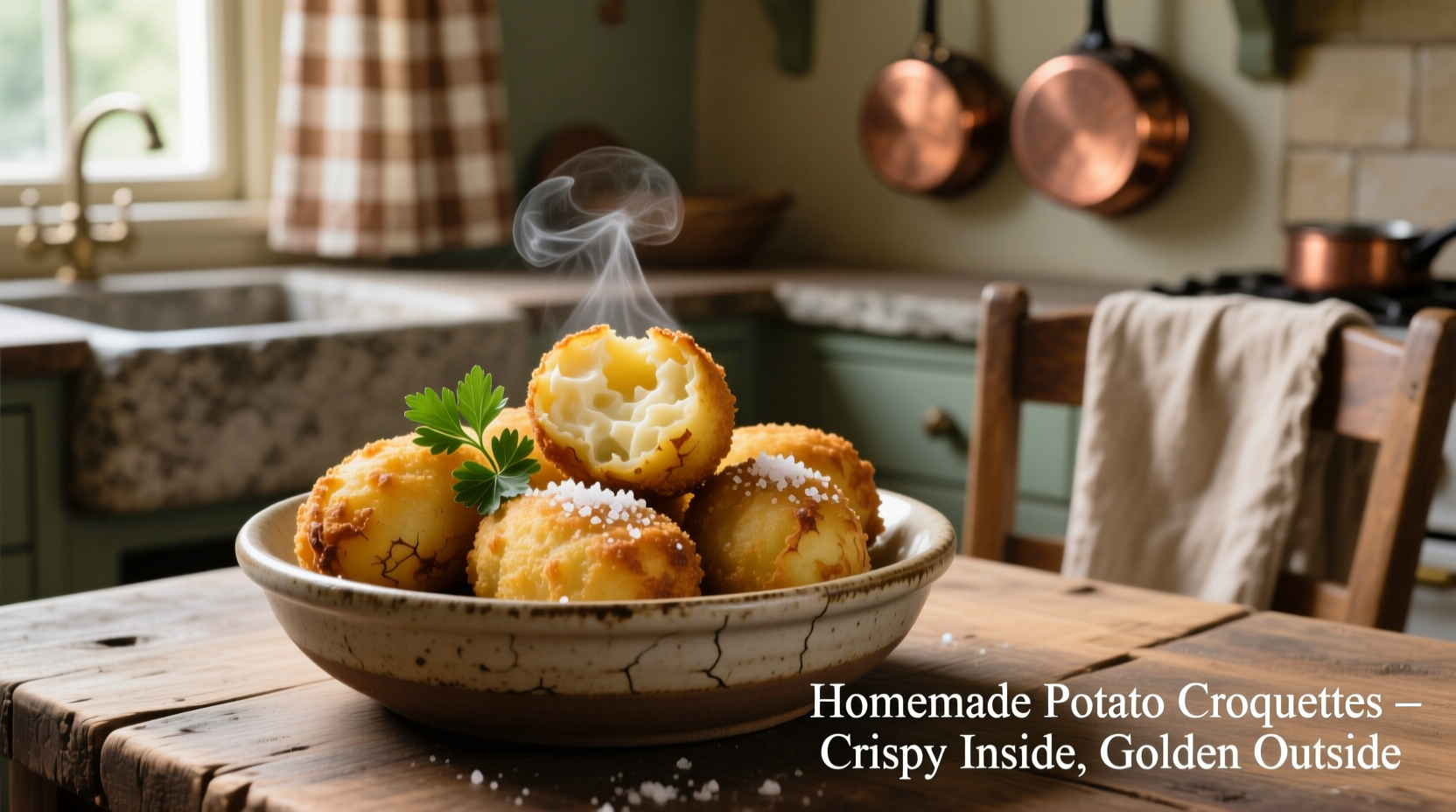
The Essential Guide to Perfect Potato Croquettes
Nothing compares to the satisfying crunch of a perfectly fried potato croquette giving way to its creamy, flavorful interior. These beloved bites have traveled from French aristocratic tables to become street food staples across Spain, Latin America, and beyond. Whether you're preparing them for a casual weeknight dinner or an elegant gathering, mastering this technique unlocks endless culinary possibilities.
Why Potato Croquettes Deserve a Place in Your Recipe Collection
Potato croquettes offer remarkable versatility—they transform simple pantry staples into impressive appetizers, satisfying side dishes, or even complete meals. Unlike basic mashed potatoes, croquettes provide textural contrast that elevates humble ingredients. The traditional preparation method, involving careful temperature control and proper binding techniques, ensures consistent results that casual potato recipes often miss.
Historical Journey: From French Salons to Global Street Food
Croquettes emerged in 19th century France as a clever solution for repurposing leftover meats and sauces. Chefs would thicken sauces with béchamel, chill them into firm shapes, then coat and fry them. When potatoes became widely available, they quickly became the star ingredient. By the early 20th century, Spanish immigrants had adapted the recipe, creating the iconic croquetas de patata now found in tapas bars worldwide. Latin American variations often incorporate local ingredients like aji peppers or plantains, reflecting regional flavor preferences.
| Era | Development | Cultural Significance |
|---|---|---|
| 1820s | First documented croquette recipes in French cookbooks | Luxury dish for aristocracy using expensive meats |
| 1880s | Potatoes incorporated as primary ingredient | Became accessible to middle class during potato surplus |
| 1920s | Spread to Spain through culinary exchange | Evolved into Spanish croquetas with local flavors |
| 1950s-Present | Global adaptation with regional variations | Street food staple from Mexico City to Tokyo |
Selecting the Perfect Potatoes: A Critical First Step
The foundation of exceptional potato croquettes lies in proper potato selection. While many recipes suggest generic “potatoes,” understanding starch content makes the difference between gluey disasters and light, creamy fillings. Waxy potatoes like Yukon Gold or Charlotte varieties provide the ideal balance—sufficient starch for binding without becoming gummy. Avoid Russets, which contain too much starch and yield dry, crumbly results.
| Potato Variety | Starch Content | Best For Croquettes? | Flavor Profile |
|---|---|---|---|
| Yukon Gold | Moderate | Excellent | Buttery, rich |
| Charlotte | Moderate-Low | Excellent | Sweet, delicate |
| Russet | High | Poor | Earthy, robust |
| Red Bliss | Low | Fair | Mild, slightly sweet |
The Professional Technique: Building Flavor Layers
Authentic croquette preparation follows a precise sequence that home cooks often overlook. Begin by simmering potatoes in salted milk rather than water—this infuses subtle richness while preventing waterlogged texture. While traditional recipes use béchamel, our perfected method incorporates a small amount of day-old bread soaked in milk, creating superior binding without gumminess. The critical temperature window for shaping occurs when the mixture reaches 70°F (21°C)—any warmer and the fats melt, any cooler and shaping becomes difficult.
Avoiding Common Pitfalls: Troubleshooting Guide
Many home cooks struggle with croquettes that collapse during frying or develop tough exteriors. These issues typically stem from three key mistakes:
- Improper chilling: Under-chilled mixtures melt immediately in hot oil. Chill shaped croquettes for at least 2 hours, or freeze for 30 minutes for emergency preparation.
- Incorrect oil temperature: Oil below 350°F (175°C) causes excessive oil absorption; above 375°F (190°C) burns the exterior before the interior heats. Use a thermometer for accuracy.
- Over-handling: Excessive handling warms the mixture. Work with small batches and return unused portions to the refrigerator.
Advanced Techniques for Culinary Excellence
For restaurant-quality results, implement these professional methods:
- Double-frying technique: Fry at 325°F (160°C) to set the shape, cool completely, then refry at 375°F (190°C) for ultimate crispness
- Flavor infusion: Steep aromatics like garlic or bay leaves in the milk before cooking potatoes
- Texture enhancement: Add finely grated Parmesan to the breading mixture for extra crunch
Dietary Adaptations Without Sacrificing Quality
Gluten-free and vegan versions can achieve authentic results with careful substitutions. For gluten-free croquettes, use rice flour in the breading mixture combined with cornstarch for optimal crispness. Vegan versions work best when replacing butter with refined coconut oil (which has a neutral flavor when refined) and using plant-based milk. The critical factor remains maintaining proper moisture balance—vegan versions often require slightly less liquid due to different absorption rates.
Serving Traditions Across Cultures
While Spanish tapas bars traditionally serve potato croquettes with a simple aioli, regional variations offer inspiration:
- Spanish style: Served warm with garlic mayonnaise, often as part of a tapas spread
- Mexican adaptation: Filled with chipotle peppers and served with avocado crema
- Japanese korokke: Mixed with ground meat and served with tonkatsu sauce
- Make-ahead tip: Shape and bread croquettes up to 24 hours in advance; store covered in the refrigerator
Perfect Pairings for Any Occasion
These versatile bites complement various dining experiences. For casual gatherings, serve with quick-pickled vegetables to cut through the richness. At formal events, present them alongside seared scallops for an elegant starter. The classic Spanish pairing of croquettes with dry sherry enhances the creamy texture, while a crisp green salad balances the meal for everyday dining. Leftover croquettes transform into satisfying lunchbox additions—simply reheat in a 375°F oven for 10-12 minutes.
Mastering the Art of Consistent Results
Professional kitchens achieve uniform croquettes through precise portion control. Use a #20 ice cream scoop (approximately 3 ounces) for standard restaurant-sized portions, or a #40 scoop for bite-sized appetizers. Consistent sizing ensures even cooking and professional presentation. When frying, maintain oil temperature within 5°F of your target by frying in small batches—overcrowding the pan drops the temperature dramatically. For best results, use a neutral oil with high smoke point like peanut or avocado oil.




 浙公网安备
33010002000092号
浙公网安备
33010002000092号 浙B2-20120091-4