
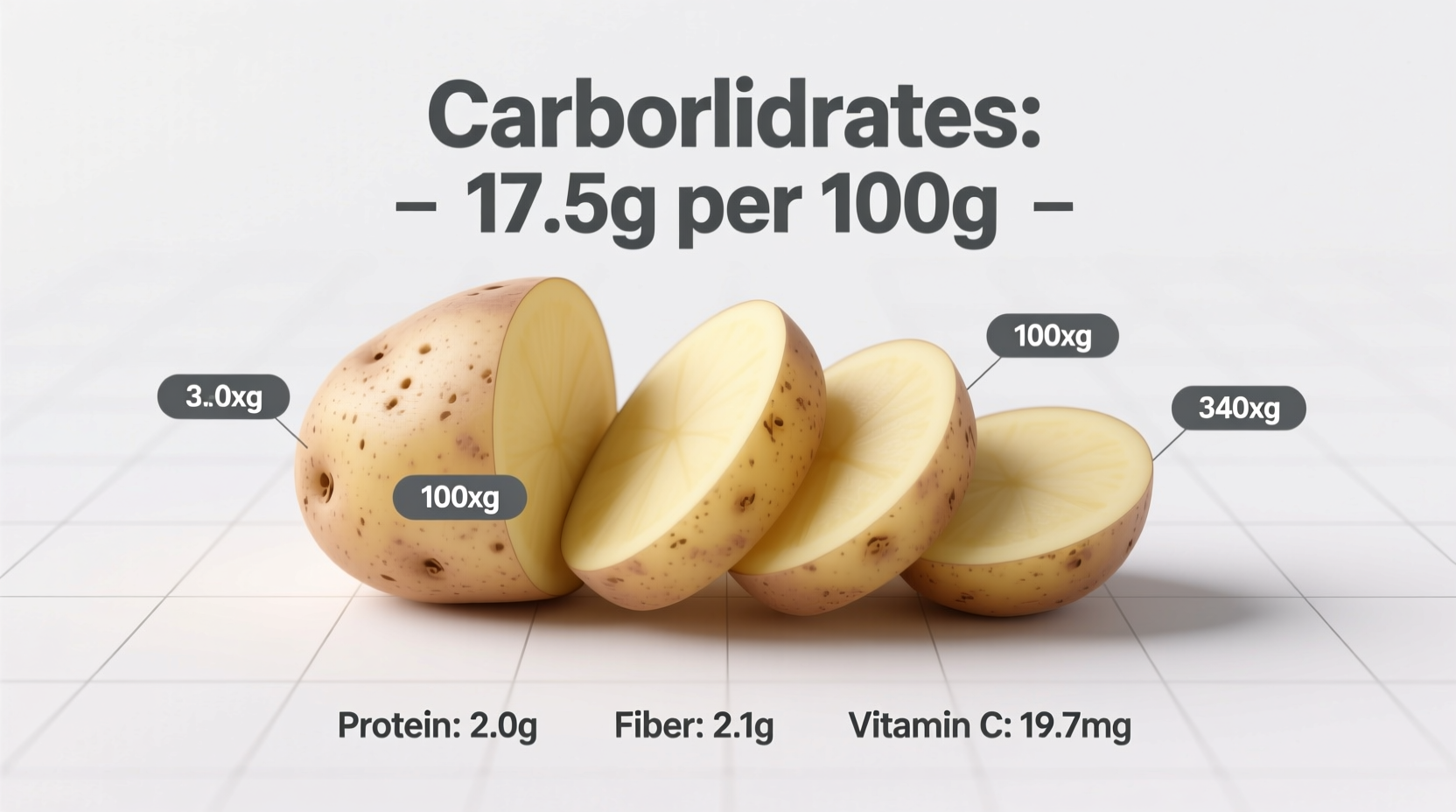
Understanding the precise carbohydrate content in potatoes helps you make informed dietary choices whether you're managing blood sugar, tracking macros, or simply curious about this staple food's nutritional profile. Let's explore the details that matter for your health goals.
Breaking Down Potato Carbohydrates: What's Really in 100g
When examining potato carbs per 100g, it's essential to distinguish between the different types of carbohydrates present. Potatoes primarily contain starch, but also provide valuable fiber and minimal natural sugars. The exact composition varies slightly depending on potato variety and preparation method.
| Potato Type | Total Carbs (per 100g raw) | Dietary Fiber | Glycemic Index |
|---|---|---|---|
| Russet | 17.5g | 1.3g | 85 (high) |
| Yukon Gold | 16.8g | 1.1g | 70 (medium) |
| Red Potatoes | 16.5g | 1.4g | 65 (medium) |
| Sweet Potatoes | 20.1g | 2.5g | 44 (low) |
This comparison from the USDA FoodData Central shows how different potato varieties contain varying carb profiles. Notice that while sweet potatoes have higher total carbs, they also provide significantly more fiber and have a lower glycemic index than white potatoes.
How Cooking Methods Transform Potato Carbohydrates
The way you prepare potatoes dramatically affects their carbohydrate composition and how your body processes them. Understanding these changes helps you make smarter choices based on your nutritional goals.
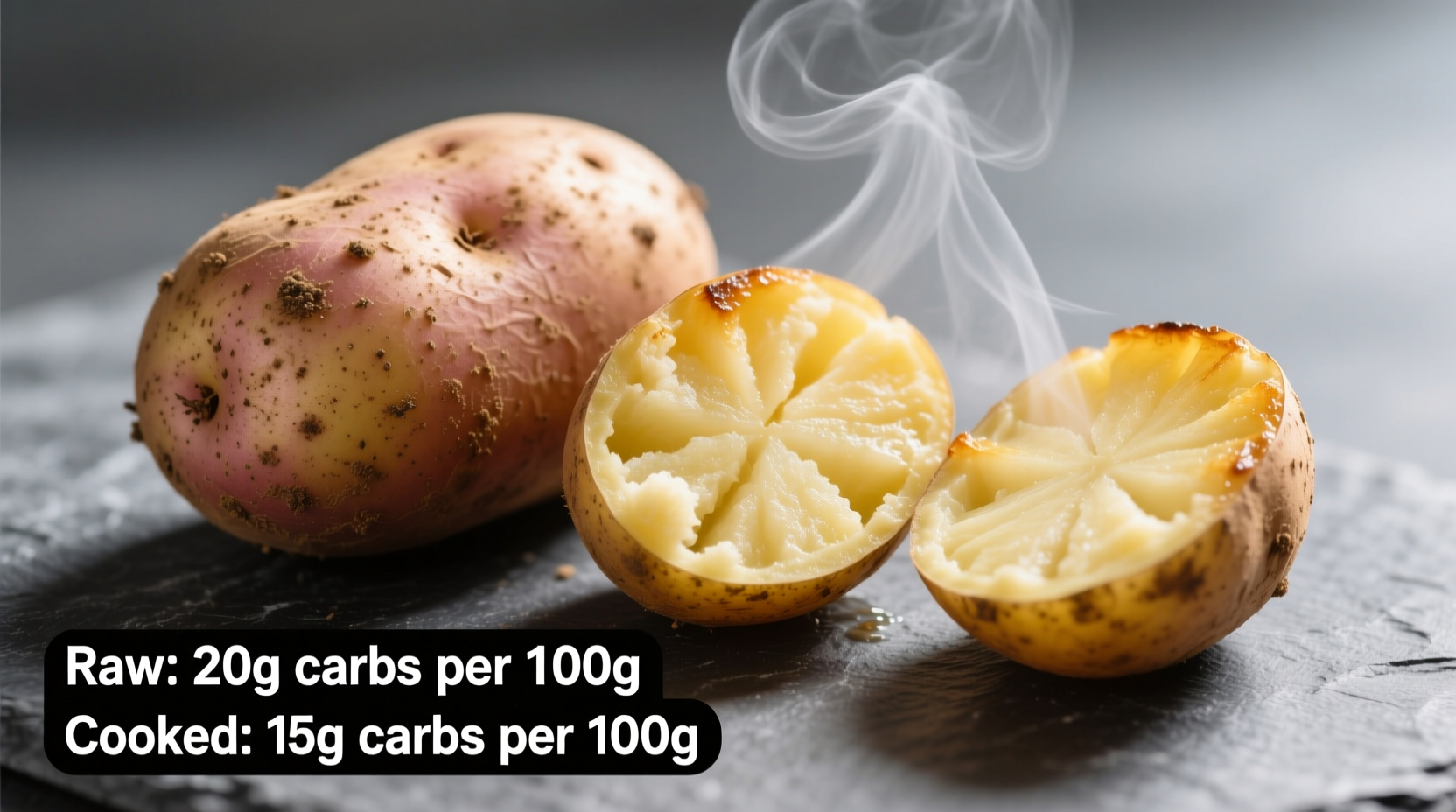
Boiling: When potatoes are boiled with skin intact, they retain most of their fiber content while some starch leaches into the water. A 100g serving of boiled Russet potatoes contains approximately 15.9g of carbs, with the glycemic index dropping from 85 (raw) to about 70.
Baking: Baking concentrates the carbohydrates as water content decreases. A 100g serving of baked Russet potato contains about 21.9g of carbs. The dry heat causes some starch conversion, slightly increasing the glycemic index to 85-90.
Cooling After Cooking: This creates resistant starch, a type of carbohydrate that behaves more like fiber in your digestive system. Cooling cooked potatoes for 24 hours can increase resistant starch content by up to 70%, reducing the effective carb count by 15-20% according to research published in the Journal of Nutrition and Metabolism.
Practical Applications: Using Potato Carb Knowledge
Knowing the exact potato carbs per 100g isn't just academic—it has real-world implications for various dietary approaches.
For Blood Sugar Management
If you're monitoring blood glucose levels, pairing potatoes with protein and healthy fats can reduce their glycemic impact by 30-40%. A study from the American Diabetes Association demonstrated that adding 15g of olive oil to a potato meal lowered post-meal blood sugar spikes significantly compared to eating potatoes alone.
For Active Individuals and Athletes
For those with higher energy needs, potatoes provide excellent carbohydrate fuel. The 17g of carbs per 100g in raw potatoes translates to quick energy replenishment after workouts. Many endurance athletes strategically time potato consumption around training sessions to optimize performance and recovery.
For Weight Management
Despite common misconceptions, potatoes can fit within balanced weight management plans. The key is portion control and preparation method. A medium potato (about 150g) contains approximately 26g of carbs—less than many commercial bread products. The high satiety index of potatoes (170% compared to white bread at 100%) means you feel fuller longer, potentially reducing overall calorie intake.
Addressing Common Misconceptions About Potato Carbs
Several myths persist about potatoes and carbohydrates that deserve clarification based on current nutritional science.
"Potatoes are just empty carbs" - This oversimplification ignores that potatoes provide significant potassium (more than bananas by weight), vitamin C, and B vitamins. The fiber content, especially when eaten with skin, contributes to gut health.
"All potatoes spike blood sugar equally" - Research shows substantial variation. Red potatoes have a medium glycemic index (65), while cooling cooked potatoes creates resistant starch that lowers effective glycemic impact. The Harvard T.H. Chan School of Public Health notes that preparation method affects blood sugar response more than the potato variety itself.
"Sweet potatoes are always better than white potatoes" - While sweet potatoes generally have more fiber and vitamin A, white potatoes provide more potassium and certain B vitamins. The "better" choice depends on your specific nutritional needs and how you prepare them.
Putting Potato Carbs in Context: How They Compare
Understanding potato carbs per 100g becomes more meaningful when compared to other common carbohydrate sources:
- White rice (cooked): 28g carbs per 100g
- Pasta (cooked): 25g carbs per 100g
- Bread: 49g carbs per 100g
- Quinoa (cooked): 21g carbs per 100g
- Beans (cooked): 20g carbs per 100g
Notice that potatoes actually contain fewer carbohydrates per 100g than many other staple foods. The difference lies in typical serving sizes and how these foods affect satiety and blood sugar.
Maximizing Nutritional Value: Practical Tips
Here's how to get the most nutritional benefit from potatoes while managing carbohydrate intake:
- Eat the skin: Potato skin contains nearly half the fiber content. A 100g serving of potato with skin has 1.2-1.4g fiber versus 0.6-0.8g without skin.
- Cool before eating: Refrigerate cooked potatoes for 24 hours to increase resistant starch content by up to 70%, effectively reducing digestible carbs.
- Pair strategically: Combine potatoes with protein (chicken, fish, beans) and healthy fats (olive oil, avocado) to slow carbohydrate digestion and minimize blood sugar spikes.
- Choose smaller portions: A 150g potato provides about 26g carbs—easily incorporated into balanced meals without excessive carb loading.
Conclusion: Potato Carbs in a Balanced Diet
With approximately 17g of carbohydrates per 100g, potatoes offer a nutrient-dense carbohydrate source that can fit well within various dietary patterns when consumed mindfully. The key is understanding how preparation methods affect their nutritional profile and pairing them with other foods to optimize their impact on your health.
By focusing on portion control, preparation techniques that increase resistant starch, and strategic food pairings, you can enjoy potatoes while effectively managing your carbohydrate intake. Remember that the quality of carbohydrates matters more than simply counting grams—potatoes provide valuable nutrients beyond their carb content that contribute to overall health.




 浙公网安备
33010002000092号
浙公网安备
33010002000092号 浙B2-20120091-4