
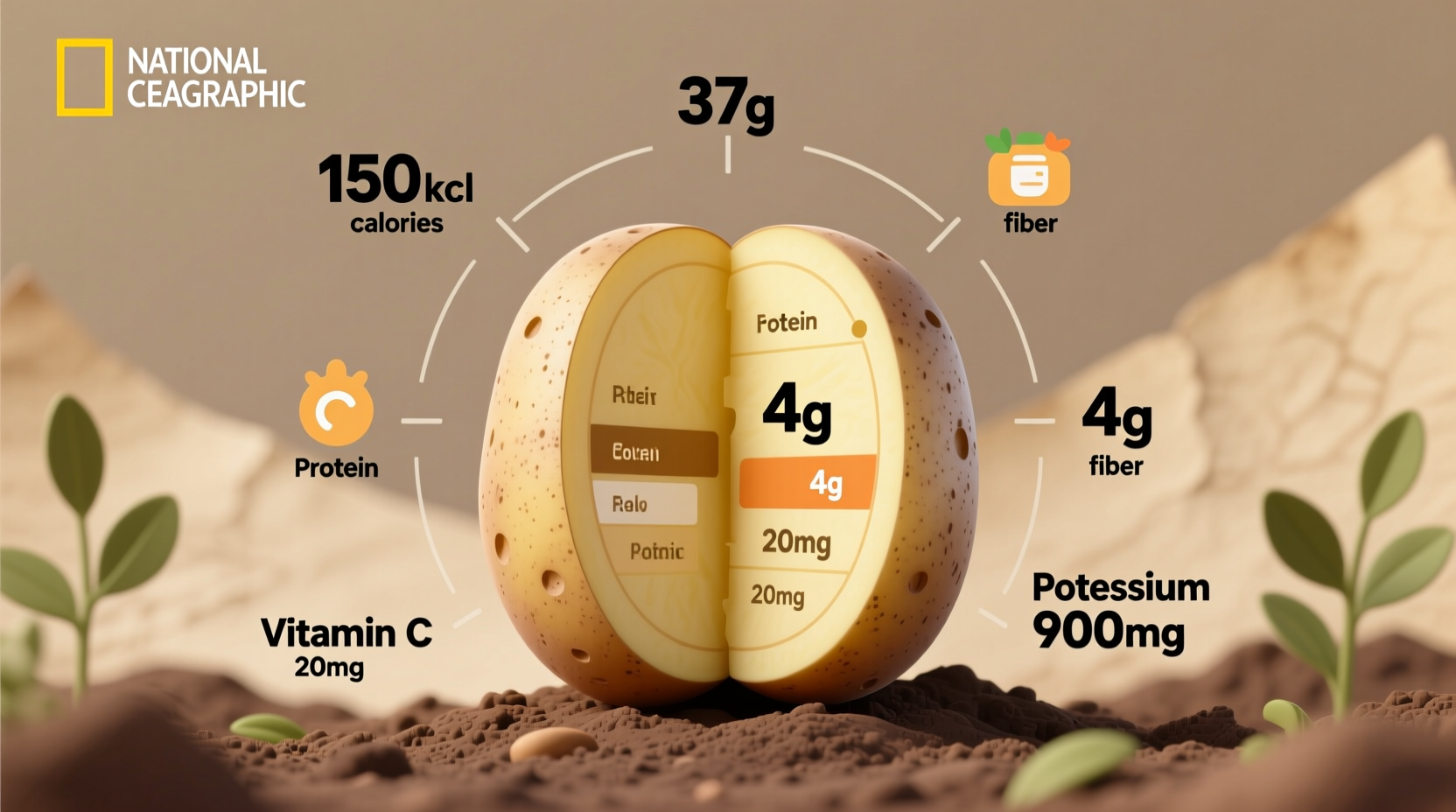
One medium potato (150g) contains approximately 110 calories, 26g of carbohydrates, 2.5g of fiber, and is an excellent source of vitamin C and potassium. This complete nutritional breakdown reveals why potatoes remain a valuable component of balanced diets worldwide.
When tracking your daily nutrition, understanding the precise caloric and nutrient content of staple foods like potatoes is essential. Whether you're meal planning, managing dietary restrictions, or simply curious about this versatile vegetable, having accurate information helps you make informed food choices that support your health goals.
Complete Nutritional Profile of Potatoes
According to the USDA FoodData Central database, a medium-sized potato (about 150 grams) with skin provides the following nutritional value:
| Nutrient | Amount | % Daily Value* |
|---|---|---|
| Calories | 110 | 5% |
| Total Fat | 0.2g | 0% |
| Carbohydrates | 26g | 9% |
| Dietary Fiber | 2.5g | 9% |
| Sugars | 1g | - |
| Protein | 3g | 6% |
| Vitamin C | 17mg | 19% |
| Potassium | 535mg | 15% |
| Vitamin B6 | 0.3mg | 15% |
*Percent Daily Values are based on a 2,000 calorie diet. Your daily values may be higher or lower depending on your calorie needs.
This nutritional powerhouse delivers more potassium than a banana and provides nearly one-fifth of your daily vitamin C requirement. The fiber content supports digestive health while helping you feel satisfied longer after eating.
How Potato Varieties Affect Calorie Content
Not all potatoes are nutritionally identical. Different varieties offer slightly different nutritional profiles that can impact your dietary planning:
- Russet potatoes: Higher in carbohydrates (37g per medium potato) but excellent for baking and mashing
- Sweet potatoes: Contain more natural sugars and beta-carotene (200% of daily vitamin A)
- Red potatoes: Slightly lower in calories (about 100 calories) with a waxy texture ideal for salads
- Yukon Gold: Medium calorie count with buttery flavor requiring less added fat
Research from the American Journal of Clinical Nutrition shows that the glycemic index of potatoes varies significantly by type, with red and Yukon Gold varieties generally having a lower glycemic response than Russets when prepared similarly.
Cooking Methods That Preserve Nutritional Value
How you prepare potatoes dramatically impacts their nutritional profile and calorie content:
- Boiling with skin on: Preserves up to 80% of vitamin C content compared to peeling before boiling
- Baking: Maintains natural nutrient density without added fats
- Steaming: Retains water-soluble vitamins better than boiling
- Air frying: Uses 70-80% less fat than traditional deep frying while maintaining texture
- Microwaving: Quick cooking method that preserves nutrients effectively
A study published in the Journal of Food Science found that boiling potatoes with their skin intact preserves significantly more nutrients than peeling before cooking. The research showed that up to 30% of vitamin C and 20% of potassium can be lost when potatoes are peeled prior to boiling.
Health Benefits Backed by Scientific Research
Despite common misconceptions, potatoes offer several evidence-based health benefits when consumed as part of a balanced diet:
- Rich in antioxidants: Particularly in colored varieties like purple potatoes which contain anthocyanins
- Supports heart health: High potassium content helps regulate blood pressure
- Promotes digestive health: Resistant starch in cooled potatoes feeds beneficial gut bacteria
- Provides sustained energy: Complex carbohydrates support steady blood sugar levels when paired with protein
The Harvard T.H. Chan School of Public Health notes that potatoes can be part of a healthy dietary pattern when prepared using methods that don't add excessive fats or sugars. Their research indicates that the key is considering the overall dietary context rather than eliminating specific foods.
Practical Dietary Integration Strategies
Maximize the nutritional benefits of potatoes with these evidence-based strategies:
- Pair with protein: Combine potatoes with lean proteins to balance blood sugar response
- Cool before eating: Refrigerating cooked potatoes increases resistant starch content by up to 50%
- Keep the skin on: Potato skins contain nearly half the fiber and significant nutrients
- Control portions: Stick to one medium potato (about 1 cup diced) as a standard serving
- Vary preparation methods: Rotate between boiling, baking, and steaming to maximize nutrient retention
Registered dietitians from the Academy of Nutrition and Dietetics recommend including potatoes as part of a varied diet rather than focusing on any single food as problematic. Their position paper emphasizes that dietary patterns matter more than individual food items for long-term health outcomes.
Addressing Common Misconceptions
Several myths about potato nutrition persist despite scientific evidence to the contrary:
- Myth: Potatoes are "empty calories" with little nutritional value
Fact: Potatoes provide significant potassium, vitamin C, and fiber when prepared properly - Myth: All potatoes cause rapid blood sugar spikes
Fact: Glycemic response varies by variety and preparation method; cooling increases resistant starch - Myth: Sweet potatoes are always healthier than white potatoes
Fact: Both offer unique nutritional profiles; white potatoes provide more potassium per serving
The Dietary Guidelines for Americans recognizes potatoes as a vegetable subgroup, noting their contribution to potassium intake which many Americans lack. This official government resource emphasizes that starchy vegetables like potatoes can be part of healthy eating patterns when consumed in appropriate portions.
Practical Meal Planning Applications
Incorporate potatoes strategically into your meal planning with these practical approaches:
- Breakfast: Add diced potatoes to vegetable omelets for sustained energy
- Lunch: Include cooled potato salad with vinaigrette dressing for resistant starch benefits
- Dinner: Pair roasted potatoes with grilled fish and leafy greens for balanced nutrition
- Snacks: Bake thin potato slices for a fiber-rich alternative to processed chips
Registered dietitians often recommend the "plate method" for balanced meals: fill half your plate with non-starchy vegetables, one-quarter with lean protein, and one-quarter with starchy foods like potatoes. This approach ensures you get the nutritional benefits of potatoes while maintaining overall dietary balance.




 浙公网安备
33010002000092号
浙公网安备
33010002000092号 浙B2-20120091-4