
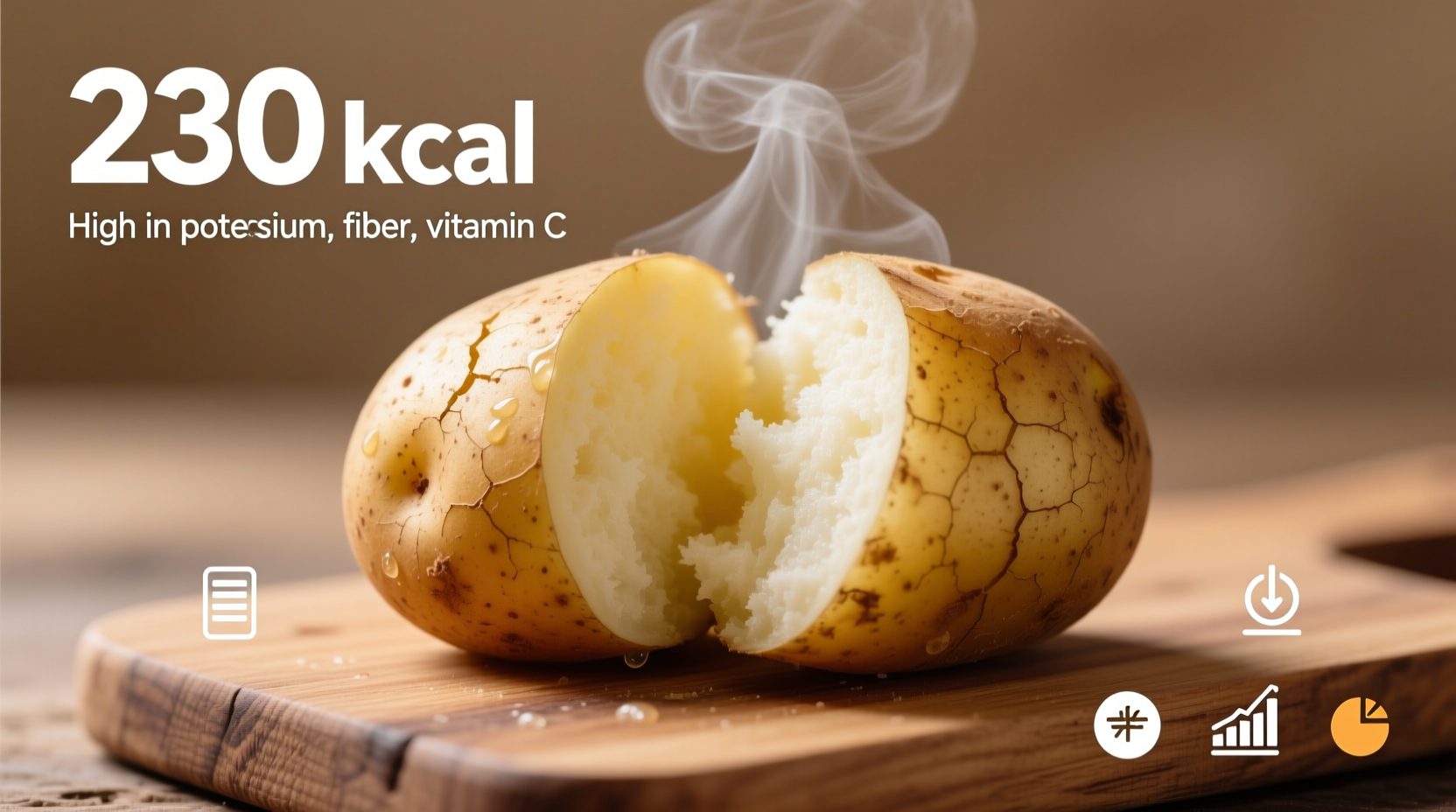
A medium-sized baked russet potato (5.3 ounces or 173g with skin) contains 161 calories, according to USDA FoodData Central. This nutrient-dense food provides 37g of carbohydrates, 4.6g of fiber, and significant amounts of potassium and vitamin C.
Understanding Baked Potato Calorie Counts
When tracking your nutrition, knowing the exact calorie content of baked potatoes helps make informed dietary choices. Unlike fried or loaded versions, a plain baked potato offers a wholesome source of complex carbohydrates that can fit into balanced meal plans.
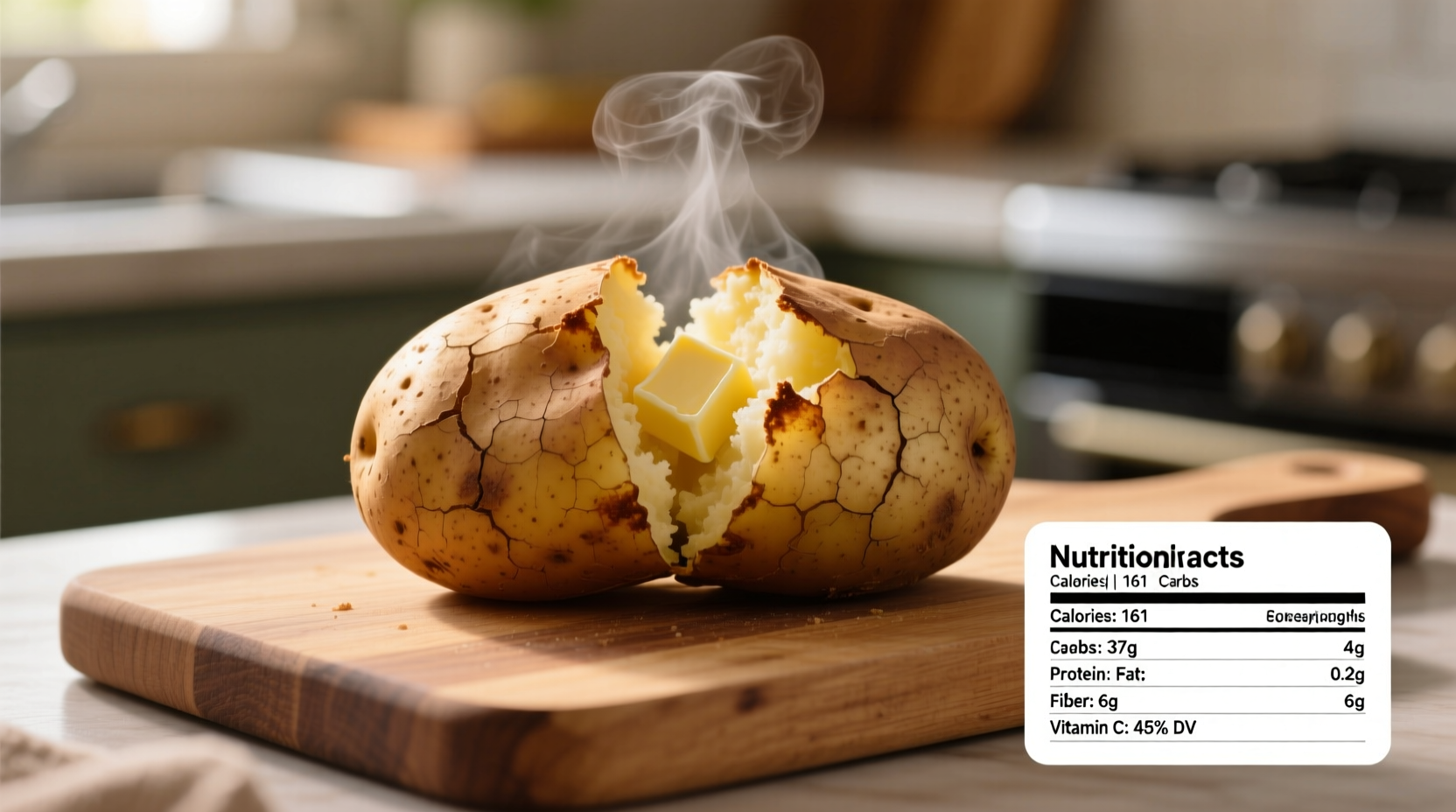
Calorie Breakdown by Potato Size
Your actual calorie intake depends primarily on potato size. Here's the precise nutritional information from the USDA's authoritative database:
| Potato Size | Weight (grams) | Calories | Carbohydrates | Fiber |
|---|---|---|---|---|
| Small (2" diameter) | 138g | 129 | 29g | 3.6g |
| Medium (3-1/4" long) | 173g | 161 | 37g | 4.6g |
| Large (3-1/2" long) | 278g | 260 | 59g | 7.4g |
| Jumbo (4-1/4" long) | 369g | 346 | 79g | 9.8g |
What Makes Baked Potatoes Nutritionally Valuable
Beyond basic calorie counts, baked potatoes deliver impressive nutritional benefits when prepared simply:
- Potassium powerhouse - One medium potato provides 926mg of potassium (20% of daily value), more than a banana
- Vitamin C source - Contains 17mg (28% of daily value), which supports immune function
- Fiber-rich - The skin contains nearly half the fiber content, aiding digestion and satiety
- Naturally fat-free - Contains zero fat when baked without added ingredients
According to research published by the National Institutes of Health, potatoes maintain most of their nutritional value when baked compared to boiling, which can leach water-soluble vitamins into cooking water.
Baking vs. Other Cooking Methods: Calorie Comparison
The cooking method significantly impacts final calorie content. Here's how baking compares to other popular preparation techniques:
- Baked with skin: 161 calories (medium potato) - preserves maximum nutrients
- Boiled: 140 calories - slight reduction due to water absorption
- Mashed (with milk/butter): 237 calories - additional fats increase calorie density
- French fries: 365 calories - oil absorption dramatically increases calories
The USDA FoodData Central confirms that baking preserves more nutrients than frying while avoiding the water-soluble vitamin loss that occurs with boiling. The dry heat of baking concentrates flavors without requiring added fats.
Smart Ways to Enjoy Baked Potatoes Without Excess Calories
You can transform a plain baked potato into a satisfying meal while keeping calories in check:
- Keep the skin on - Adds texture, fiber, and nutrients while maintaining the same calorie count
- Top with Greek yogurt - Provides creaminess with half the calories of sour cream
- Add vegetable toppings - Try steamed broccoli, sautéed mushrooms, or roasted peppers
- Use herbs instead of fats - Chives, rosemary, or garlic powder add flavor without calories
- Pair with lean protein - Creates a balanced meal that keeps you full longer
Nutrition professionals at the Academy of Nutrition and Dietetics recommend treating potatoes as a vegetable serving rather than a starch, which helps maintain appropriate portion sizes in meal planning.
Common Misconceptions About Potato Calories
Several myths persist about potato nutrition that deserve clarification:
- "Potatoes are fattening" - The potato itself isn't the issue; it's how we prepare and serve them
- "All carbs are bad" - Potatoes provide complex carbohydrates that fuel your body efficiently
- "Sweet potatoes are always healthier" - Both offer unique nutritional profiles; regular potatoes provide more potassium
- "Eating potatoes at night causes weight gain" - Total daily calories matter more than timing
Research from Harvard T.H. Chan School of Public Health shows that when prepared healthfully, potatoes can be part of successful weight management plans due to their high satiety value.
Practical Tips for Meal Planning With Baked Potatoes
Integrating baked potatoes into your diet requires understanding proper portion sizes and preparation methods:
- Measure before baking - Weigh potatoes raw for accurate calorie tracking
- Control portion sizes - Stick to one medium potato (5-6 ounces) as a side dish
- Avoid high-calorie toppings - Skip butter, cheese, and bacon bits which can double calorie content
- Cool before eating - Refrigerating cooked potatoes increases resistant starch, which has additional health benefits
- Track your additions - Remember that toppings significantly impact total calories
Dietitians at CDC Nutrition Resources emphasize that potatoes' high water content and fiber make them particularly satisfying for their calorie count, helping prevent overeating at meals.
Frequently Asked Questions
How many calories in a baked potato without skin?
A medium baked russet potato without skin (138g) contains approximately 129 calories. Removing the skin reduces both calories and valuable fiber content, as nearly half the fiber is in the skin.
Do different potato varieties have different calorie counts?
Most common varieties (russet, Yukon Gold, red potatoes) have similar calorie counts when comparing equal weights. Russets contain about 79 calories per 100g, while Yukon Golds have approximately 77 calories per 100g - a negligible difference for meal planning purposes.
How does baking time affect potato calorie content?
Baking time doesn't significantly change calorie content, though longer baking reduces water content which slightly concentrates calories by weight. A potato that starts at 173g might weigh 150g after extended baking, making calories per 100g appear higher while total calories remain essentially unchanged.
Are cold baked potatoes lower in calories?
Cold baked potatoes contain the same calories as when hot, but cooling increases resistant starch content which provides additional digestive benefits. This change in starch structure doesn't affect calorie count but may improve blood sugar response.
Can baked potatoes fit into a weight loss diet?
Yes, when prepared simply and portion-controlled. A medium baked potato provides substantial nutrients for just 161 calories and promotes satiety. Nutritionists recommend treating it as a vegetable serving rather than a starch to maintain appropriate portions in weight management plans.




 浙公网安备
33010002000092号
浙公网安备
33010002000092号 浙B2-20120091-4