
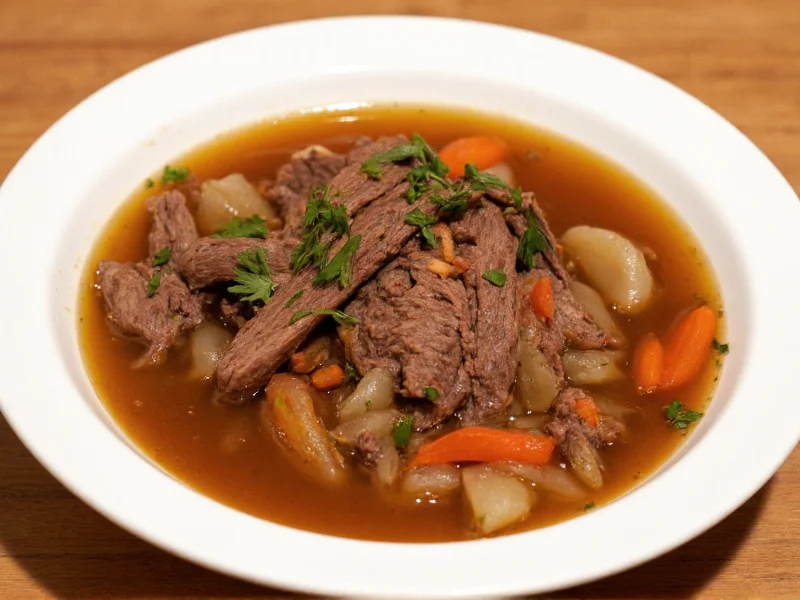
For decades, home cooks have relied on onion soup mix as a secret weapon for perfect pot roast. The combination of dried onions, beef-flavored powder, and aromatic spices creates a savory foundation that tenderizes tough cuts of beef while developing complex flavors. What makes this method particularly valuable is its reliability—unlike from-scratch gravy recipes that can vary based on ingredient quality, the consistent formulation of commercial onion soup mix ensures dependable results every time.
Why Onion Soup Mix Works Perfectly for Pot Roast
The magic of onion soup mix in pot roast comes from its carefully balanced ingredients. Most brands contain:
| Key Ingredient | Function in Pot Roast |
|---|---|
| Dehydrated onions | Provides deep onion flavor without burning during long cooking |
| Beef bouillon or flavoring | Enhances meat's natural umami and creates rich gravy base |
| Salt and pepper | Seasons throughout the cooking process |
| Wheat flour or starch | Helps thicken the cooking liquid into a velvety gravy |
| Garlic powder | Adds aromatic depth without becoming bitter |
These components work synergistically during the slow cooking process. As the roast braises, the dehydrated onions reconstitute and release their flavor into the cooking liquid, while the bouillon intensifies the meat's natural richness. The starch content helps create a smooth, cohesive gravy without requiring additional thickening steps.
Best Beef Cuts for Onion Soup Mix Pot Roast
Not all beef cuts respond equally well to this cooking method. Choose from these ideal options:
- Chuck roast - The marbling melts during cooking, creating exceptionally tender meat
- Brisket - Benefits from long cooking; develops incredible flavor with onion soup mix
- Round roast - Leaner option that stays moist with proper cooking time
- Short ribs - Creates an extra-rich version of classic pot roast
For best results with onion soup mix pot roast recipe, select cuts with visible marbling. The fat content breaks down during the slow cooking process, basting the meat from within and preventing dryness. Avoid lean cuts like eye of round for this particular preparation method.
Step-by-Step Cooking Instructions
Follow these professional techniques for foolproof pot roast with onion soup mix every time:
- Prep the roast: Pat 3-4 pound beef roast dry with paper towels. Season generously with black pepper.
- Sear properly: Heat 2 tablespoons oil in Dutch oven over medium-high heat. Sear roast on all sides until deeply browned (about 4 minutes per side).
- Add aromatics: Remove roast. Add 1 large chopped onion and 4 minced garlic cloves to pot. Cook until softened.
- Create the braising liquid: Stir in 1 packet (1.4 oz) onion soup mix, 2 cups beef broth, and 2 tablespoons Worcestershire sauce.
- Add vegetables: Return roast to pot. Surround with 4 peeled carrots cut into 2-inch pieces and 8 baby potatoes.
- Cook low and slow: Cover and cook at 325°F for 3-4 hours until fork-tender.
- Rest and serve: Let roast rest 15 minutes before slicing. Thicken gravy if needed before serving.
Perfect Cooking Times by Cut
Adjust cooking duration based on your selected cut for optimal tenderness:
| Beef Cut | Weight Range | Recommended Cooking Time | Internal Temperature |
|---|---|---|---|
| Chuck roast | 3-4 lbs | 3 to 3.5 hours | 200-205°F |
| Brisket | 3-5 lbs | 3.5 to 4 hours | 205-210°F |
| Rump roast | 2.5-3.5 lbs | 2.5 to 3 hours | 195-200°F |
| Short ribs | 3-4 lbs | 3 to 3.5 hours | 200°F |
Avoiding Common Pot Roast Mistakes
Even with the simplicity of using onion soup mix, certain errors can compromise your results:
- Skipping the sear: Proper browning creates flavor through the Maillard reaction. Never skip this step.
- Overcrowding vegetables: Too many vegetables dilute the gravy's flavor. Stick to 4-6 total vegetable pieces.
- Boiling instead of braising: Maintain a gentle simmer—rapid boiling makes meat tough.
- Cutting too soon: Allow 15 minutes resting time for juices to redistribute.
- Using low-sodium broth: Onion soup mix contains salt, but adequate liquid seasoning is crucial for flavor balance.
Delicious Variations to Try
Once you've mastered the basic onion soup mix pot roast recipe, experiment with these flavor enhancements:
- Red wine version: Replace 1 cup of broth with dry red wine for deeper flavor complexity
- Herb-infused: Add 2 sprigs fresh rosemary and 3 thyme sprigs during cooking
- Beer-braised: Substitute 12 ounces of stout or porter for equal parts broth
- Spicy kick: Include 1 teaspoon smoked paprika or 2 minced chipotle peppers in adobo
- Sweet and savory: Add 2 tablespoons tomato paste and 1 tablespoon brown sugar to the braising liquid
Storage and Reheating Tips
Proper handling ensures your pot roast with onion soup mix maintains quality:
- Refrigeration: Store in airtight container for up to 4 days. Keep meat submerged in gravy.
- Freezing: Freeze portions with gravy for up to 3 months. Thaw overnight in refrigerator.
- Reheating: Warm gently in covered dish at 300°F until heated through (about 30 minutes). Avoid microwave reheating which makes meat tough.
- Gravy refresh: If gravy separates after storage, whisk vigorously while reheating or blend briefly with immersion blender.
Frequently Asked Questions
Can I use low-sodium onion soup mix for pot roast?
Yes, low-sodium onion soup mix works well for pot roast, but you'll need to adjust seasoning. Add 1/2 teaspoon salt to the braising liquid and taste the gravy before serving. You may need additional salt since the low-sodium version contains less sodium than regular mix.
How do I thicken pot roast gravy made with onion soup mix?
If your gravy needs thickening, create a slurry by mixing 2 tablespoons cornstarch with 1/4 cup cold water. Remove the roast and vegetables, then bring the gravy to a simmer. Whisk in the slurry and cook for 2-3 minutes until thickened. Alternatively, remove 1 cup of cooking liquid, blend with 1 tablespoon flour, then return to the pot and simmer for 5 minutes.
What's the best way to adapt onion soup mix pot roast for slow cooker?
For slow cooker adaptation, sear the roast first as directed, then place in slow cooker with the onion soup mix, broth, and Worcestershire sauce. Add vegetables on top. Cook on low for 8-10 hours or high for 5-6 hours. The extended cooking time in slow cooker produces exceptionally tender meat while maintaining the signature onion soup mix flavor profile.
Why does my onion soup mix pot roast turn out dry?
Dry pot roast typically results from insufficient cooking time or using too lean a cut. Tough cuts require 3-4 hours at 325°F to break down connective tissue properly. Check internal temperature—it should reach 200-205°F for proper tenderness. Also ensure enough liquid remains in the pot throughout cooking; add additional broth if liquid reduces too much.




 浙公网安备
33010002000092号
浙公网安备
33010002000092号 浙B2-20120091-4