
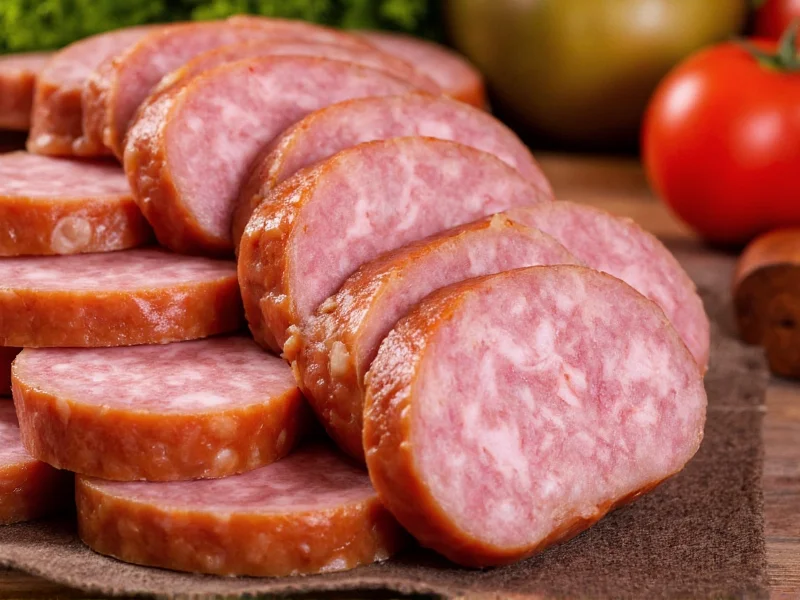
Nutritional Breakdown of Pork Sausage
Understanding the complete nutritional profile of pork sausage helps consumers make informed dietary choices. While the exact values vary by brand and recipe, the following table shows average nutritional values for a standard 3-ounce (85g) cooked serving of traditional pork sausage:
| Nutrient | Amount | % Daily Value* |
|---|---|---|
| Calories | 290-330 | - |
| Total Fat | 20-24g | 26-31% |
| Saturated Fat | 7-9g | 35-45% |
| Cholesterol | 70-90mg | 23-30% |
| Sodium | 500-700mg | 22-30% |
| Protein | 25-28g | 50-56% |
| Vitamin B12 | 2.4-3.0mcg | 40-50% |
| Selenium | 25-35mcg | 30-40% |
| Zinc | 2.0-2.8mg | 25-35% |
*Percent Daily Values based on a 2,000 calorie diet. Individual needs may vary. Nutritional data sourced from USDA FoodData Central Standard Reference (2023 release) [https://fdc.nal.usda.gov/](https://fdc.nal.usda.gov/).
Macronutrient Analysis
Pork sausage serves as a concentrated source of protein and fat. The protein content makes it valuable for muscle maintenance and satiety, while the fat content contributes to its rich flavor but also increases calorie density. Most pork sausage varieties contain minimal carbohydrates (typically less than 1g per serving), making them suitable for low-carb dietary approaches.
The fat composition deserves attention: approximately 35-40% of the total fat in pork sausage is saturated fat. While recent research has nuanced our understanding of saturated fats, health organizations still recommend limiting saturated fat intake to support cardiovascular health. The remaining fat consists primarily of monounsaturated and polyunsaturated fats.
Serving Size Reality Check
Many consumers unknowingly double or triple their intended portion when serving pork sausage. A standard serving is 3 ounces cooked (about the size of a deck of cards), but restaurant portions and typical breakfast servings often contain 6-8 ounces. This effectively doubles the calorie, fat, and sodium intake.
Cooking method significantly impacts the final nutritional profile. Grilling or baking allows excess fat to drain away, potentially reducing total fat content by 10-15% compared to pan-frying where the sausage cooks in its own fat. Avoid adding extra fats during preparation to keep the nutritional profile as favorable as possible.
Health Considerations
Pork sausage offers notable nutritional benefits alongside certain health considerations. The high-quality protein supports muscle maintenance and provides all essential amino acids. The substantial vitamin B12 content is particularly valuable, as this nutrient is primarily found in animal products and is essential for neurological function and red blood cell formation.
However, the World Health Organization classifies processed meats like pork sausage as Group 1 carcinogens, meaning there's sufficient evidence linking them to colorectal cancer. This classification relates to the processing methods (curing, smoking, salting) rather than the meat itself. The high sodium content also warrants attention, especially for individuals managing hypertension or cardiovascular conditions.
Evolution of Processing Methods and Safety Standards
The production of pork sausage has undergone significant regulatory evolution since the early 20th century. Originally preserved through natural fermentation and heavy salting, modern sausage safety was transformed by three critical developments:
- 1920s-1940s: Introduction of sodium nitrite as a curing agent to prevent botulism (Clostridium botulinum), reducing foodborne illness mortality by 98% according to CDC historical data [https://www.cdc.gov/mmwr/preview/mmwrhtml/mm5901a4.htm](https://www.cdc.gov/mmwr/preview/mmwrhtml/mm5901a4.htm)
- 1970s: Discovery of nitrosamine formation led to FDA regulations requiring ascorbate additives to inhibit carcinogen development (21 CFR 172.170)
- 2015-Present: WHO/IARC classification prompted USDA FSIS to mandate clearer labeling of processed meat risks while maintaining nitrite safety standards [https://www.fsis.usda.gov/laboratory-tests/curing-and-cure-calculations](https://www.fsis.usda.gov/laboratory-tests/curing-and-cure-calculations)
Current regulations strictly limit sodium nitrite to 156 ppm in sausages, balancing botulism prevention with carcinogen risk reduction. "Nitrate-free" products using celery juice (naturally high in nitrates) remain subject to identical safety standards per USDA Food Safety and Inspection Service guidelines.
Population-Specific Consumption Guidelines
The appropriateness of pork sausage consumption varies significantly across demographic and health profiles, requiring contextual application:
| Population Group | Recommended Limitation | Primary Health Concern | Evidence Source |
|---|---|---|---|
| General Adults | ≤1 serving (3oz) weekly | Colorectal cancer risk | WCRF Continuous Update Project [https://www.wcrf.org/dietandcancer/](https://www.wcrf.org/dietandcancer/) |
| Hypertension Patients | Avoid or ≤300mg sodium option monthly | Blood pressure elevation | American Heart Association Guidelines [https://www.heart.org/en/health-topics/high-blood-pressure](https://www.heart.org/en/health-topics/high-blood-pressure) |
| Chronic Kidney Disease | Generally contraindicated | Protein/sodium overload | National Kidney Foundation KDOQI [https://www.kidney.org/professionals/guidelines](https://www.kidney.org/professionals/guidelines) |
| Active Athletes | ≤2 servings weekly with balanced diet | Nutrient density benefits | ACSM Sports Nutrition Guidelines [https://www.acsm.org/](https://www.acsm.org/) |
These guidelines reflect evidence that sausage's impact depends on individual health status and overall dietary patterns. For example, athletes may benefit from the protein density when consumed within a vegetable-rich meal, while kidney patients face amplified risks from the same serving due to compromised excretion pathways. Always consult healthcare providers for personalized recommendations.
Comparative Nutrition Analysis
Understanding how pork sausage compares to alternative protein sources helps inform healthier choices. The following comparison shows nutritional differences between various sausage types and leaner protein options:
| Protein Source | Calories (per 3oz) | Protein (g) | Total Fat (g) | Saturated Fat (g) | Sodium (mg) |
|---|---|---|---|---|---|
| Traditional Pork Sausage | 310 | 26 | 22 | 8 | 600 |
| Chicken Sausage | 180 | 16 | 11 | 3 | 550 |
| Turkey Sausage | 200 | 18 | 13 | 4 | 500 |
| Lean Ground Turkey | 140 | 22 | 4 | 1 | 70 |
| Grilled Chicken Breast | 140 | 26 | 3 | 1 | 60 |
*Data sourced from USDA FoodData Central Standard Reference SR Legacy (2023) [https://fdc.nal.usda.gov/](https://fdc.nal.usda.gov/). Values represent cooked, drained products.
This comparison reveals significant differences in nutritional profiles. While pork sausage delivers more protein per serving than chicken or turkey sausage, it also contains substantially more calories and fat. Leaner alternatives like ground turkey and chicken breast offer comparable protein with dramatically lower fat and sodium content.
Making Healthier Choices with Pork Sausage
You don't need to eliminate pork sausage entirely to maintain a healthy diet—strategic choices can reduce potential health impacts:
- Read nutrition labels carefully - Look for varieties with lower sodium (under 400mg per serving) and reduced fat content
- Consider portion control - Use half a sausage link with additional vegetables rather than multiple full links
- Choose breakfast blends - Some brands mix pork with chicken or turkey to reduce overall fat content
- Look for nitrate-free options - These use natural preservatives like celery juice instead of synthetic nitrates
- Balance your meal - Pair sausage with vegetables, fruits, or whole grains to create a more nutritionally complete meal
When preparing pork sausage at home, consider making your own with leaner cuts of pork, reduced salt, and added herbs for flavor instead of additional sodium. This approach gives you complete control over ingredients and nutritional content.
Contextualizing Pork Sausage in Your Diet
Nutrition science increasingly recognizes that foods don't exist in isolation but as components of overall dietary patterns. While pork sausage contains beneficial nutrients like protein and B vitamins, its processed nature means it should be consumed mindfully.
Current dietary guidelines generally recommend limiting processed meat intake as part of a healthy eating pattern. The Mediterranean diet, consistently ranked among the healthiest dietary approaches, includes moderate amounts of high-quality meats while emphasizing plant-based foods. Incorporating pork sausage occasionally within such a balanced approach represents a more sustainable strategy than complete elimination for most healthy individuals.




 浙公网安备
33010002000092号
浙公网安备
33010002000092号 浙B2-20120091-4