
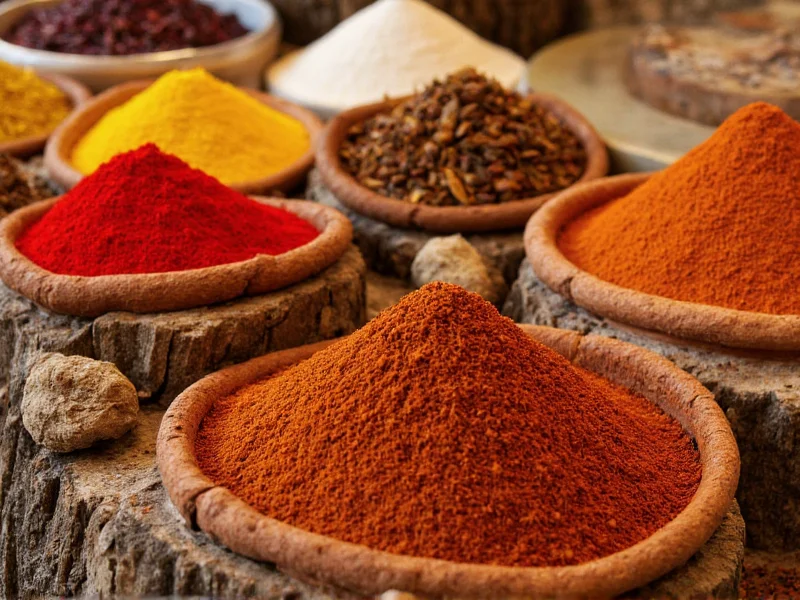
The Global Spice Pantry: Understanding Popular Spices
Spices have shaped human civilization, driving exploration, trade, and culinary innovation for millennia. Today, certain spices maintain universal appeal across diverse cultures and cuisines. This guide explores the most widely used spices globally, their flavor profiles, culinary applications, and practical tips for incorporating them into your cooking repertoire.
Measuring Spice Popularity Worldwide
Spice popularity can be assessed through multiple metrics including global production volumes, import/export data, and culinary usage frequency. While regional preferences vary significantly—cumin dominates Middle Eastern cuisine while star anise features prominently in Chinese cooking—several spices consistently appear in kitchens worldwide.
According to international food trade statistics, the top consumed spices by volume include black pepper, chili peppers (in various forms), turmeric, and cumin. These spices transcend cultural boundaries, appearing in everything from European sauces to Asian curries and American barbecue rubs.
| Rank | Spice | Primary Flavor Profile | Global Annual Consumption (Metric Tons) |
|---|---|---|---|
| 1 | Black Pepper | Pungent, woody, slightly floral | 500,000+ |
| 2 | Chili Peppers | Varies from mild to extremely hot | 380,000+ |
| 3 | Cumin | Earthy, warm, slightly smoky | 350,000+ |
| 4 | Turmeric | Earthy, slightly bitter, peppery | 200,000+ |
| 5 | Cinnamon | Sweet, warm, woody | 150,000+ |
Historical Evolution of Global Spice Trade
Spice trade routes have evolved dramatically over centuries, shaping global economics and cuisine. Key milestones include:
- 2000 BCE: Early spice trade between India and Mesopotamia documented in cuneiform tablets (The Metropolitan Museum of Art, 2000).
- 1st Century CE: Roman Empire establishes direct sea routes to India, bypassing Arab intermediaries (The Met, 2000).
- 13th Century: Venetian merchants dominate European spice trade, controlling distribution from Alexandria (British Library, 2002).
- 1498: Vasco da Gama's sea voyage to India opens direct European access, breaking Venetian monopoly (The Met, 2000).
- 16th-17th Century: Dutch and British East India Companies establish colonial spice plantations in Asia (The National Archives, UK, 2019).
- Mid-20th Century: Container shipping and international trade agreements make spices affordable globally (FAO, 2003).
These developments transformed spices from luxury goods for the elite to everyday kitchen staples, influencing culinary traditions across continents.
Essential Popular Spices and Their Culinary Applications
Black Pepper: The Universal Enhancer
Often called the "king of spices," black pepper (Piper nigrum) originates from India's Malabar Coast. Its pungent, complex flavor enhances virtually any savory dish without overwhelming other ingredients. Whole peppercorns maintain freshness significantly longer than pre-ground pepper—investing in a pepper mill delivers noticeably superior flavor. Professional chefs typically add black pepper at multiple cooking stages: early for infused background notes and near the end for pronounced pepper flavor.
Cinnamon: Sweet and Savory Versatility
True cinnamon (Ceylon cinnamon) from Sri Lanka offers delicate, sweet notes compared to the more common cassia cinnamon with its stronger, spicier profile. While cinnamon features prominently in baked goods, its culinary applications extend to savory dishes like Moroccan tagines, Indian curries, and even Middle Eastern lamb preparations. When substituting between cinnamon types, use approximately half the amount of cassia for recipes specifying Ceylon due to its more intense flavor.
Turmeric: The Golden Spice
Turmeric provides both vibrant yellow color and earthy flavor to dishes worldwide. Beyond its role in curry powders, turmeric appears in mustards, rice dishes, and even golden milk beverages. The compound curcumin gives turmeric its distinctive color and potential health benefits, though absorption increases dramatically when combined with black pepper and healthy fats. Fresh turmeric root offers more complex flavor than dried powder and can be grated directly into dishes.
Cumin: Earthy Depth for Global Cuisines
Cumin seeds deliver distinctive earthy, warm notes essential to Mexican, Indian, Middle Eastern, and North African cuisines. For maximum flavor impact, toast whole cumin seeds in a dry pan until fragrant before grinding. This simple technique releases essential oils, transforming the spice's flavor profile. Cumin pairs exceptionally well with coriander, creating the foundational flavor base for countless spice blends including garam masala and chili powder.
Paprika: Color and Flavor Spectrum
Produced from ground peppers, paprika ranges from mild and sweet to hot and smoky. Hungarian paprika varieties offer the most nuanced flavor profiles, with classifications including sweet (édes), half-hot (félédes), and hot (erős). Spanish smoked paprika (pimentón) provides distinctive smoky notes without actual smoking. When cooking with paprika, add it toward the end of cooking or mix with a small amount of oil first to prevent bitterness from high heat exposure.
Practical Constraints of Popular Spices
Understanding the limitations of spice usage ensures optimal culinary results and safety. Evidence-based guidelines highlight key considerations:
- Cinnamon (Cassia): Contains coumarin, which in high doses may cause liver damage. The European Food Safety Authority recommends a maximum daily intake of 0.1 mg per kg of body weight (EFSA, 2012). For regular use, opt for Ceylon cinnamon which has negligible coumarin.
- Turmeric: Curcumin, the active compound, has low bioavailability. Combining turmeric with black pepper (piperine) increases absorption by up to 2000% (Shoba et al., 1998). However, excessive consumption may interact with blood thinners (NCCIH, 2021).
- Paprika: High heat can cause bitterness. Culinary experts recommend adding paprika late in cooking or blooming it in oil at low temperatures to preserve flavor (University of Georgia Extension, 2020).
- Black Pepper: Overuse can overpower delicate dishes. To preserve its complex flavor, add near the end of cooking (University of Georgia Extension, 2020).
Building Your Essential Spice Collection
Starting with just five core spices—black pepper, cumin, paprika, cinnamon, and turmeric—creates tremendous culinary flexibility. These foundational spices enable preparation of dishes spanning multiple global cuisines. As you expand your collection, consider adding coriander, cardamom, and ginger to round out your basic pantry.
Proper storage significantly extends spice freshness. Keep spices in airtight containers away from heat and light—never above the stove. Whole spices maintain potency for 2-4 years, while ground spices typically remain fresh for 6-12 months. A simple smell test reveals freshness: vibrant, distinctive aromas indicate quality, while dull or absent scents signal it's time for replacement.
Mastering Spice Usage Techniques
Understanding when and how to add spices transforms cooking results. Whole spices generally benefit from early addition to infuse dishes with flavor, while ground spices often perform best when added midway through cooking. Delicate spices like saffron require gentle treatment, while robust spices like cumin withstand prolonged cooking.
Creating custom spice blends allows personalization of flavors. Start with small batches using ratios like 2 parts cumin to 1 part coriander, adjusting to taste. Toasting whole spices before grinding creates more complex flavor profiles than using pre-ground versions. Remember that spice potency varies between brands and harvests—always taste as you go rather than strictly following measurements.




 浙公网安备
33010002000092号
浙公网安备
33010002000092号 浙B2-20120091-4