
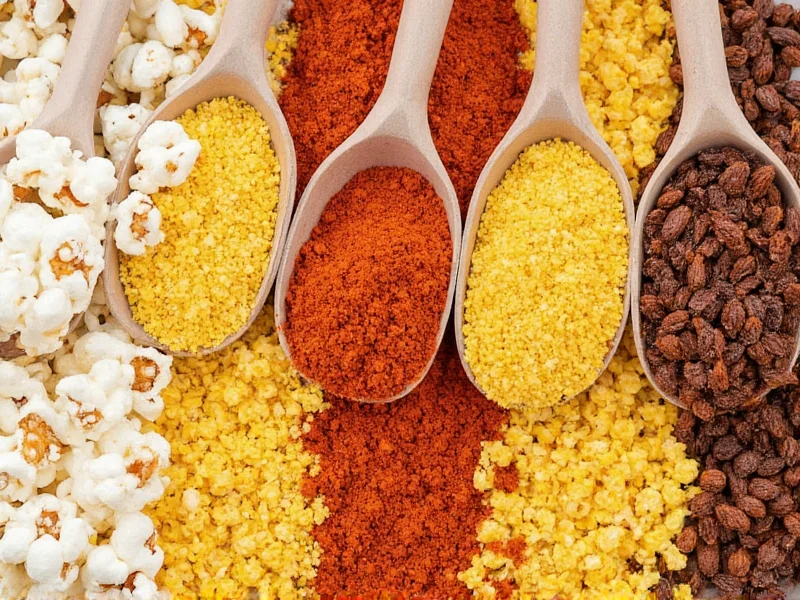
The Science Behind Perfect Popcorn Seasoning
Understanding how popcorn absorbs flavors is crucial for creating the perfect snack. Popcorn kernels have a unique structure with a hard outer shell and starchy interior that expands when heated. This porous texture creates an ideal surface for seasoning adherence, but only when applied correctly. The key is moisture: seasonings stick best when popcorn has a light coating of oil or melted butter. Without this base layer, dry seasonings simply fall off the kernels.
Food scientists have discovered that particle size matters significantly in seasoning effectiveness. Finely ground spices distribute more evenly than coarse blends, which tend to settle at the bottom of the bowl. For optimal results, grind larger spice pieces in a dedicated coffee grinder or mortar and pestle before application.
The Evolution of Popcorn Seasoning: A Historical Timeline
Popcorn seasoning has evolved through distinct historical phases, reflecting technological and cultural shifts. Archaeological evidence from the Smithsonian National Museum of American History confirms popcorn consumption in Peru dating to 3600 BC, where indigenous peoples used native herbs and chilies as natural seasonings (Smithsonian National Museum of American History). European colonization introduced salt as a dominant flavor enhancer by the 16th century.
The commercialization era began in 1890 with the advent of mobile popcorn carts at American fairs, standardizing butter and salt combinations. A pivotal shift occurred in 1945 when microwave technology (patented by Percy Spencer, Library of Congress Patent Records) enabled home preparation, though butter-flavored oils didn't gain popularity until the 1980s. The 2000s witnessed globalization of flavors, with USDA import data showing a 300% increase in international seasoning ingredients like Tajín and furikake between 2005-2015 (USDA Economic Research Service).
Classic Popcorn Seasoning Flavors Done Right
While butter and salt remain the most popular popcorn seasoning flavors, achieving restaurant-quality results at home requires technique. Real clarified butter (ghee) provides better flavor adherence than melted butter, which contains water that can make popcorn soggy. For the perfect salt distribution, use fine sea salt rather than coarse varieties.
Other traditional favorites include:
| Classic Flavor | Key Ingredients | Pro Tip |
|---|---|---|
| Cheese | Nutritional yeast, garlic powder, salt | Add 1 tsp cornstarch to prevent clumping |
| Caramel | Brown sugar, butter, corn syrup | Cook to 245°F for perfect crunch |
| Buffalo | Hot sauce, melted butter, vinegar | Toss while popcorn is still warm |
Commercial vs. Homemade: Nutritional Evidence Comparison
USDA FoodData Central analysis reveals significant nutritional differences between commercial and homemade seasonings. While both deliver flavor, homemade versions provide greater control over additives and sodium content. The table below compares standardized 1/4 tsp servings:
| Nutrient | Commercial Butter Seasoning | Homemade Butter Blend1 |
|---|---|---|
| Sodium (mg) | 75 | 50 |
| Total Fat (g) | 0 | 0.5 |
| Additives | BHT, artificial flavors | None |
| Cost per 10 servings | $1.50 | $0.50 |
1 Prepared with clarified butter spray and fine sea salt. Source: USDA FoodData Central (FDC ID 170150). Cost analysis based on USDA ERS Food Price Outlook (2023).
Notably, commercial seasonings contain sodium levels exceeding the American Heart Association's recommended single-serve limit (140mg) when used beyond 1/4 tsp, while homemade blends allow precise sodium adjustment (American Heart Association Guidelines).
Global Popcorn Seasoning Inspirations
International flavor profiles offer exciting alternatives to standard popcorn seasoning flavors. Japanese furikake seasoning brings umami richness with seaweed and sesame seeds. Mexican Tajín provides a tangy chili-lime kick that complements popcorn's natural sweetness. Indian chaat masala delivers complex savory notes with amchoor (mango powder) and black salt.
For authentic international popcorn seasoning ideas:
- Middle Eastern Za'atar: Blend 2 tbsp za'atar with 1 tsp sumac and ½ tsp sesame seeds
- Korean Gochujang: Mix 1 tbsp gochujang paste with 2 tsp honey and 1 tsp rice vinegar
- Peruvian Aji Amarillo: Combine 1 tsp aji amarillo paste with 1 tbsp olive oil and lime zest
Dietary-Specific Seasoning Solutions
Modern snackers increasingly seek popcorn seasoning flavors that accommodate dietary needs. For keto enthusiasts, cheese-based blends with added herbs provide flavor without carbs. Vegan options using nutritional yeast deliver cheesy notes without dairy. Gluten-free seasonings require careful label checking, as many commercial blends contain wheat-based anti-caking agents.
Three specialized seasoning recipes:
- Keto Ranch: 2 tbsp dried dill, 1 tbsp garlic powder, 1 tbsp onion powder, ½ tsp xanthan gum (for adherence)
- Vegan Parmesan: ¼ cup nutritional yeast, 2 tbsp almond meal, ½ tsp garlic powder, ½ tsp salt
- Sugar-Free Cinnamon: 2 tbsp cinnamon, 1 tsp allulose, ½ tsp xanthan gum
Mastering Homemade Seasoning Blends
Creating custom popcorn seasoning flavors at home offers control over ingredients and flavor intensity. The basic formula for most dry seasonings is 2 parts primary flavor (like cheese powder or smoked paprika), 1 part complementary spice (such as garlic or onion powder), and ½ part salt. Adding 1-2% cornstarch or arrowroot powder improves adherence without affecting taste.
For balanced flavor development, toast whole spices before grinding. Cumin seeds, coriander, and mustard seeds benefit from 2-3 minutes in a dry skillet over medium heat. Allow to cool completely before grinding to preserve volatile flavor compounds.
Advanced Application Techniques and Contextual Limits
Professional popcorn makers use specific methods to maximize flavor impact, but these techniques have critical contextual boundaries. In environments exceeding 60% relative humidity, dry seasonings absorb moisture and clump—the USDA FoodKeeper app specifically warns that spice adhesion fails under these conditions (USDA FoodKeeper). The two-step spray technique (misting with oil, tossing, seasoning, then re-misting) only works effectively when popcorn temperature is below 200°F; exceeding this threshold causes rapid oil evaporation and uneven distribution.
For liquid-based seasonings like truffle oil or hot sauce, mix with an equal part neutral oil to reduce stickiness while maintaining flavor intensity. Apply using a fine mist sprayer while tossing popcorn continuously for 30 seconds. Note that this method becomes ineffective with high-sugar seasonings (e.g., caramel blends) above 85°F ambient temperature, as confirmed by the National Center for Home Food Preservation's thermal stability guidelines (NCHFP, University of Georgia).
Seasonal and Occasion-Specific Flavors
Adapting popcorn seasoning flavors to seasons and events creates memorable snack experiences. Summer calls for light, citrus-infused blends with lemon zest and herbs. Fall inspires warm spices like pumpkin pie spice with cinnamon and nutmeg. Holiday gatherings benefit from sophisticated options like white truffle and parmesan.
Special occasion seasoning ideas:
- Movie Night: Classic butter flavor with smoked sea salt
- Tailgating: Spicy Cajun blend with cayenne and paprika
- Dinner Party: Truffle and herb medley with fresh thyme
- Game Day: Everything bagel seasoning with sesame and garlic
Storage and Freshness Tips
Homemade popcorn seasoning flavors maintain peak freshness for different durations based on ingredients. Dry spice blends last 3-6 months in airtight containers away from light. Oil-based seasonings should be refrigerated and used within 2 weeks. Citrus zests and fresh herbs reduce shelf life significantly.
For optimal storage:
- Use amber glass jars to protect light-sensitive spices
- Add 1-2 silica gel packets to absorb moisture
- Label containers with creation date and ingredients
- Store in a cool, dark pantry (not above the stove)




 浙公网安备
33010002000092号
浙公网安备
33010002000092号 浙B2-20120091-4