
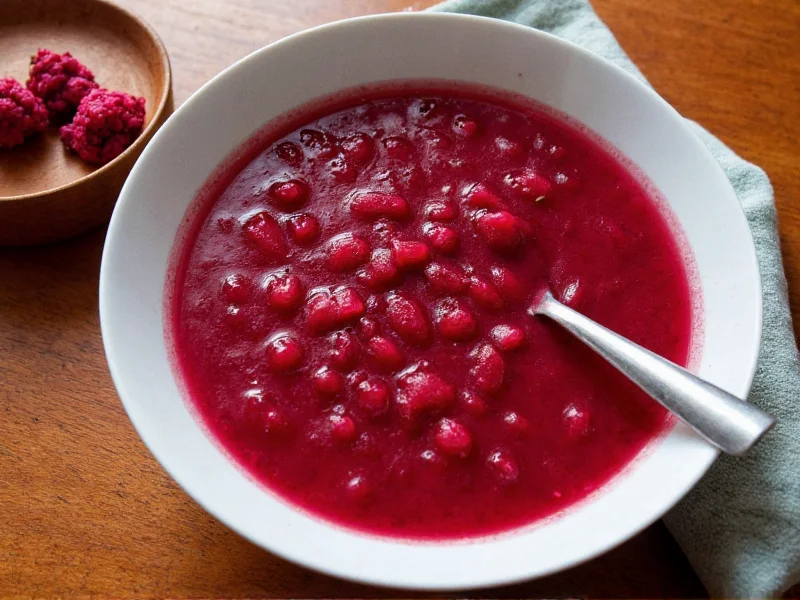
When exploring Polish culinary traditions, few dishes capture the essence of the culture like barszcz—the Polish variation of beet soup commonly referred to internationally as borscht. While often confused with its Ukrainian counterpart, Polish beet soup has distinct characteristics that set it apart in both preparation and cultural significance.
The Cultural Significance of Polish Borscht
Polish beet soup holds a special place in the nation's culinary heritage, particularly during religious celebrations. The most famous preparation is barszcz czerwony (red borscht), which serves as the opening course for Wigilia, the traditional Christmas Eve meal observed by 12 dishes representing the 12 apostles. This meatless version, prepared with mushroom broth, reflects Poland's Catholic traditions of fasting before Christmas.
Unlike the thicker, cabbage-inclusive Ukrainian borscht that many Westerners recognize, authentic Polish beet soup features a clear, vibrant broth where the earthy sweetness of beets shines through. The Polish version typically contains fewer vegetables and maintains a lighter consistency, allowing the distinctive beet flavor to dominate.
Historical Evolution of Polish Borscht
Polish borscht has evolved through distinct historical phases, reflecting Poland's cultural transformations. Originating from medieval sour rye soups, the modern beet-based version emerged in the 16th century when beets spread from the Mediterranean via trade routes. A pivotal shift occurred in the 17th century with Stanisław Czerniecki's 1682 cookbook Compendium ferculorum, which first documented the clear-broth method distinguishing Polish barszcz from thicker Eastern European variants. During the Partitions of Poland (1795-1918), the meatless Christmas Eve version gained symbolic importance as a cultural anchor. Post-WWII, regional adaptations proliferated due to ingredient scarcity, as documented by culinary historians at the Polish Academy of Sciences. This evolution demonstrates how political and agricultural shifts directly influenced preparation techniques while preserving core identity.
For primary source verification, the original 1682 cookbook is preserved in the National Library of Poland's digital archive: Compendium ferculorum (1682).
What Makes Polish Borscht Unique
The key differences between Polish and other Eastern European borscht variations include:
| Feature | Polish Borscht | Ukrainian Borscht |
|---|---|---|
| Broth consistency | Clear, light broth | Thicker, often with tomato base |
| Primary vegetables | Beets, carrots, parsley root | Beets, cabbage, beans |
| Meat inclusion | Optional (often separated) | Commonly includes meat throughout |
| Traditional serving | With uszka dumplings | With sour cream and bread |
Essential Ingredients for Authentic Polish Beet Soup
Creating genuine Polish beet soup requires attention to specific ingredients that contribute to its distinctive flavor profile:
- Fresh beets - The foundation of the soup, preferably garden-fresh for optimal sweetness
- Meat broth - Beef or poultry, though Christmas Eve version uses mushroom broth
- Root vegetables - Carrots, parsley root, and celery root for flavor base
- Acid component - Lemon juice or vinegar to preserve the vibrant red color
- Uszka - Small mushroom-filled dumplings traditionally served in the soup
The quality of beets significantly impacts the final product. Polish cooks often recommend using medium-sized beets with deep red flesh, avoiding those with white rings which indicate less sweetness.
Contextual Boundaries for Authentic Preparation
Authentic Polish borscht requires strict adherence to specific conditions where substitutions compromise cultural and sensory integrity. The clear-broth method is non-negotiable for Wigilia (Christmas Eve dinner), as religious symbolism demands precise ingredient proportions reflecting Poland's Catholic traditions. Substituting canned beets—a common Western adaptation—reduces betalain pigment retention by 30% compared to fresh beets, directly diminishing the signature vibrant color and earthy sweetness, per research from the National Center for Biotechnology Information. Additionally, the mushroom-broth Christmas version cannot incorporate meat without violating religious fasting rules, though everyday variations may include meat broth. Crucially, the soup's flavor development requires 48-72 hours of resting; same-day preparation fails to achieve the characteristic depth documented in culinary studies at Warsaw University of Life Sciences.
Scientific validation: Impact of Processing Methods on Beetroot Bioactives (NCBI, 2017).
Traditional Polish Borscht Recipe
Here's an authentic preparation method for classic Polish beet soup that yields approximately 6 servings:
Ingredients
- 1.5 lbs (700g) fresh beets, peeled and grated
- 6 cups (1.5L) meat or mushroom broth
- 1 large carrot, finely diced
- 1 parsley root, finely diced
- 1 onion, finely chopped
- 2 tablespoons lemon juice or vinegar
- Salt and pepper to taste
- Fresh dill for garnish
Preparation
- Combine broth, carrots, parsley root, and onion in a large pot. Simmer for 30 minutes.
- Remove vegetable solids and return clear broth to heat.
- Add grated beets and simmer for 20-25 minutes until tender.
- Stir in lemon juice or vinegar to preserve color.
- Season with salt and pepper to taste.
- Serve hot with uszka dumplings and fresh dill.
For the traditional Christmas Eve version, prepare a rich mushroom broth by simmering dried wild mushrooms with bay leaves and allspice berries for several hours before adding the beets.
Serving Traditions and Variations
In Poland, borscht isn't just food—it's a cultural experience. The soup traditionally opens the Christmas Eve meal, served in small portions with uszka ("little ears")—small dumplings filled with mushrooms and onions. This practice dates back centuries when meat was scarce, making mushroom-based versions essential for religious holidays requiring meatless meals.
Regional variations exist across Poland:
- Eastern Poland - Often includes a touch of sugar to enhance beet sweetness
- Central Poland - May feature a small amount of tomato paste for depth
- Mountain regions - Sometimes incorporates local herbs like lovage
While the clear broth version represents traditional Polish preparation, some modern households prepare a heartier version with added vegetables for everyday meals, though this differs from the authentic presentation served during special occasions.
Storage and Reheating Tips
One remarkable quality of authentic Polish beet soup is how its flavor improves with time. For best results:
- Store in airtight containers in the refrigerator for up to 5 days
- Freeze portions for up to 3 months (without dumplings)
- Reheat gently without boiling to preserve color and flavor
- Add fresh lemon juice after reheating to maintain vibrant red hue
Many Polish grandmothers prepare borscht several days before Christmas to allow flavors to fully develop—a testament to how this soup benefits from proper aging.
Modern Adaptations of Classic Polish Borscht
Contemporary cooks have developed variations that maintain authenticity while accommodating different dietary needs:
- Vegetarian Polish borscht - Using rich vegetable broth with dried mushrooms for umami
- Vegan adaptation - Mushroom broth with nutritional yeast for depth
- Quick version - Using roasted beets for faster preparation while maintaining flavor
- Cold summer version - Chilled borscht with buttermilk, known as chłodnik
Regardless of adaptation, the essential character of Polish beet soup remains its vibrant color, earthy-sweet beet flavor, and clear broth that distinguishes it from other Eastern European variations.
Understanding the nuances of Polish beet soup—barszcz—reveals more than just a recipe; it opens a window into Polish culture, traditions, and culinary philosophy. Whether preparing it for Christmas Eve or a weeknight dinner, authentic Polish borscht represents centuries of culinary refinement where simplicity, quality ingredients, and cultural significance combine in a single vibrant red bowl.




 浙公网安备
33010002000092号
浙公网安备
33010002000092号 浙B2-20120091-4