
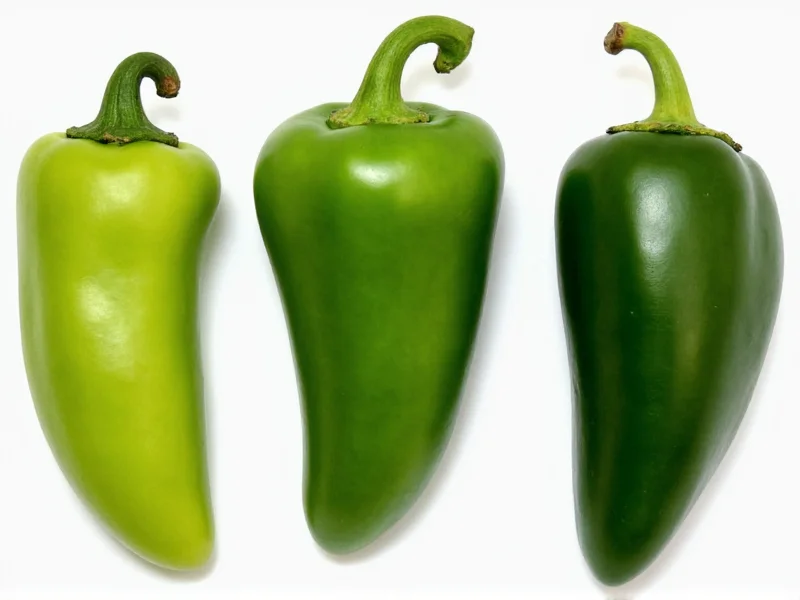
When navigating the world of Mexican cuisine, understanding the key distinctions between poblano, serrano, and jalapeño peppers is essential for achieving authentic flavors. These three staple chilies vary dramatically in heat, flavor profile, size, and culinary applications. Choosing the wrong pepper can transform a dish from perfectly balanced to overwhelmingly spicy or disappointingly bland. This comprehensive comparison provides the practical knowledge you need to select the right pepper for every recipe, whether you're making traditional chiles rellenos, fresh pico de gallo, or creamy jalapeño poppers.
Pepper Profile Comparison
| Pepper Type | Heat Level (SHU) | Size & Shape | Color When Mature | Flavor Profile | Best Culinary Uses |
|---|---|---|---|---|---|
| Poblano | 1,000-2,000 | 4-6" long, heart-shaped | Dark green to red/brown | Earthy, mild, slightly sweet | Chiles rellenos, mole, stuffing |
| Serrano | 10,000-23,000 | 2-3" long, tapered | Bright green to red | Grassy, bright, intensely spicy | Salsas, guacamole, garnishes |
| Jalapeño | 2,500-8,000 | 2-3" long, cylindrical | Dark green to red | Grassy, bright, moderately spicy | Popper, pickling, sauces, fresh use |
Understanding Heat Levels: Poblano vs Serrano vs Jalapeño
Heat measurement using the Scoville scale reveals dramatic differences between these peppers. The poblano vs serrano heat comparison shows serranos are up to 23 times hotter than poblanos. Many home cooks mistakenly believe jalapeños are the hottest of the three, but serranos consistently outrank them in heat intensity.
When considering poblano vs serrano vs jalapeño heat levels, remember that growing conditions significantly affect spiciness. Peppers become hotter when stressed by less water or more sun. The white lines (corking) on jalapeños indicate higher heat potential. For accurate poblano vs serrano heat comparison, always consider these variables.
Flavor Profiles and Culinary Applications
Poblano peppers offer the mildest heat with a rich, earthy flavor that develops complexity when roasted. Their thick walls and large size make them perfect for stuffing in traditional chiles rellenos. When dried, they become ancho chilies, essential in mole sauces. Understanding poblano pepper uses in Mexican cuisine reveals why they're the foundation of many complex dishes.
Serrano peppers deliver intense heat with a clean, grassy flavor that doesn't overpower other ingredients. Their thinner walls make them ideal for fresh applications where you want pronounced heat without bulk. Many authentic salsa verde recipes specifically call for serranos rather than jalapeños because of their brighter flavor profile. The serrano vs jalapeño for salsa debate often favors serranos for traditional preparations.
Jalapeño peppers provide the most versatile middle ground. Their moderate heat and thick flesh work well for stuffing, pickling, or fresh use. When smoked, they become chipotles, adding deep, smoky notes to sauces and stews. The jalapeño substitution for serrano requires careful adjustment—use half the amount of serrano to replace jalapeño in recipes.
Substitution Guide: When You Can't Find Your Preferred Pepper
Understanding proper substitutions prevents recipe disasters. The differences between poblano serrano and jalapeño peppers means direct swaps rarely work without adjustments:
- Substituting for Poblano: Use green bell pepper for zero heat, or Anaheim pepper (500-2,500 SHU) for mild heat. Never substitute serrano as it's 10-20x hotter.
- Substituting for Serrano: Use jalapeño but double the amount, or cayenne pepper (30,000-50,000 SHU) sparingly. For authentic serrano vs jalapeño substitution, remember serranos have brighter flavor.
- Substituting for Jalapeño: Use serrano at half the quantity, or Fresno peppers (2,500-10,000 SHU) for similar heat and flavor.
Critical Context Boundaries: When Substitutions Compromise Authenticity
Authentic Mexican regional cuisine often forbids substitutions due to biochemical and cultural constraints. As documented by New Mexico State University's Chile Pepper Institute (the world's only academic chile research center), these boundaries are critical:
- Oaxacan Mole Negro: Requires dried poblanos (anchos) for their unique earthy-sweet compounds. Substituting jalapeños (which become chipotles when smoked) introduces overwhelming vanillin derivatives that disrupt the 20+ ingredient balance. Source: Chile Pepper Institute - Chile Biochemistry Analysis
- Salsa Bandera: Authentic preparation mandates raw serranos for their high 2-methoxy-3-isobutylpyrazine concentration (responsible for grassy notes). Jalapeños contain 40% less of this compound, resulting in muted flavor and textural imbalance. Source: USDA Agricultural Research Service - Volatile Compound Study
Growing Characteristics and Availability
All three peppers originate from Mexico but have different growing requirements. Poblanos grow on larger plants producing fewer but substantially bigger fruits. Serranos and jalapeños come from more compact plants yielding abundant smaller peppers.
Historical Evolution in Mexican Cuisine
Archaeological evidence confirms chile domestication in Mexico over 6,000 years ago. Poblanos (named for Puebla state) became central to Aztec cuisine by the 15th century, as recorded in Bernardino de Sahagún's Historia General de las Cosas de Nueva España. Serranos gained prominence in mountainous regions during the colonial period (17th-18th centuries) due to their altitude tolerance. Jalapeños, cultivated near Xalapa, Veracruz, entered global markets after the 1918 U.S.-Mexico trade agreement and achieved mainstream popularity following the 1970s salsa boom. Source: Chile Pepper Institute - Historical Timeline
Availability varies by region and season. Poblanos appear most consistently in late summer through fall. Serranos maintain relatively steady year-round availability in Mexican markets. Jalapeños remain the most widely available globally, often found fresh, canned, or pickled in mainstream grocery stores.
Common Misconceptions Clarified
Several myths persist about these peppers. Many believe red jalapeños are hotter than green ones, but color indicates ripeness, not necessarily heat. In reality, fully ripe red jalapeños often develop more sugars, balancing the heat.
Another misconception: the seeds contain all the heat. While capsaicin concentrates near the placenta (white ribs), significant heat exists throughout the flesh. Removing seeds reduces heat but doesn't eliminate it.
When debating which pepper is hotter serrano or jalapeño, remember serranos consistently test hotter, though individual pepper variability means sometimes a particularly hot jalapeño might surpass a mild serrano.
Practical Cooking Recommendations
For authentic Mexican cooking, match peppers to traditional applications. Use poblanos when recipes specify chiles rellenos or mole. Choose serranos for fresh salsas where pronounced heat is desired. Reserve jalapeños for dishes requiring moderate heat with versatility.
When handling hot peppers like serranos, wear gloves to prevent skin irritation. Never touch your face after handling chilies. To reduce heat in over-spicy dishes, add dairy (sour cream, cheese) or acidic components (lime juice) rather than more liquid.
Frequently Asked Questions
Which pepper is hotter: serrano or jalapeño?
Serrano peppers are significantly hotter than jalapeños. Serranos range from 10,000-23,000 Scoville Heat Units (SHU), while jalapeños range from 2,500-8,000 SHU. On average, serranos are about 2-3 times hotter than jalapeños, making them noticeably spicier in direct comparison.
Can I substitute jalapeño for poblano in recipes?
Yes, but with caution. Jalapeños are 2-8 times hotter than poblanos, so use approximately half the amount of jalapeño when substituting for poblano. For stuffed pepper dishes, jalapeños won't work well due to their smaller size. For sauces or soups where heat matters more than texture, this substitution works with careful heat adjustment.
What's the best pepper for making salsa?
The best pepper depends on your desired heat level. For traditional salsa verde, serranos provide authentic bright heat. For milder table salsa, jalapeños offer balanced flavor and moderate heat. Poblanos work well in cooked salsas where you want subtle heat with rich flavor. Many authentic Mexican salsas specifically call for serranos rather than jalapeños for their distinctive grassy flavor.
How do I reduce the heat of serrano peppers?
To reduce serrano heat, remove all white ribs and seeds (where capsaicin concentrates), then soak sliced peppers in ice water for 15-30 minutes. For cooked dishes, adding dairy (sour cream, cheese) or acidic components (lime juice, vinegar) helps balance heat. Remember that cooking doesn't reduce capsaicin—it redistributes it throughout the dish.
Are poblano peppers the same as pasilla peppers?
No, they're different. Poblano peppers are fresh, large, heart-shaped chilies. When dried, poblanos become ancho peppers. Pasilla peppers are actually dried chilaca peppers, which are long, thin, and dark. The confusion comes from some markets incorrectly labeling dried poblanos as pasillas. True pasillas have a raisin-like flavor, while anchos (dried poblanos) have earthier notes.




 浙公网安备
33010002000092号
浙公网安备
33010002000092号 浙B2-20120091-4