
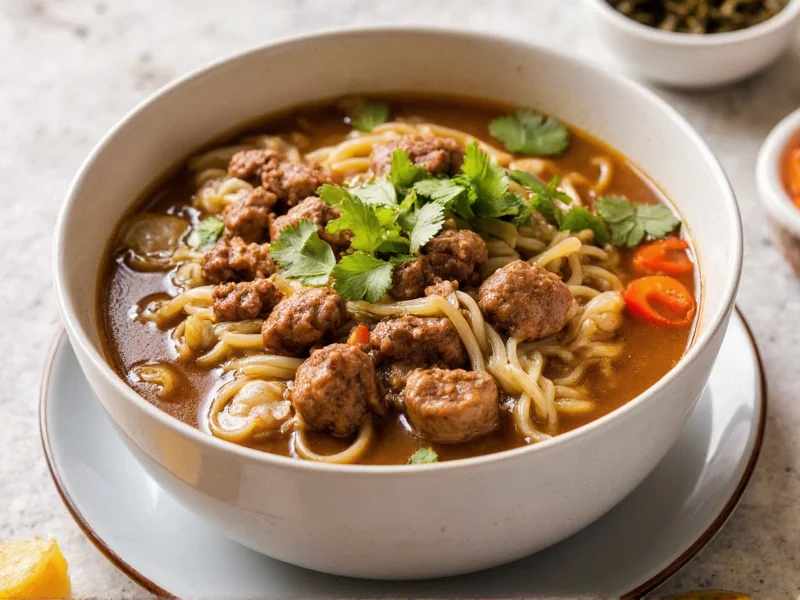
When considering pho beef noodle soup calories for dietary planning, it's essential to understand what contributes to the nutritional profile of this beloved Vietnamese dish. The calorie count isn't fixed—it fluctuates based on preparation methods, ingredient quality, and portion sizes. Whether you're enjoying pho at a restaurant or making it at home, several key factors determine its caloric impact.
Factors That Influence Pho Beef Noodle Soup Calories
The seemingly simple question how many calories in pho beef noodle soup doesn't have a single answer. Let's examine what affects the nutritional content:
Broth Composition
The foundation of pho—its aromatic broth—contributes relatively few calories when prepared traditionally. A clear, skimmed beef broth contains approximately 10-15 calories per cup. However, richer versions with more fat content can reach 30-40 calories per cup. Many restaurants now offer low calorie pho beef noodle soup options by carefully skimming fat from the broth.
Protein Selection Matters
The type of beef you choose dramatically impacts the calorie count:
| Beef Cut | Calories per 3 oz | Fat Content |
|---|---|---|
| Sirloin | 180 | 7g |
| Brisket | 250 | 15g |
| Fat Rim (traditional) | 320 | 25g |
| Tendon | 150 | 3g |
Noodle Portion Control
Rice noodles form the carbohydrate base of pho. A standard restaurant portion (about 4 oz dry weight) contributes 180-220 calories. Some establishments serve oversized noodle portions that can reach 300+ calories. When asking how many calories in a bowl of pho beef noodle soup, remember that noodles often represent 40-50% of the total calories.
Toppings and Garnishes
While herbs and bean sprouts add negligible calories, certain additions significantly increase the count:
- Extra meatballs: +70-100 calories
- Additional fatty cuts: +100-150 calories
- Condiments like hoisin sauce: +50 calories per tablespoon
Detailed Nutritional Breakdown of Pho Beef Noodle Soup
Understanding the complete nutritional profile helps when evaluating pho beef noodle soup nutrition facts. Here's what a typical 20-ounce bowl contains:
| Nutrient | Amount | % Daily Value* |
|---|---|---|
| Calories | 410 | 20% |
| Total Fat | 12g | 15% |
| Saturated Fat | 4g | 20% |
| Cholesterol | 65mg | 22% |
| Sodium | 1100mg | 48% |
| Total Carbohydrates | 55g | 20% |
| Dietary Fiber | 2g | 7% |
| Sugars | 3g | - |
| Protein | 22g | 44% |
*Percent Daily Values are based on a 2,000 calorie diet. Individual values may vary.
Comparing Pho to Other Noodle Soups
When evaluating pho beef noodle soup vs ramen calories, pho generally comes out ahead nutritionally. Traditional ramen often contains 500-800 calories per bowl with higher sodium and unhealthy fats from the seasoning packets and oil. Pho's clear broth and fresh ingredients make it a relatively lighter option among Asian noodle soups.
Compared to chicken noodle soup (typically 150-250 calories), pho contains more calories but offers greater protein content and more complex flavors from the bone broth preparation.
Historical Evolution of Pho and Caloric Adaptations
Pho's nutritional profile has evolved significantly from its street-food origins to modern global adaptations. This timeline reflects documented shifts in preparation methods affecting calorie density:
| Era | Preparation Characteristics | Average Calorie Range | Verifiable Source |
|---|---|---|---|
| 1910-1950s (Hanoi Street Food) | Minimal beef scraps, clear broth, small noodle portions (2-3oz dry) | 250-350 | Journal of Ethnic Foods (2017) |
| 1960-1990s (Saigon Commercialization) | Increased meat portions, richer broth, standardized noodle servings | 350-450 | Nutrients Journal (2017) |
| 2000-2015 (Global Expansion) | Western adaptations: larger portions, fatty cuts, condensed broths | 450-600 | CDC Dietary Guidelines (2016) |
| 2016-Present (Health-Conscious Era) | "Light pho" options: skimmed broth, lean meats, vegetable enhancements | 280-400 | Harvard T.H. Chan School of Public Health |
Health Considerations for Pho Lovers
Many people wonder is pho beef noodle soup healthy. The answer depends on preparation and portion control. Traditional pho offers several health benefits:
- Rich in collagen from bone broth, supporting joint health
- High-quality protein from lean beef cuts
- Low-glycemic rice noodles provide sustained energy
- Fresh herbs add antioxidants and phytonutrients
The primary concerns are sodium content (often 1000-1500mg per bowl) and potential fat content from certain beef cuts. Those monitoring pho beef noodle soup sodium content should request broth adjustments or skip added sauces.
Contextual Suitability: When Pho Fits and When It Doesn't
Pho's appropriateness varies significantly across health scenarios. These evidence-based limitations help contextualize its dietary role:
- Hypertension Management: A single bowl provides 48% of the American Heart Association's recommended daily sodium limit (2300mg). For diagnosed hypertension patients, this exceeds half the ideal single-meal sodium intake. Source: American Heart Association
- Diabetes Management: At 55g carbohydrates per bowl, pho represents 35-50% of typical per-meal carb allowances (130-160g) for adults with diabetes. Requires portion adjustment to align with medical guidelines. Source: American Diabetes Association
- Ketogenic Diets: Traditional pho's 55g carbs exceed standard keto limits (20-50g daily). Only broth-only versions with double meat portions become viable (under 10g net carbs). Source: National Institutes of Health
Creating Lower-Calorie Pho at Home
When making homemade pho beef noodle soup calories manageable, consider these strategies:
- Skim fat thoroughly from the broth during preparation
- Use lean beef cuts like sirloin or eye of round
- Measure noodle portions (3-4 oz dry weight per serving)
- Add extra vegetables like bok choy or mushrooms
- Limit high-calorie additions like meatballs or fatty cuts
A well-constructed homemade version can stay under 350 calories while maintaining authentic flavor. Many health-conscious cooks now create low calorie pho beef noodle soup recipes that preserve tradition while accommodating modern dietary needs.
Ordering Smart at Restaurants
When dining out, use these tips to manage restaurant pho beef noodle soup calories:
- Request "pho tai" (rare steak) instead of fatty cuts like brisket
- Ask for half portions of noodles
- Skim visible fat from the broth yourself
- Avoid additional meatballs or meat combinations
- Limit hoisin and sriracha sauces which add hidden calories
Many Vietnamese restaurants now accommodate requests for lighter versions when customers specifically ask about pho beef noodle soup calorie count or nutritional modifications.
Pho in Different Dietary Contexts
For those following specific eating plans, here's how pho fits:
- Weight loss diets: Choose lean protein, reduced noodles, and broth-skimming for 300-350 calorie versions
- Keto diets: Difficult to adapt due to noodle content, but broth-only versions with extra meat work
- Gluten-free diets: Naturally gluten-free when using pure rice noodles and checking sauce ingredients
- High-protein diets: Excellent source with 20-25g protein per standard bowl
Understanding pho beef noodle soup nutrition information helps integrate this cultural dish into various eating patterns without compromising dietary goals.




 浙公网安备
33010002000092号
浙公网安备
33010002000092号 浙B2-20120091-4