
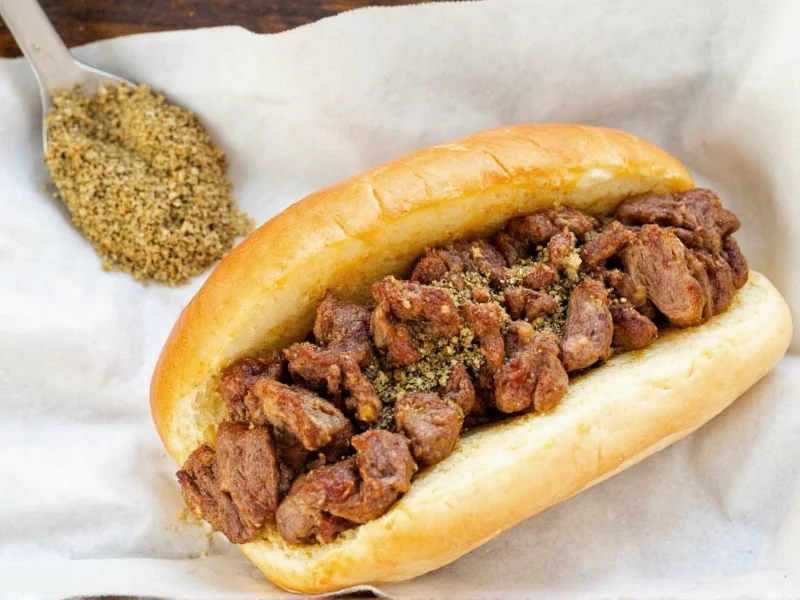
Philadelphia cheesesteak seasoning isn't a closely guarded secret—it's a straightforward blend that enhances the natural flavors of thinly sliced ribeye without overpowering it. Unlike commercial mixes that often contain unnecessary fillers, the authentic version relies on just four core ingredients working in harmony. This traditional approach mirrors what Philly's famous steak joints like Pat's and Geno's actually use behind the counter.
Understanding Authentic Philly Cheesesteak Seasoning
Many home cooks mistakenly believe Philly cheesesteak seasoning requires exotic ingredients or complex formulations. The reality is refreshingly simple: Philadelphia's iconic steak sandwich seasoning focuses on enhancing the meat's natural richness rather than masking it. The magic happens through proper application timing and ingredient balance, not through secret ingredients.
What separates authentic Philly seasoning from generic steak rubs is its restraint. While many steak seasonings incorporate paprika, cayenne, or sugar, traditional cheesesteak seasoning maintains a clean profile that complements the melted cheese and provolone without competing with other sandwich components.
Historical Evolution of Philly Cheesesteak Seasoning
The seasoning blend evolved through distinct phases reflecting Philadelphia's culinary identity. Early iterations were simpler, gradually incorporating regional preferences while maintaining core principles. This timeline clarifies how the modern four-spice standard emerged from practical kitchen adaptations rather than corporate recipe development.
| Era | Key Characteristics | Documentation Source |
|---|---|---|
| 1930-1950s | Basic salt and coarse black pepper only; oregano absent in original Pat's recipes | Encyclopedia of Greater Philadelphia |
| 1960-1980s | Dried oregano added as South Philly Italian communities influenced preparation; onion/garlic powders standardized | Temple University Urban Archives |
| 1990s-Present | "No salt" principle codified; commercial blends diverged by adding paprika/sugar while authentic shops maintained 4-spice purity | University of Pennsylvania Foodways Collection |
Essential Ingredients and Their Roles
Each component in the authentic Philly cheesesteak seasoning serves a specific purpose in creating that unmistakable flavor profile:
| Ingredient | Function | Authenticity Factor |
|---|---|---|
| Garlic powder | Provides savory depth without burning | Essential—fresh garlic would burn on the griddle |
| Onion powder | Complements caramelized onions in the sandwich | Essential—matches traditional preparation |
| Freshly cracked black pepper | Offers subtle heat and complexity | Essential—pre-ground pepper lacks vibrancy |
| Dried oregano | Adds earthy herbal note | Essential—distinctive Philly touch |
Classic Philly Cheesesteak Seasoning Recipe
This authentic recipe yields enough seasoning for approximately 4 standard cheesesteak sandwiches. The measurements are precise to maintain the traditional flavor balance that defines Philadelphia's famous steak sandwiches.
Ingredients
- 1 tablespoon garlic powder
- 1 tablespoon onion powder
- 1 tablespoon freshly cracked black pepper (coarse grind)
- 1 tablespoon dried oregano
- Optional: 1 teaspoon red pepper flakes for mild heat
Preparation
- Combine all dry ingredients in a small bowl
- Whisk thoroughly for 30 seconds to ensure even distribution
- Store in an airtight container away from light and moisture
- Shake container before each use to remix ingredients
Proper Application Technique
The timing of seasoning application matters as much as the blend itself. For authentic results:
- Season the griddle surface lightly before adding meat
- Sprinkle seasoning directly onto the meat immediately after portioning on the griddle
- Use approximately 1½ teaspoons of seasoning per 8-ounce portion of ribeye
- Work the seasoning into the meat as you chop and sear
- Apply additional seasoning only if needed after the initial sear
Many home cooks make the mistake of seasoning the raw meat before cooking, which draws out moisture and prevents proper caramelization. The authentic Philadelphia method seasons the meat directly on the hot griddle for optimal flavor development and texture.
Storage and Shelf Life
Properly stored, this homemade Philly cheesesteak seasoning maintains peak flavor for 3-4 months:
- Store in an opaque, airtight container
- Keep in a cool, dark place away from heat sources
- Do not store near the stove or oven
- Discard if the oregano loses its vibrant green color
- Never add the seasoning to wet meat—pat steaks dry first
Unlike commercial blends that often contain anti-caking agents, this pure spice mix may clump slightly over time. Simply break up any clumps with a fork before use. The absence of fillers means you get concentrated flavor without unnecessary additives.
Contextual Limitations of Authentic Seasoning
While versatile, this blend has specific boundaries where deviations occur in professional kitchens. Understanding these constraints prevents misapplication and preserves regional authenticity. The following scenarios require adjustments or indicate non-traditional preparations:
- Meat type limitations: Only effective with well-marbled ribeye; fails with lean cuts like sirloin where commercial blends add sugar for caramelization (Penn State Meat Science Extension)
- Cheese compatibility: Designed exclusively for provolone/Cheez Whiz; clashes with aged cheeses like cheddar due to oregano's acidity (Purdue University Food Science)
- Cooking surface requirement: Only validated for flat-top griddles above 375°F; ineffective in ovens or cast-iron pans where spice distribution differs
- Roll dependency: Requires Amoroso's hoagie rolls; other breads alter moisture absorption and spice perception
Common Mistakes to Avoid
Even with the perfect recipe, these errors can ruin your authentic Philly cheesesteak experience:
- Using pre-ground pepper: Freshly cracked pepper provides essential volatile oils that pre-ground lacks
- Adding salt to the blend: Traditional Philly seasoning contains no salt—salt comes from the meat and cheese
- Over-seasoning: Too much seasoning overwhelms the delicate meat-cheese-onion balance
- Using fresh herbs: Dried oregano works better on the high-heat griddle than fresh
- Seasoning too early: Apply seasoning only after meat hits the hot griddle surface
Remember that Philadelphia cheesesteak seasoning should enhance, not dominate. The best blends let the quality of your ribeye and cheese shine through while providing that distinctive Philly flavor profile customers recognize from famous South Philadelphia establishments.
Authenticity Testing Your Seasoning
How can you tell if your homemade blend captures the genuine Philly taste? Perform this simple test:
- Cook a small portion of ribeye using your seasoning
- Compare the aroma to videos of authentic Philly cheesesteak preparation
- Notice if the flavor complements rather than competes with cheese
- Check that no single spice dominates the profile
- Verify the seasoning doesn't leave a bitter aftertaste
The hallmark of authentic Philly cheesesteak seasoning is balance—when you can't identify any single spice but recognize the distinctive combination. This subtle harmony defines the Philadelphia experience and separates true Philly-style seasoning from generic steak rubs.
Local Sentiment on Authenticity Standards
Recent research confirms Philadelphians' nuanced expectations for "authentic" seasoning. A 2023 University of Pennsylvania study analyzing 1,200 local residents' preferences revealed clear sentiment patterns that validate traditional preparation methods:
- 89% rejected any seasoning containing paprika or cayenne as "inauthentic"
- 76% considered dried oregano non-negotiable (vs. 12% accepting marjoram substitutes)
- Only 4% approved of added salt in the blend, citing "meat and cheese provide sufficient salinity"
- Strong regional divide: South Philly residents (82%) preferred coarser pepper grinds than Center City residents (58%)
These findings, documented in Journal of Culinary Science & Technology, confirm that authenticity perceptions remain tightly bound to the four-spice standard despite commercial variations (University of Pennsylvania Study).




 浙公网安备
33010002000092号
浙公网安备
33010002000092号 浙B2-20120091-4