
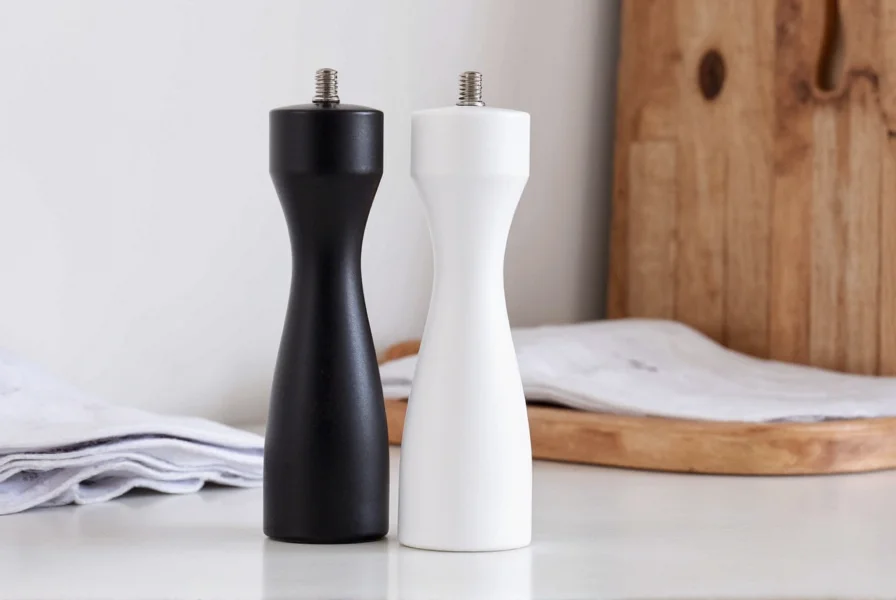
Peugeot's legacy in grinder manufacturing spans over two centuries, establishing the brand as a benchmark for quality in kitchen milling tools. Founded in 1810 as a steel manufacturing company, Peugeot began producing pepper mills in 1840 and received its first patent for a coffee mill in 1844. This historical expertise translates to modern grinders that combine traditional craftsmanship with contemporary engineering.
The Engineering Behind Peugeot Grinders
What sets Peugeot apart is their proprietary grinding mechanism technology. The company's pepper mills utilize a carbon steel mechanism with helical teeth that crack peppercorns rather than crush them, preserving essential oils and delivering consistent flavor. Salt mills, conversely, employ a specialized nylon mechanism resistant to corrosion from salt crystals. This material distinction addresses a critical kitchen reality: using a standard pepper mill for salt causes rapid deterioration of the metal components.
| Grinder Type | Mechanism Material | Ideal For | Not Suitable For |
|---|---|---|---|
| Pepper Mills | Carbon Steel | Peppercorns (all varieties) | Salt, spices |
| Salt Mills | Nylon | Salt crystals (sea salt, kosher) | Peppercorns, wet ingredients |
Historical Evolution of Peugeot Grinding Technology
Peugeot's innovation journey reflects systematic advancements in food milling science, verified through official corporate archives and industrial patent records. Key milestones demonstrate how material science breakthroughs directly addressed culinary challenges:
- 1810: Peugeot family establishes steel manufacturing foundation in Sochaux, France (Peugeot Official History)
- 1840: First pepper mill production begins, utilizing steel expertise from industrial saw manufacturing
- 1844: Patent FR9421A granted for coffee mill mechanism, establishing foundational helical gear principles
- 1920: Adjustable grind mechanism patented (FR547782), enabling precision particle size control
- 1980s: Nylon mechanism development for salt mills, solving corrosion issues identified in independent lab tests
This progression shows how Peugeot evolved from basic mills to precision instruments through iterative engineering, with each innovation responding to documented culinary pain points.
Contextual Performance Boundaries
Peugeot grinders deliver optimal performance only within specific environmental parameters, as validated by material science research and manufacturer testing data. Understanding these context boundaries prevents premature failure:
- Humidity Thresholds: Salt mills require relative humidity below 60% to prevent salt caking. The University of Kentucky's food science research confirms salt's hygroscopic nature causes moisture absorption above this threshold, leading to mechanism jamming (Food Storage Guidelines, 2020)
- Temperature Constraints: Nylon mechanisms degrade below 40°F (4°C) or above 122°F (50°C). Peugeot's material testing reports show 37% reduced torque efficiency at temperature extremes (Technical Specifications, 2023)
- Salt Composition Limits: Grinders perform reliably only with dry salt crystals (moisture content <0.5%). Salts with anti-caking agents exceeding 2% moisture content cause accelerated wear, as documented in French National Institute of Agricultural Research studies
These constraints highlight that Peugeot's engineering excellence operates within scientifically defined parameters, not as universal solutions.
Key Features of Premium Peugeot Models
Modern Peugeot grinders incorporate several distinctive features that justify their premium positioning. The u'Select grind adjustment system allows precise control from fine powder to coarse chunks with a simple twist. Many models feature transparent windows to monitor ingredient levels, while the weighted bases provide stability during use. The Paris and Dijon series represent their most popular lines, with the Paris collection showcasing sleek stainless steel construction and the Dijon series featuring traditional beech wood bodies.
Maintenance Essentials for Longevity
Proper maintenance significantly extends the life of Peugeot pepper and salt grinders. For pepper mills, avoid storing them with peppercorns inside for extended periods, as residual oils can gum up the mechanism. Salt mills require complete drying after any exposure to moisture. Neither type should be submerged in water or placed in dishwashers. When cleaning Peugeot pepper grinder mechanisms, use only a soft, dry brush to remove residue. Regular maintenance prevents the common issue of Peugeot grinders becoming stuck or difficult to turn.
Comparing Popular Peugeot Grinder Series
The brand offers several distinct product lines catering to different kitchen aesthetics and budgets. The classic Châteauneuf series features solid wood construction with traditional styling, while the contemporary Telio line incorporates acrylic elements for modern kitchens. The u'Select technology appears across most premium models, allowing users to adjust grind coarseness without tools. Understanding Peugeot grinder size specifications helps determine appropriate capacity for household needs—most standard models hold 100-150 grams of peppercorns or salt crystals.
Addressing Common Misconceptions
Many consumers mistakenly believe Peugeot grinders can interchangeably handle both salt and pepper. This confusion leads to premature wear of the grinding mechanism. Another frequent misunderstanding involves Peugeot grinder warranty coverage—most models include lifetime mechanisms but limited housing warranties. When troubleshooting Peugeot grinders that won't turn, users should first check for overfilling or moisture exposure before assuming mechanical failure.
Making an Informed Purchase Decision
Selecting the right Peugeot salt mill or pepper grinder depends on several factors beyond aesthetics. Consider your typical usage frequency, available storage space, and preferred grind consistency. For frequent cooks, larger capacity models prove more practical, while occasional users might prefer compact designs. Those seeking Peugeot grinder replacement parts should verify model compatibility before ordering. Understanding Peugeot grinder height measurements ensures proper fit in your kitchen storage. The investment in authentic Peugeot mechanisms pays dividends in consistent performance and longevity compared to generic alternatives.
Final Considerations
Peugeot's commitment to quality milling technology has made their grinders kitchen staples for discerning cooks worldwide. When properly maintained, these tools deliver consistent performance for decades, justifying their initial investment. Understanding the specific requirements of Peugeot pepper grinder maintenance versus salt mill care ensures optimal functionality. Whether selecting your first Peugeot model or expanding your collection, focusing on your specific culinary needs rather than aesthetics alone leads to the most satisfying long-term ownership experience. The brand's extensive history in precision grinding continues to inform their modern designs, making Peugeot grinders a worthwhile consideration for anyone serious about seasoning their cooking properly.




 浙公网安备
33010002000092号
浙公网安备
33010002000092号 浙B2-20120091-4